


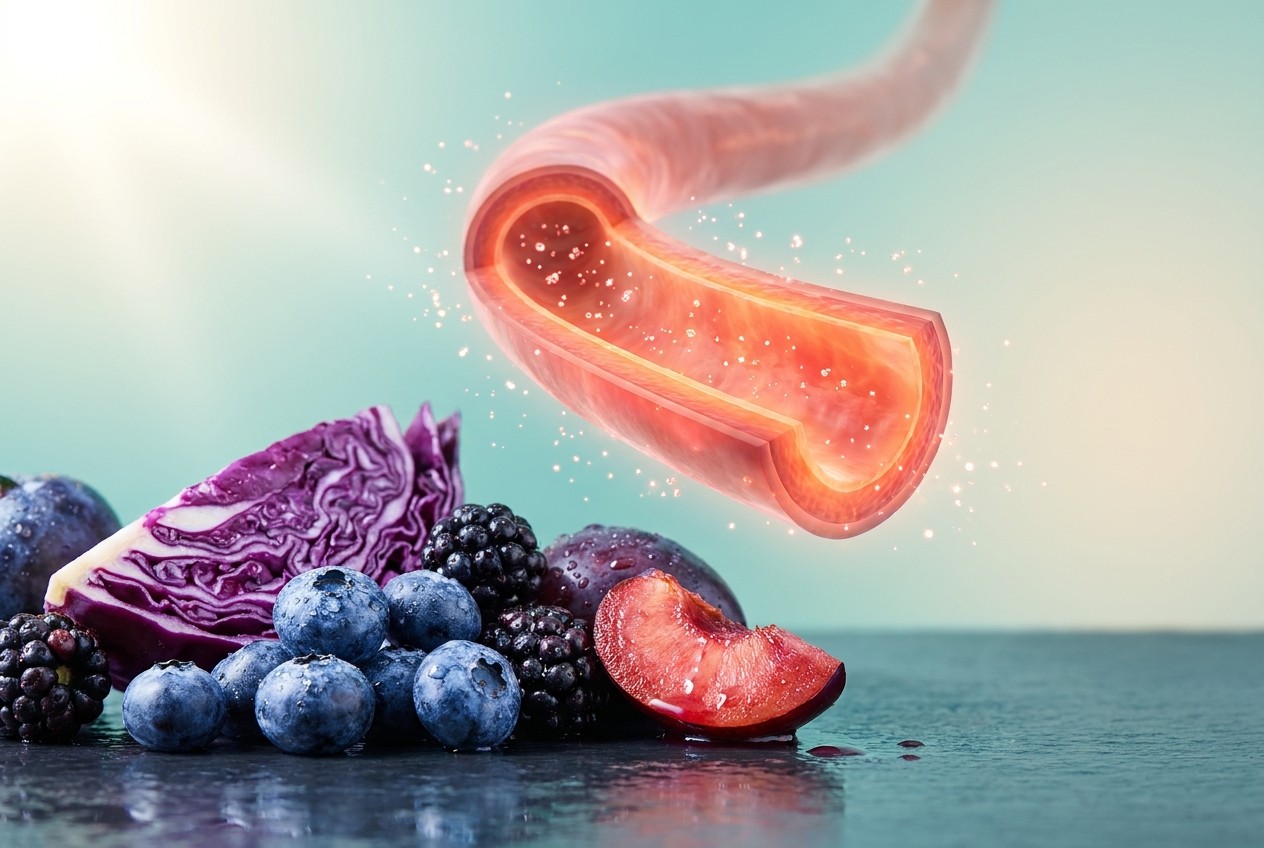
The paper pooled results from 18 long-term cohort studies and 65 randomized controlled trials on generally healthy adults, and its authors reported measurable effects on blood vessel function, including in participants with no existing cardiovascular disease.
Aedín Cassidy, the review's author and chair in nutrition and preventive medicine at Queen's University Belfast in Northern Ireland, told The Epoch Times that the findings included effects in healthy participants. The pigments occur in blueberries, plums, purple grapes, red cabbage and other plant foods, and are described in separate literature as colored water-soluble compounds belonging to the phenolic group [1].
What the Research Found
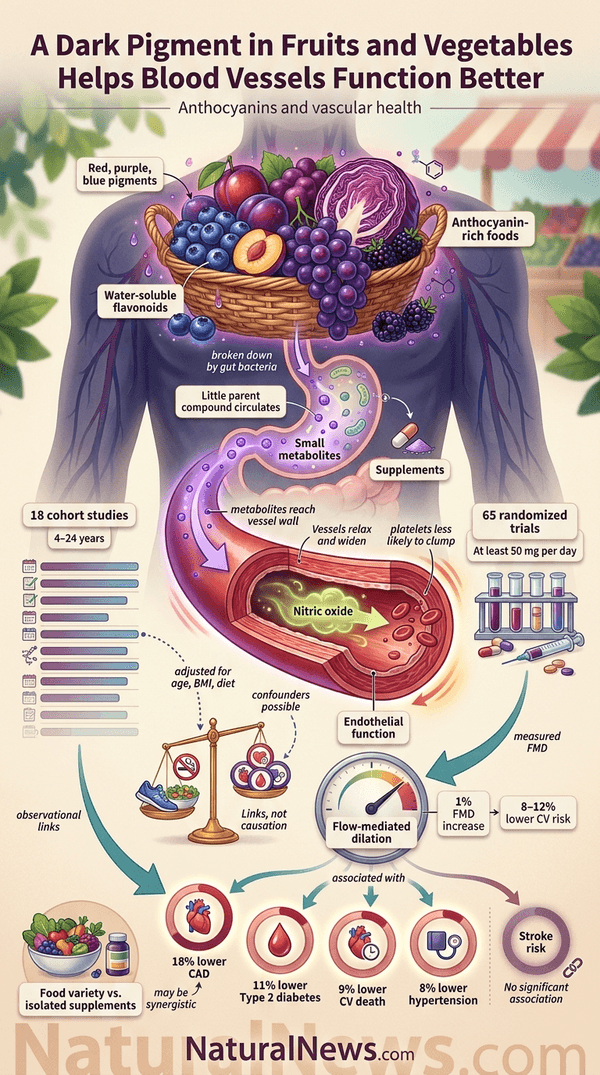
The cohort studies followed participants for four to 24 years and estimated anthocyanin intake largely through dietary questionnaires, according to the review. The paper reported an 18% lower likelihood of coronary artery disease or nonfatal heart attack, an 11% lower likelihood of Type 2 diabetes, a 9% lower likelihood of dying of cardiovascular disease and an 8% lower likelihood of hypertension.
The review did not find a significant association between anthocyanin intake and stroke risk. The figures come from observational studies, which show links but not causation, the review stated, noting that researchers adjusted for age, body mass index and, in nearly all studies, diet. Other factors, such as people who eat more anthocyanin-rich foods being healthier in other ways, could still explain the numbers, according to the review [2].
The findings add to a broader body of research on plant compounds known as flavonoids. A separate study reported by NaturalNews.com followed 4,596 U.S. adults and found that a greater variety of flavonoid-rich foods was associated with lower mortality during the follow-up period, the report stated [3].
Trial Results on Blood Vessel Function
The randomized trials examined anthocyanin-rich foods, drinks, supplements or purified compounds at doses of at least 50 milligrams per day, ranging from single-dose experiments to studies lasting several months. Flow-mediated dilation measures how much an artery widens when blood flow increases.
Cassidy told The Epoch Times that a 1% increase in flow-mediated dilation has been associated with an 8% to 12% reduction in cardiovascular risk.
The team limited the analysis to healthy adults because including people with existing disease, who tend to respond more to anthocyanins, would make it difficult to tell what diet can do for prevention.
How Anthocyanins May Work
Anthocyanins appear to help blood vessels produce and preserve nitric oxide, which helps vessels relax and widen, according to the review. The review stated that anthocyanins may also make blood platelets less likely to clump, which could lower the risk of clots.
The compounds are often categorized as antioxidants, but because little of the parent compound circulates, their effect may come from being broken down in the digestive system into smaller metabolites that have been linked to improved blood vessel function in humans.
Separate research has pointed in a similar direction. A review by I. Mozos and colleagues found that the antioxidant effects of anthocyanins contribute to the improvement of endothelial function and arterial elasticity [4]. A review by H.E. Khoo and colleagues noted that anthocyanin-rich flowers and fruits have been traditionally used as medicine to treat various diseases [1].
Dietary Sources and Intake Guidance
U.S. Department of Agriculture material lists cherries, blueberries, blackberries and cranberries among the fruits that contain anthocyanins [5]. A half-cup serving of ripe wild blueberries can provide between 200 and 400 milligrams of polyphenols, according to NaturalNews.com [6].
Cassidy told The Epoch Times that benefits were seen with three portions a week in some population studies and that a portion every day would be ideal. Mitri told The Epoch Times that half to one cup of berries or other anthocyanin-rich foods daily is a target.
Frozen berries and dried fruits retain high levels of anthocyanins, Cassidy said. The review authors and outside experts described the goal as a varied, colorful diet rather than a single "best" food or a supplement.
Limitations and Conclusion
Jayne Morgan, a cardiologist and vice president of medical affairs at Hello Heart, who was not involved in the study, told The Epoch Times that association does not prove causation.
Deepak Bhatt, a cardiologist and professor of cardiovascular medicine at the Icahn School of Medicine at Mount Sinai, who was not involved in the study, told The Epoch Times that a large, long-term trial tracking heart attacks and strokes would be definitive, but that such dietary trials are difficult to conduct.
The findings align with longstanding research on flavonoids: a review by Jonathan M. Hodgson and Kevin D. Croft noted that several population studies have found an inverse association between flavonoid intake and risk of cardiovascular disease [7].
References
- Anthocyanidins and anthocyanins: colored pigments as food .... https://pmc.ncbi.nlm.nih.gov/articles/PMC5613902/
- A Dark Pigment in Fruits and Vegetables Helps Blood Vessels Function Better | The Epoch Times. https://www.theepochtimes.com/health/what-gives-berries-their-color-may-also-help-your-heart-6086123
- Study Links Tea, Fruit, Dark Chocolate Compounds to Lower Mortality Risk. https://www.naturalnews.com/2026-11-08-tea-fruit-dark-chocolate-linked-lower-mortality-risk.html
- Effects of Anthocyanins on Vascular Health - PMC. https://pmc.ncbi.nlm.nih.gov/articles/PMC8227852/
- The Healthy Colors of Your Diet. https://www.ars.usda.gov/plains-area/gfnd/gfhnrc/docs/news-articles/2011/the-healthy-colors-of-your-diet/
- Polyphenols in wild blueberries can help lower blood pressure and boost brain function - NaturalNews.com, July 02, 2023.
- Dietary ?avonoids: effects on endothelial function and blood pressure. dvips 5.83 Copyright 1998 Radical Eye Software. Journal of the Science of Food and Agriculture 86:2492–2498 2006
Explainer Infographic






Please contact us for more information.


