


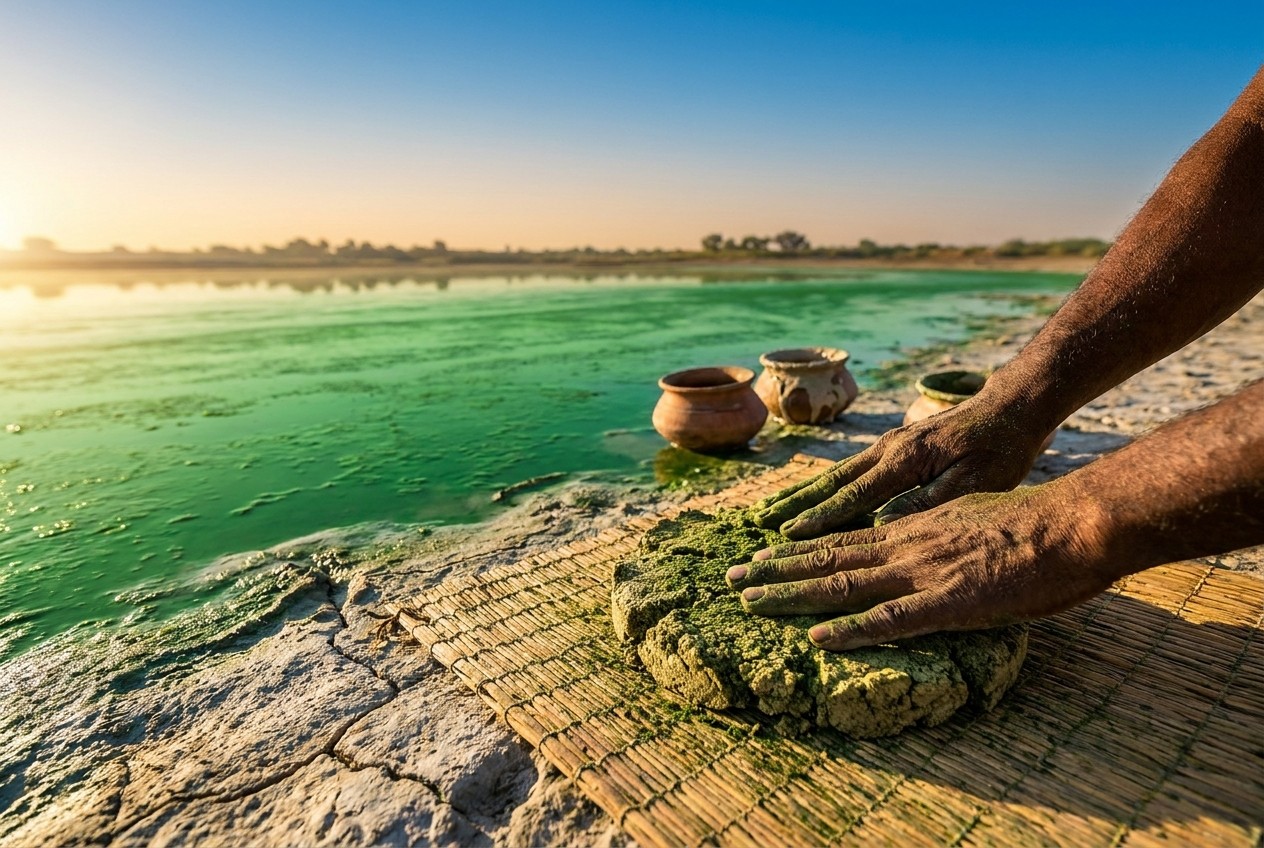
Reports examining the food source describe analysis focused mainly on its nutritional use, with the microalga's rich composition cited for its valuable nutritional and therapeutic properties [1].
Nutritional Profile and Historical Use
Compared to other foods by weight, spirulina is described as one of the most nutritious foods on the planet, high in protein and containing all essential amino acids and high in B vitamins, iron, magnesium, potassium and a wide range of other vitamins, minerals and antioxidants.
The Kanembu people dry spirulina into cakes, which are then crumbled and included in the majority of their meals, according to accounts of traditional use. As spirulina is a very simple organism, its proteins and nutrients are described as easily digested and absorbed. The World Health Organization has predicted that spirulina will become one of the most curative and prophylactic foods of the twenty-first century, according to the same accounts.
Ancient Aztec practice reflects a similar tradition. According to one account, Aztec messengers harvested the algae from Lake Texcoco, which surrounded what became Mexico City, and sun-dried it into flat cakes, giving them the energy they needed for their exhaustive marathon runs [2].
Health Benefits and Malnutrition
A 2016 scientific review concluded that spirulina can be used as a source for alleviating hidden hunger or micronutrient deficiencies, according to reporting on the findings. The same reporting states that eating as little as one gram of spirulina per day is proven to correct malnutrition in a small child in a few weeks, and that international spirulina supplementation programs have helped rehabilitate many malnourished adults affected by HIV/AIDS with only two grams of spirulina per day. Malnutrition in some form is estimated to affect almost 11% of the earth's population, and hidden hunger is estimated to affect up to 85% of Americans.
Research suggests spirulina can help prevent or treat many different conditions, including age-related brain degeneration, anemia, cancer, diabetes and pre-diabetes, fibromyalgia, hay fever, heavy metal toxicity, herpes, high blood pressure, high cholesterol, HIV infection, inflammation, malnutrition and obesity, according to the same reporting. Separate research has examined spirulina feeding in rats, where Spirulina platensis feeding inhibited the anemia- and leucopenia-induced lead and cadmium [3].
The United Nations' 1974 declaration and the World Health Organization's prediction are cited together in the reporting as key institutional markers of spirulina's potential. The World Food Program's executive director, David Beasley, told a meeting with the World Economic Forum in Davos, Switzerland, that "We have no choice but to take food from the hungry to feed the starving" [4].
Growing Spirulina and Contamination Concerns
Growing spirulina is described as a straightforward process used successfully by many families and small growers throughout the world. Commercial dehydration may reduce nutritional properties, and research comparing fresh and dried spirulina found that fresh spirulina has more bioactive compounds, which makes it easier to digest and absorb, according to reporting on the study. Commercial spirulina may also be grown overseas in open ponds, where contamination with heavy metals and other pollutants is described as common, and a Chinese study reported that 95% of spirulina supplements in the country contained serious liver toxins known as microsystins.
The Medical Center at the University of Maryland recommends that consumers always check the source of any spirulina supplements they buy, according to the reporting. Growing spirulina at home is presented as a way to avoid these risks and ensure a safe, sustainable supply of the food source for years to come.
Production research has examined ways to improve yields.
Conclusion
The United Nations and the World Health Organization have highlighted spirulina's potential as a food source, according to reports. The alga is described as nutritionally dense and can be grown with a small ecological footprint, because it grows in water and does not require fertile land, and the water it grows in can be reused.
Accounts describing spirulina's value in a food crisis state that if there were ever a serious global crash, spirulina would be an exceptionally valuable food source [5]. Those same accounts describe the food as offering a way for families to maintain a safe, sustainable supply for years to come.
References
- Spirulina—An Invaluable Source of Macro- and Micronutrients with Broad .... https://pmc.ncbi.nlm.nih.gov/articles/PMC11596570/
- A green food that's key to ending malnutrition worldwide. https://news-decoder.com/a-green-food-thats-key-to-ending-malnutrition-worldwide/
- Spirulina platensis feeding inhibited the anemia- and leucopenia-induced lead and cadmium in rats. Elsevier. Journal of Hazardous Materials 164 (2009) 1304–1309
- WFP executive director_ We have no choice but to take food from the hungry to feed the starving - NaturalNews.com, May 27, 2022.
- Why Spirulina Is An Extraordinary Food Source During Famines – Survivopedia. https://www.survivopedia.com/spirulina-one-of-the-most-curative-and-prophylactic-foods/










Please contact us for more information.


