


The authors said the findings show associations, not cause and effect, and described the work as exploratory. Earlier research has tied coffee to lower risks of conditions such as type 2 diabetes, and separate studies have associated coffee consumption with reduced risks of mortality and cardiovascular disease [1].
Study Design and Participants
Observational means nobody was assigned to drink or skip coffee. For eight days, each person logged everything eaten and drunk in an online diary.
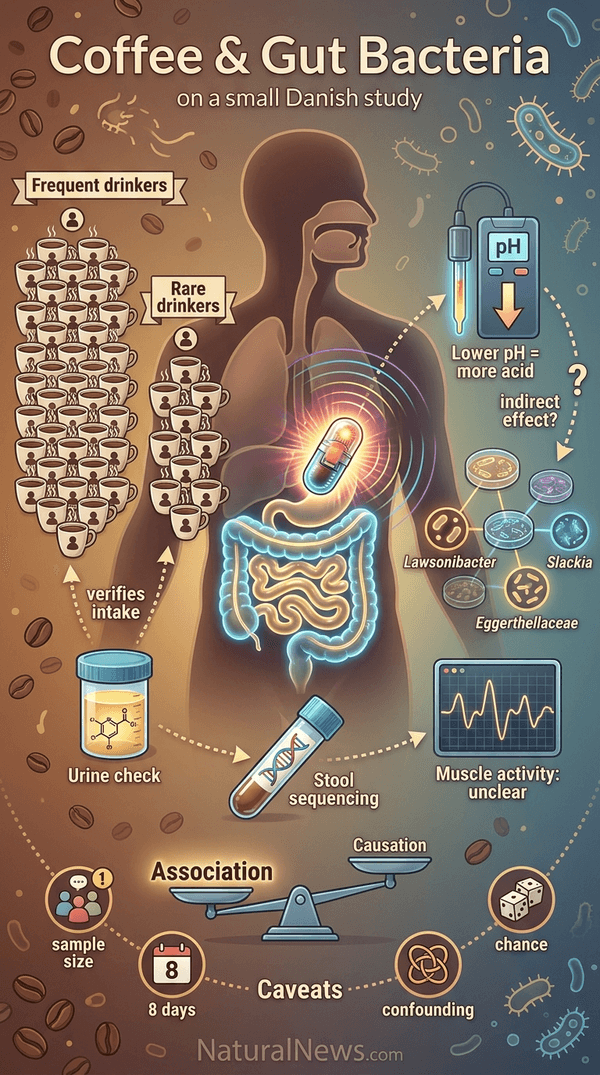
Those who had coffee on fewer than three of the days were labeled rare drinkers, a group of 13 people, and those who had coffee on four or more days were labeled frequent drinkers, a group of 48. To check whether the diaries were accurate, the team tested urine for caffeine and the chemicals the body makes while breaking it down.
Everyone gave daily stool and urine samples, and genetic sequencing of the stool identified which bacteria were present and in what amounts.
Bacterial Diversity and Specific Groups
A second diversity measure, which also weighs how evenly the bacteria are spread, showed no clear gap, and the full mix of bacteria was not significantly tied to coffee intake.
Three bacterial groups — Lawsonibacter, Slackia, and an unnamed member of the Eggerthellaceae family — appeared in larger amounts among frequent drinkers, the report stated. Other analyses fared better.
The finding has drawn interest because gut microbes are known to help exclude pathogens and support digestion, a function described in microbiome research [2].
Small Intestine Acidity and Gut Motility
Acidity was the capsule's main result. People who drank more of it, and those with more caffeine and one of its breakdown chemicals in their urine, had lower readings. Frequent drinkers had measurably lower small intestine pH than rare drinkers.
The capsule correlations were not corrected for chance results, and why coffee would shift acidity is unknown, the report stated. Acidity and gut movement are thought to help decide which microbes do well in the digestive tract, so the authors floated the idea that coffee affects bacteria indirectly by changing conditions in the gut. The study did not test it.
Muscle activity told a murkier story.
Limitations and Authors' Caution
A handful of limits cap how much can be read into the results. Rare drinkers were also younger on average, about 33 versus 41 years.
The paper noted that the study was not originally intended to investigate the effects of coffee consumption, that none of the group differences in bacterial abundance remained statistically significant after adjustment for multiple testing, and that the gut physiology correlations were explored without that adjustment. Funding came from the Novo Nordisk Foundation through the PRIMA project and from the European Union under the Marie Sklodowska-Curie action program, and author Henrik M.
More kinds of gut bacteria and a more acidic small intestine give researchers reason to keep studying regular coffee drinkers' insides, but this small snapshot is an early clue, not a reason to rethink anyone's morning cup, the report stated.
References
- Studies Link Coffee Consumption to Health Benefits Including Longevity, Gut Health - NaturalNews.com, June 18, 2026.
- The Whole-Body Microbiome. Brett Finlay Jessica Finlay-2-1
Explainer Infographic









Please contact us for more information.


