


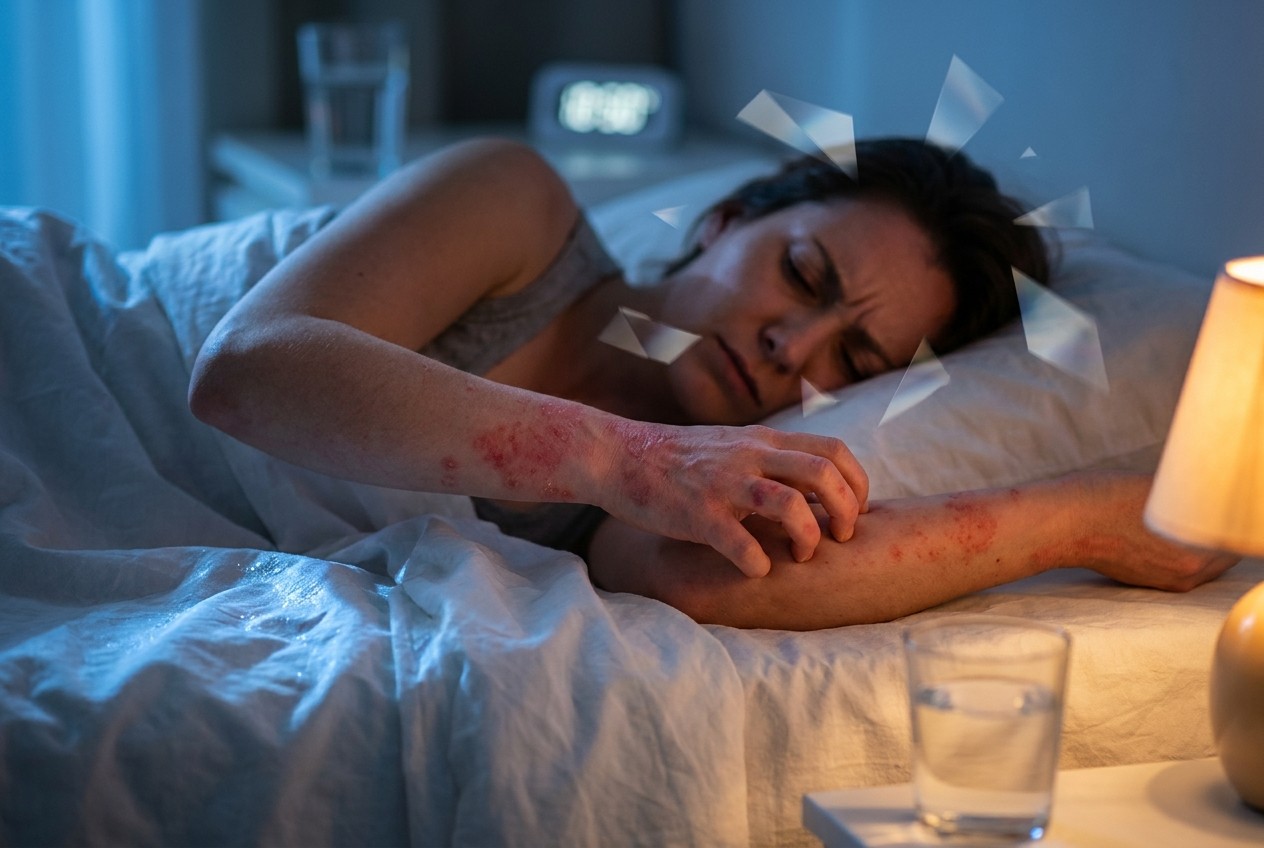
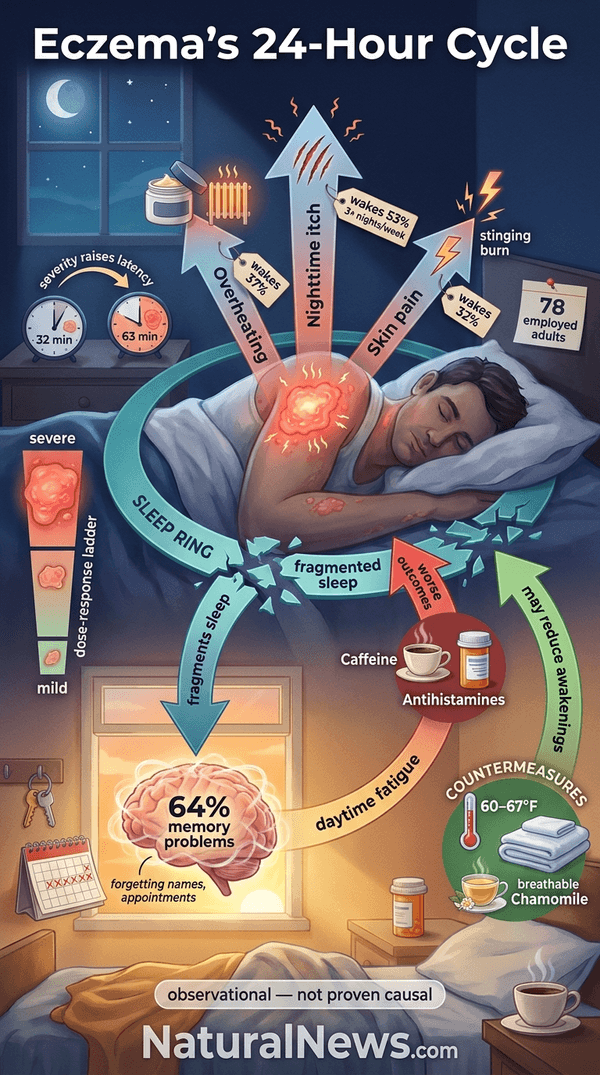
Researchers recruited 78 employed adults with eczema ranging from mild to severe, the report stated. The report stated that a new study found 77% of adults with eczema report poor sleep and 64% experience memory problems, with nighttime itch and overheating possibly being key drivers [1].
Results showed that 77% of participants reported poor sleep quality and 64% exhibited memory dysfunction, the report stated. The report stated that a new study found 77% of adults with eczema report poor sleep and 64% experience memory problems, with nighttime itch and overheating possibly being key drivers [1].
Study Details and Key Statistics
Patients with severe eczema took an average of 63 minutes to fall asleep, compared with 32 minutes for those with mild eczema, according to the study.
Itch woke 53% of patients three or more times per week, feeling too hot woke 37%, and skin pain woke 32%, researchers reported. Memory problems were reported by 64% of adults with eczema, the study found [1].
The pattern is consistent with clinical literature describing how skin disease disrupts rest. Dermatologic disorders may cause sleep disruption because of pruritus and painful skin diseases, and patients may have sleep initiation and maintenance insomnia, according to Sudhansu Chokroverty's Sleep Disorders Medicine [2]. A clinical guide to functional symptoms in pediatric disease describes a 12-year-old patient with long-standing atopic dermatitis whose extreme itchiness disrupted his sleep, interactions with parents, and academic and social functioning at school [3].
Sleep Quality and Cognitive Function
Poor sleep quality and daytime dysfunction were independent predictors of memory impairment, even after accounting for age, disease severity, and medication use, according to the report. The report stated that a new study found 77% of adults with eczema report poor sleep, and 64% experience memory problems [1].
Caffeine intake and antihistamine use were associated with worse outcomes in the study population, the report noted. A separate review of 47 trials involving more than 6,200 children and adults concluded that antihistamines likely offer no meaningful benefit for eczema-related itchiness and, in some cases, may slow thinking or cause other cognitive harms, according to Everyday Health [4].
The study cannot prove that poor sleep directly causes memory problems, but the pattern suggests fragmented sleep may be a key driver of next-day cognitive difficulties, researchers said. Broader research has linked disrupted sleep to cognitive outcomes: a 2017 systematic review cited in a NaturalNews.com report found that people with sleep-disordered breathing had a 26 percent higher risk of developing cognitive impairment [5].
Implications for Eczema Management
The findings reframe eczema as a 24-hour condition in which nighttime symptom control may influence daytime cognitive function, the report stated.
Keeping the sleep environment cool, between 60 and 67 degrees Fahrenheit, may reduce sleep fragmentation, according to the report. A new study found that 77% of adults with eczema report poor sleep and 64% experience memory problems, with nighttime itch and overheating as possible key drivers [1]. A new study found that 77% of adults with eczema report poor sleep, and 64% experience memory problems, with nighttime itch and overheating as possible key drivers [1].
References
- Common Skin Condition Linked To Sleep Disruption & Beyond | mindbodygreen. https://www.mindbodygreen.com/articles/common-skin-condition-linked-to-sleep-disruption-and-beyond-about-the-study
- Sleep Disorders Medicine. Sudhansu Chokroverty
- A Clinical Guide to Functional Symptoms in Pediatric Disease
- Antihistamines Do Little to Help Eczema Itch, Study Finds. https://www.everydayhealth.com/skin-conditions/antihistamines-do-little-to-help-eczema-itch/
- Snoring Linked to Cardiovascular and Cognitive Risks, Clinicians Say; Natural Approaches Draw Attention. https://www.naturalnews.com/2026-09-14-snoring-linked-to-cardiovascular-and-cognitive-risks.html
- Chamomile Tea May Aid Sleep and Skin Health, Studies Show. https://www.naturalnews.com/2026-08-20-studies-chamomile-tea-aid-sleep-skin-health.html
- Routines that Emphasize Natural, Non-Pharmaceutical Approaches Support Skin Health. https://www.naturalnews.com/2026-03-19-natural-non-pharmaceutical-routines-support-skin-health.html
Explainer Infographic











Please contact us for more information.


