



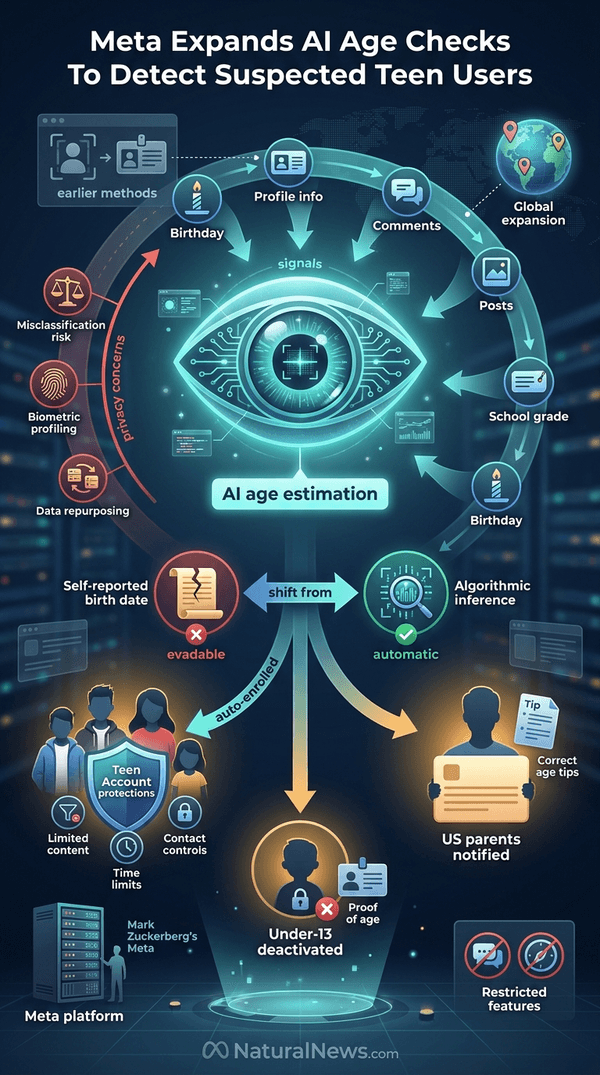
The Facebook and Instagram made the announcement in a statement Monday, Nov. 9 – with the new measure applying to suspected teen users, even if they registered with an adult birth date. The measure will also apply stricter safety settings to their accounts automatically [1].
According to the statement, the expansion will mean more teenagers around the globe will receive protections that will limit the content they see, the time they spend on the app and who can contact them. Moreover, U.S. parents on Instagram will also be notified about how the tech company will apply these safeguards for teen users, alongside tips on ensuring their child is logged in the correct age [1].
How Meta's Age-Estimation Technology Works
The company can also analyze photo and video visual patterns to determine age [2]. It also looks at visual cues from photos and videos, including a person's height or bone structure, according to TechCrunch [3].
Larry Magid, CEO of the nonprofit ConnectSafely, expounded on the age verification technology in a Nov. 6 post on Meta's website. According to him, the Big Tech firm uses AI and other signals to estimate a user's age – such as profile information, comments, posts, captions and references to school grades or birthdays [1].
"This visual analysis is not facial recognition. The idea is to look for general visual characteristics that suggest someone who is underage that may help estimate an age range, not to identify the person," wrote Magid. "Meta deactivates suspected under-13 accounts and requires proof of age to prevent deletion."
Teen Account Protections and Parental Controls
Meta said Teen Account protections automatically limit the content teenagers see, the time they spend on the app, and who can contact them [1]. Teen Accounts place users into a stricter account experience with additional safeguards, such as receiving direct messages only from people they follow or are already connected to, hiding harmful comments, and setting accounts to private by default [3].
Settlement and Regulatory Disputes
Meta's announcement Monday follows the company reaching a billion-dollar settlement with multiple U.S. jurisdictions in August over accusations that it endangered children. The agreement settles several lawsuits against Meta, and part of the settlement requires the company to put safety features such as age verification protocols, content controls and time limits for young users [1].
Recently, the Facebook and Instagram parent sued to block the state of California from enforcing a new law that aims to protect users younger than 16 from the harms of social media exposure. Google and Tiktok likewise filed similar lawsuits on Nov. 4 that sought to stop the bill's implementation. The three tech companies alleged that the new bill violates free speech protections as guaranteed by the First Amendment [1].
Ultimately, the outcome of these disputes will shape how platforms approach age verification and content moderation for minors in the U.S. and abroad.
References
- Meta to Use AI to Identify Teens Posing as Adults on Instagram. https://www.theepochtimes.com/tech/meta-to-use-ai-to-identify-suspected-teenagers-on-instagram-apply-safety-protections-6123095
- Meta is expanding its AI age checks on Instagram worldwide to identify teen .... https://www.instagram.com/p/Dfj6LIFTovG/
- Meta expands Instagram’s AI age-guessing tech globally. https://techcrunch.com/2026/11/09/meta-expands-instagrams-ai-age-guessing-tech-globally/
Explainer Infographic











Please contact us for more information.


