



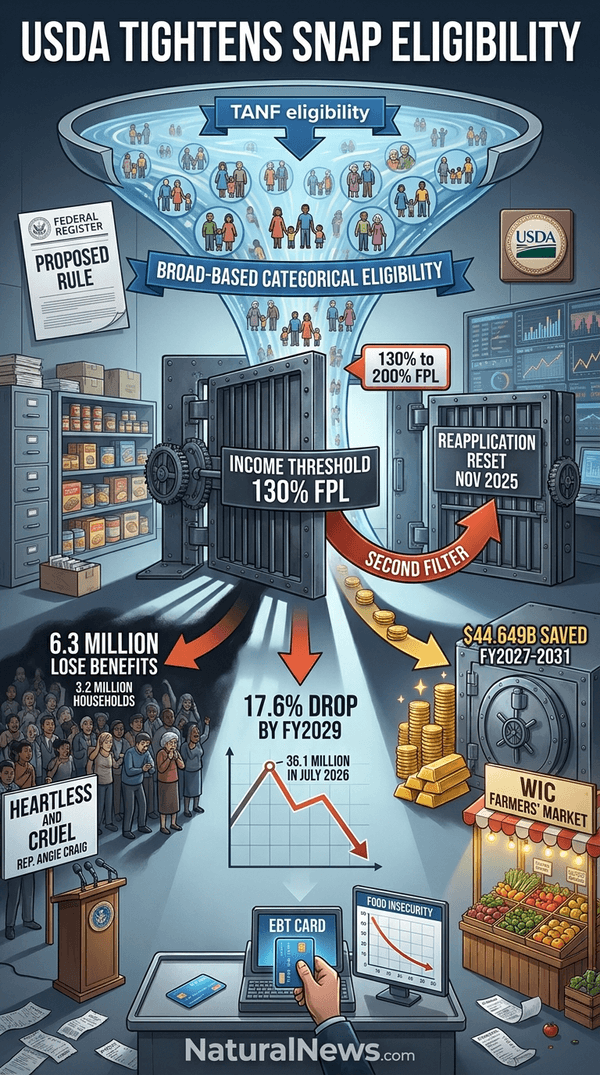
The USDA estimates that 17.6% of SNAP participants would lose benefits in fiscal year (FY) 2029 under the proposed rule, according to an agency analysis included in the proposal [1]. The department estimates the rule would reduce federal SNAP benefit spending by approximately $44.649 billion over the five-year period from fiscal 2027 through fiscal 2031, according to the Federal Register notice [2].
Proposal Targets Categorical Eligibility Linked to TANF
According to The Hill, the proposal seeks to raise the threshold families must meet to qualify for the government assistance program in order to "preserve benefits for the truly needy" [3]. It would end "broad-based categorical eligibility" for SNAP, which allowed for families to qualify for the program if they qualified for Temporary Assistance for Needy Families (TANF) benefits without needing to show proof they met federal income thresholds [3].
Generally, TANF eligibility is 130% to 200% higher than the federal poverty level, while SNAP qualification is 130%. Current regulations consider TANF benefits to include both cash assistance and non-cash or in-kind benefits or services from TANF-funded programs. The Food Research and Action Center said eliminating the policy does nothing to reduce hunger and does not improve program integrity [4].
USDA Estimates First-Year Enrollment and Benefit Effects
The USDA estimated the proposed rule would reduce SNAP participation by about 17.6% in FY 2029, the first year the rule would be fully in effect, according to the proposal [1]. The department said the estimate represents 3.2 million households, or 6.3 million individuals, who would lose benefits [5]. About 36.1 million people received SNAP benefits in July 2026, the latest month for which data are available, according to federal figures cited in reporting on the proposal [1].
SNAP has historically provided financial assistance to low-income people and families to pay for groceries. The program, administered by the USDA's Food and Nutrition Service, issues benefits through electronic benefits transfer cards that function like debit cards at authorized retailers [6]. Nutrition surveys in the United States have consistently shown that the lower a family's income, the less adequate its nutrition status, and that food insecurity negatively affects diet and health [6].
Lawmaker Criticizes USDA Proposal
Outgoing Rep. Angie Craig (D-MN) condemned the USDA's proposed rule as "heartless and cruel" in a statement. "The proposed rule would make it harder to meet basic needs and roll back efforts to streamline federal programs," continued Craig, the ranking member on the House Agriculture Committee.
The Farmers' Market Nutrition Program established in 1992 – under the USDA's Special Supplemental Nutrition Program for Women, Infants, and Children (WIC) – provides fresh, unprepared, locally grown fruits and vegetables to WIC recipients and seeks to expand awareness, use of and sales at farmers' markets [6]. The department has separately moved to tighten SNAP administration on other fronts, including a requirement announced in November 2025 that every SNAP recipient reapply for benefits as part of what officials described as a reset of the program [7].
Proposal Follows Prior SNAP Cuts and Error-Rate Pressure
The proposal follows a series of earlier changes to the program. The administration has also pursued program-integrity measures.
The Hill noted in a report that the Trump administration has previously pushed for budget cuts to SNAP, via the One Big Beautiful Bill Act passed last year [3]. The law slashed $180 billion from SNAP and added work requirements to be eligible for the program.
According to the outlet, the public comment period for the USDA's new proposal is ongoing until Dec. 10. The department did not immediately respond to The Hill's request for comment on the matter as of press time.
References
- USDA Proposes Aligning SNAP Eligibility Rules With Federal Standards, Affecting 6.3 Million Recipients. https://theepochtimes.com/us/usda-proposes-aligning-snap-eligibility-rules-with-federal-standards-affecting-6-3-million-recipients-6123396
- Federal Register: Supplemental Nutrition Assistance Program: Reforming Categorical Eligibility. https://www.federalregister.gov/documents/2026/11/10/2026-22936/supplemental-nutrition-assistance-program-reforming-categorical-eligibility
- New USDA proposal moves to kick millions from SNAP. https://thehill.com/homenews/administration/6211586-usda-snap-eligibility-proposal/
- FRAC Calls Latest Proposal to Cut SNAP Another Attack on Hungry Americans - Food Research & Action Center. https://frac.org/blog/bbceproposedrulenov2026/
- USDA Is Proposing a Rule That Would Kick Millions Off SNAP. https://www.washingtonsun.com/administration/usda-rule-millions-snap
- Community nutrition in action an entrepreneurial approach. Boyle Marie A Marie Ann-3
- SNAP reset USDA requires recipients to reapply for benefits - NaturalNews.com, November 18, 2025.
Explainer Infographic







Please contact us for more information.


