


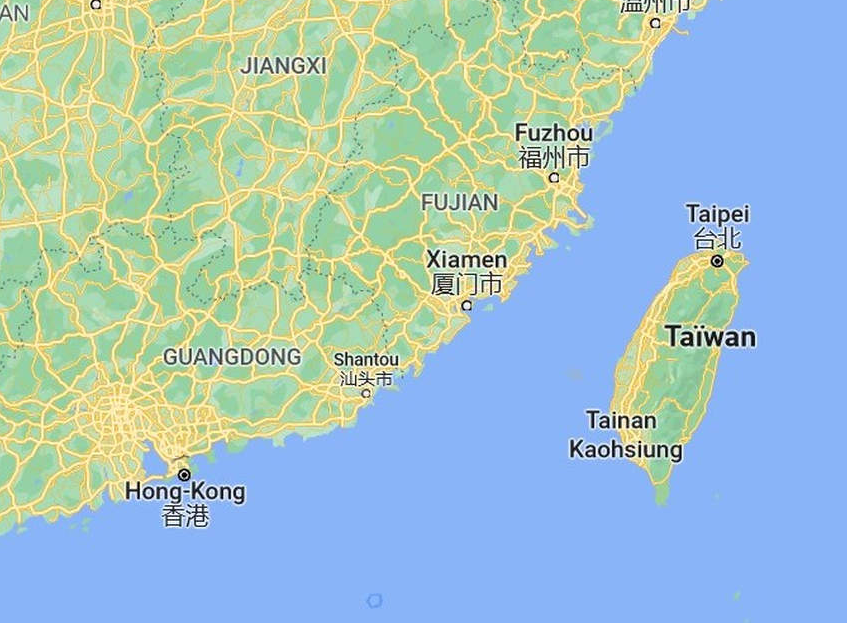
- Xi Jinping declared Taiwan's unification with China an unstoppable historical necessity in a speech commemorating revolutionary Sun Yat-sen.
- Taipei rejected Xi's remarks, stating they were not that different from Beijing's past positions.
- Beijing and Taipei both claim Sun Yat-sen's legacy, using his anniversary as a proxy for competing national narratives.
- Xi reiterated peaceful reunification under "one country, two systems," but Taiwan refuses to accept Communist Party rule.
- The speech precedes Xi's meeting with Trump at APEC, with Taiwan remaining a volatile issue between the superpowers.
Chinese President Xi Jinping used the 160th birthday of a long-dead revolutionary to deliver a pointed warning about Taiwan's future Thursday, declaring that the island's absorption into mainland China is an unstoppable historical necessity. The speech came just days before Xi is expected to sit down with President Donald Trump at the Asia-Pacific Economic Cooperation summit in Shenzhen and shortly before pivotal local elections in Taiwan.
Speaking at Beijing's Great Hall of the People to commemorate Sun Yat-sen, the revolutionary who helped topple China's last imperial dynasty in 1911, Xi framed Taiwan's future as a settled matter. "The tide of history cannot be stopped," he said. "The complete reunification of the motherland must be realized, and it will certainly be realized."
Taipei fired back almost immediately, dismissing Xi's remarks as a warmed-over position that changes nothing about the island's democratic reality.
Sun Yat-sen's contested legacy fuels competing national narratives
Both Beijing and Taipei claim Sun Yat-sen as their own, turning his anniversary into a proxy battle over who speaks for the Chinese people. Xi called Sun a great national hero and a "great pioneer of China's democratic revolution" whose life work included defending national unity and opposing any effort to divide the country.
In Taiwan, however, Sun remains officially recognized as the "father of the nation," with his portrait still hanging in the presidential office.
The competing interpretations trace back to the civil war that ended in 1949 with the defeated Republic of China government retreating to Taiwan while Mao Zedong's communists founded the People's Republic on the Chinese mainland. More than seven decades later, this island's status is still one of Asia's most explosive geopolitical flashpoints.
Taiwan has also pushed back against Beijing's efforts to claim credit for China's role in World War II, noting that the Allies' wartime partner was the Republic of China government, because the People's Republic didn't exist at the time.
Beijing sticks with 'one country, two systems' as Taiwan cries foul
Xi reiterated China's official position of seeking peaceful reunification under the "one country, two systems" model, which would allow Taiwan to keep some autonomy while becoming part of China. But that framework has little support among Taiwan's major political parties.
Taiwan's Mainland Affairs Council said neither the government nor the Taiwanese people could accept a deal that would ultimately mean submitting to Communist Party rule. "As for the wording on Taiwan unification, it isn't much different from the past," council spokesperson Liang Wen-chieh told reporters.
Though Xi didn't threaten military force explicitly in his speech, Beijing has never abandoned that option. Taiwan's defense ministry reported Thursday that 29 Chinese military aircraft, among them J-16 fighter jets and drones, had launched a "joint combat readiness patrol" around the island alongside Chinese warships.
Pre-APEC timing raises stakes for Trump meeting
The speech's timing feels deliberate. Xi is due to meet Trump next week at the APEC summit, and Taiwan remains one of the most volatile issues between the two superpowers.
Trump has previously shown willingness to use arms sales to Taiwan as leverage. After his summit with Xi in Beijing in May, he told Fox News that he was putting a $14 billion weapons package for the island on hold, calling it "a very good negotiating chip." U.S. allies like Japan have long feared Trump might soften support for Taiwan to win concessions from Beijing — and Washington is seeking a lot of them, from Chinese purchases of Boeing planes and farm goods to Beijing's help in pressuring Iran.
When Xi pushed Trump to oppose Taiwanese independence in a September meeting in Washington, Taiwan's foreign ministry fired back, calling China the "true disruptor" of regional peace and stability. President Lai Ching-te maintains that only Taiwan's people can decide their future; Beijing brands him a separatist.
Taiwan squeezed between Beijing's pressure and Trump's dealmaking
Xi's speech doesn't signal any immediate policy change. But it reinforces the fact that Beijing considers Taiwan a question of when, not if. Taipei now finds itself caught between Chinese warplanes and an American president who has made no secret of the fact that he considers its arms deals to be a bargaining tool.
Beijing has made its position clear, and so has Taipei. Next week in Shenzhen, Trump will get his turn — and Xi will be paying close attention to see if America's support for Taiwan comes with a price tag.
Sources for this article include:




Please contact us for more information.


