


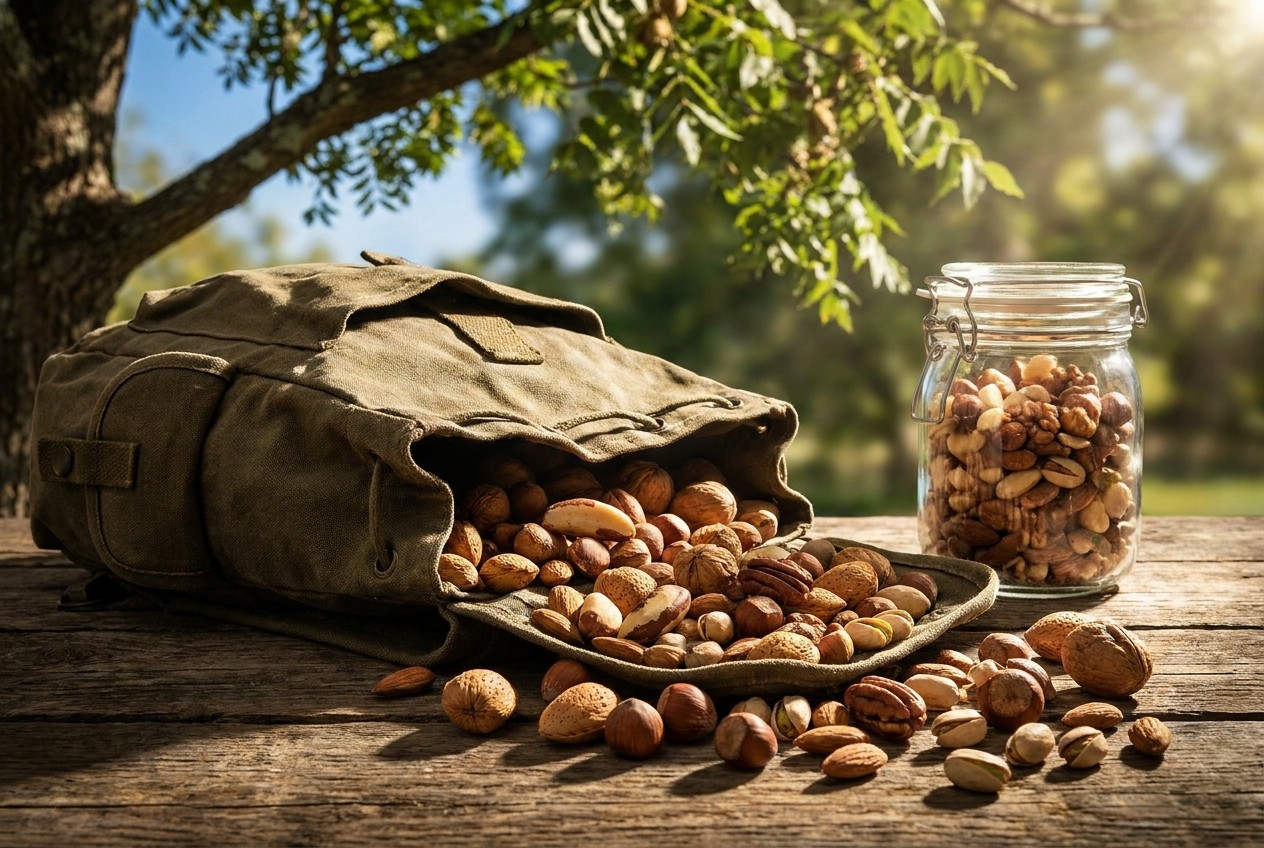
The report stated that nuts can be purchased in small packages and carried in survival backpacks, pouches and pockets. According to the article, all the nuts mentioned share some traits. They are light, small-sized and, if preserved in a proper place and manner, they can last a long time [1].
The article said the nut family covers a large variety, and that preppers may ignore facts about country of origin, nutritional content and best methods of conservation. The report stated that the clever and quick answer to which are the best nuts for survival is all of them [1].
Historical and Agricultural Background
The article mentioned historical information about some of the nuts. It quoted "1984" and "Animal Farm" writer George Orwell's notes about the rarity of planting walnuts, observing that a walnut tree is generally planted for one's grandchildren.
According to the article, the pecan tree was declared the state tree of Texas in 1919, and the pecan was named the health nut in 2001. The report stated that San Saba, Texas, became known as The Pecan Capital of the World. Meanwhile, pistachios are native to Central Asia and were cultivated as food as early as 6750 BC, with pistachio trees said to have been in the Hanging Gardens of Babylon around 700 BC.
Nutritional Data and Health Findings
The report stated that 1 ounce of almonds, about 24 almonds, contains 160 calories, 6 grams of carbohydrate, 1 gram of sugar, 4 grams of fiber, 14 grams of total fat, 75 milligrams of calcium, 1 milligram of iron, 76 milligrams of magnesium, 0.3 milligrams of riboflavin, 210 milligrams of potassium, and vitamins E and B2. The article also reported that almonds are good as antioxidants.
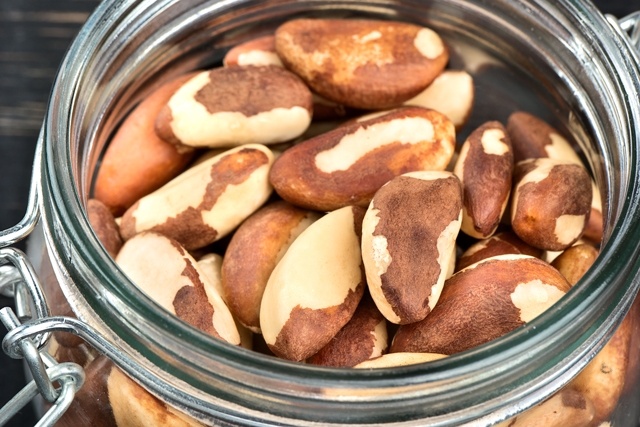
According to the article, 1 ounce of Brazil nuts, about 3 nuts, contains 99 calories, 2.15 grams of protein, 10.06 grams of fat, 1.76 grams of carbohydrate, 1.10 grams of fiber, 109 milligrams of phosphorus, 22 milligrams of potassium, 56 milligrams of magnesium, and vitamins B6 and E.
According to the article, 20 grams of hazelnuts provide 176 calories, 17 grams of fat, 4.2 grams of protein, 4.7 grams of carbohydrate and 2.7 grams of fiber, with magnesium at 12 percent, manganese at 87 percent and copper at 24 percent of recommended daily intake, plus vitamins B and E.
According to the article, 28.3 grams of pecan deliver 196 calories, 20 grams of fat, 116.2 milligrams of potassium, 4 grams of carbohydrate, 3 grams of protein, 0.7 milligrams of iron, 34.3 milligrams of magnesium, and vitamins C and B6.
Suitability for Survival Storage and Field Use
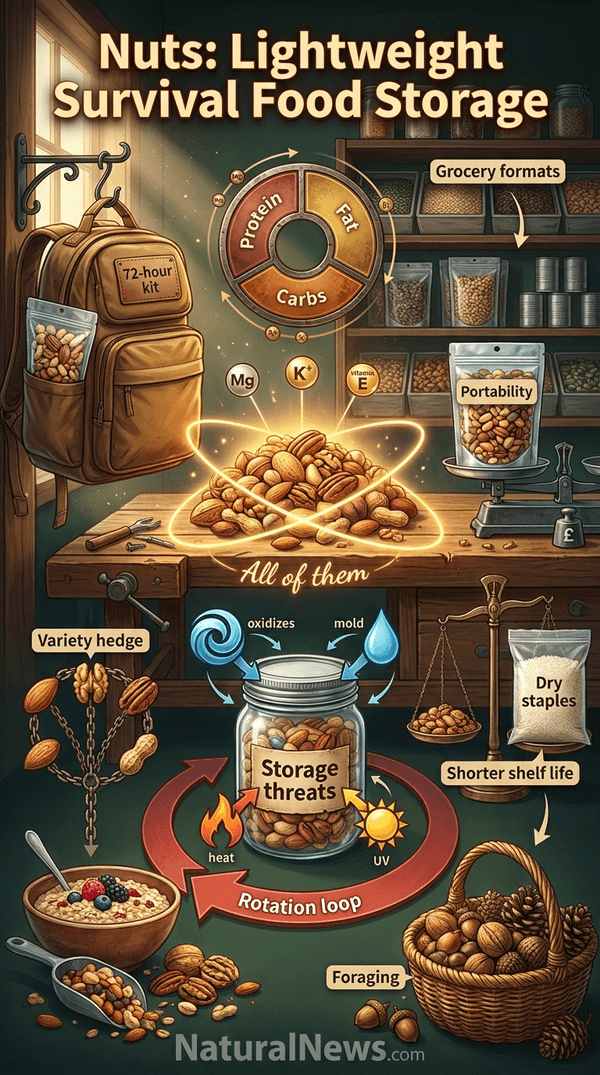
The report stated that the best nuts for survival are all of them, because all nuts cited are light, small-sized and can last a long time when properly preserved [1]. According to the article, crushed nuts can still be eaten or used to make flour.
The article reported that Brazil nuts, macadamia nuts and pistachios can be expensive, especially when imported, while almonds, hazelnuts and walnuts are easy to acquire in most locations.
Conclusion
According to the report, people with land can cultivate walnuts, hazelnuts and pecan trees to grow their own sustainable food.
Separate reporting from NaturalNews.com notes that foods containing oils or fats, including nuts, have significantly shorter shelf lives than dry staples and are not suitable for long-term storage, with oxygen, moisture, heat and light identified as the four primary enemies that degrade stored food [2].
For households treating nuts as part of a broader preparedness strategy, the report's inventory of historical background, USDA-derived nutrition figures and field-tested preparation methods provides a reference point.
References
- Best Nuts for Survival - The Prepper Journal. https://theprepperjournal.com/2021/10/26/best-nuts-for-survival/
- Long-Term Food Storage: Foods That Last Decades and Proper Storage Methods. https://www.naturalnews.com/2026-07-22-foods-that-last-decades-proper-storage-methods.html
Explainer Infographic






Please contact us for more information.


