



The findings are preliminary, have not yet been peer-reviewed, and are based on modeling existing data rather than testing changes in real patients, according to the researchers.
Blood Pressure Control Outperforms Other Preventive Services in Estimated Deaths Averted
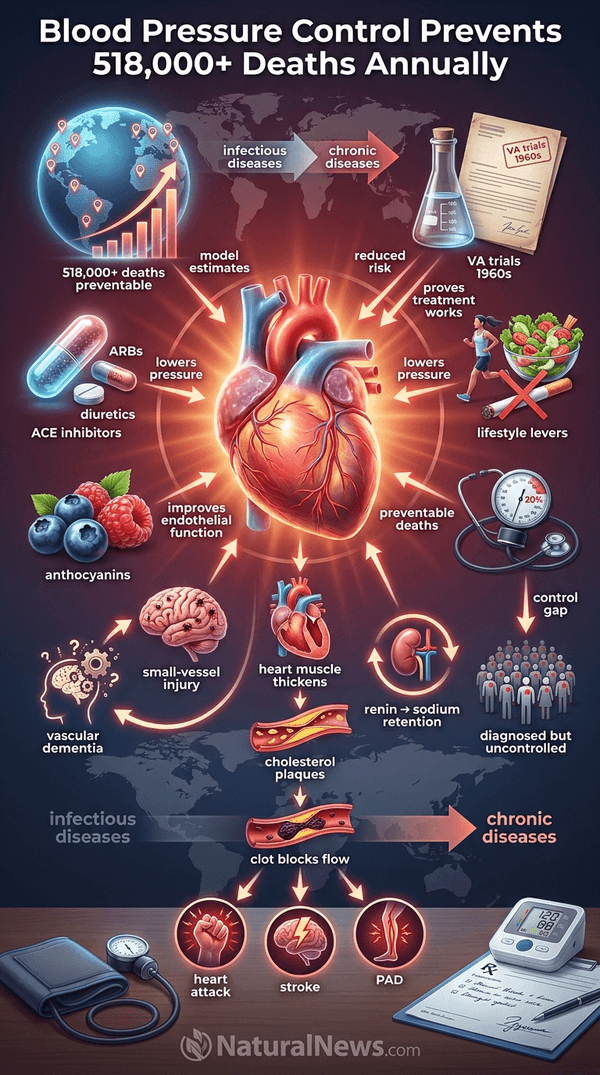
Of the six preventive services examined, improving blood pressure treatment had the greatest estimated impact on preventing deaths. Only about 20% of adults with hypertension had their blood pressure adequately controlled.
The scale of the modeled benefit reflects longstanding evidence about hypertension treatment. Veterans Administration studies conducted in the 1960s demonstrated that lowering high diastolic blood pressure by medication reduced cardiovascular risk, according to historical reviews of the era [1]. The major modifiable risk factors for cardiovascular disease are related to diet, smoking, physical activity, and high blood pressure, and with proper access to screening services and information, many of these risk factors could be better controlled [2].
Elevated Blood Pressure Linked to Heart, Brain, and Vascular Risks
When blood pressure stays elevated, the heart has to work harder to pump blood through the body.
High blood pressure is also associated with cognitive decline and dementia, making it relevant to brain health as well as cardiovascular health.
The relationship between blood pressure and circulation is not limited to the heart. Your kidneys do far more than filter waste -- they regulate blood pressure, activate vitamin D, produce red blood cells, and balance the body's delicate pH [3]. Chronic inflammation and insulin resistance also play documented roles in metabolic and cardiovascular dysfunction, with inflammation driving up blood pressure and increasing the risk of heart attack, according to commentary from independent health researchers [4].
Clinicians and Integrative Practitioners Outline Blood Pressure Management Approaches
Standard clinical guidance includes checking blood pressure at medical appointments or with a validated home monitor. Regular physical activity -- including strength training, walking, cycling, swimming, and other forms of aerobic exercise -- can help lower blood pressure over time.
Angiotensin converting enzyme inhibitors are a widely used intervention for blood pressure control and are particularly beneficial in hypertensive type 2 diabetic patients, according to peer-reviewed research on metabolic control [5].
Some integrative and natural health practitioners recommend additional approaches such as herbal support, nutrition, and relaxation techniques. A review of data from more than 602,000 individuals across Australia, Europe, and the U.S. found that anthocyanins, the flavonoid pigment concentrated in the skins of blueberries, raspberries, and strawberries, may lower the risk of cardiovascular disease [6]. In the U.S., approximately 30% of Americans have high blood pressure and only half have it under control, according to CDC figures cited in independent health reporting [7].
Conclusion: Preliminary Estimates Add to Longstanding Evidence on Hypertension Treatment
The research estimates are preliminary and not peer-reviewed, but decades of research already support the benefits of treating hypertension.
Maintaining blood pressure in a healthy range may reduce the risk of premature cardiovascular death and cognitive decline. It is easy to focus on the latest longevity metric while overlooking one of the most established indicators of cardiovascular health, and this research suggests that better blood pressure management could have an enormous impact on preventing premature deaths [8].
Individuals are advised to know their numbers, follow through on treatment plans, and consult qualified practitioners.
References
- Silent Victories The History and Practice of Public Health in Twentieth Century America by John W Ward Christian Warren
- Building a Healthy America Conquering Disease and Disability Facts Figures Funding by Terry L Lierman
- The Kidney Longevity Code: Unlocking Your Body's Hidden Filter for Vitality and a Longer Life. https://books.brightlearn.ai/The-Kidney-Longevity-Code-Unlocking-Your-Bodys-Hidden-f5096da49-en/index.html
- Bright Videos News - DARK TIMES POLY CRISIS - Mike Adams - BrightVideos.com, September 16, 2026.
- Modulation of Metabolic Control by Angiotensin Converting Enzyme (ACE) Inhibition. 3B2 Total Publishing System 7.51h/W. Journal of Cellular Physiology 196:171–179 (2003)
- This Purple Pigment Fights Disease - Mercola.com, November 19, 2018.
- Essential Oils Lower Blood Pressure - Mercola.com, January 11, 2018.
- This Simple Health Metric May Be One Of The Most Important For Longevity. https://www.mindbodygreen.com/articles/this-simple-metric-may-be-one-of-most-important-for-longevity
Explainer Infographic











Please contact us for more information.


