



Within days, Elon Musk was telling investors that 100,000 laser-linked Starlink satellites could "outcompete undersea cables." The fear of sabotage may be real, but the remedy raises a harder question: when a threat to shared infrastructure becomes the sales pitch for a private substitute, who ends up owning the internet's lifeline and therefore controlling the fate of vessels and shipping routes?
Key points:
- ZeroHedge reported Nov. 8 that Starlink is building a parallel internet backbone in low Earth orbit as undersea cable sabotage threats mount.
- The Financial Times reported that at least four Iran-linked vessels looped, loitered or went dark over cable corridors off Oman in October.
- Two senior Iranian security officials told Reuters that Tehran has plans to target Persian Gulf cables, and to hinder repairs, if the United States and Israel attack again.
- Musk said roughly 100,000 satellites with about 100 lasers each could rival cables, though he also spoke of 10 lasers per satellite at 10 terabits each.
- SpaceX's plan for 100,000 Gen3 satellites remains an application before the Federal Communications Commission.
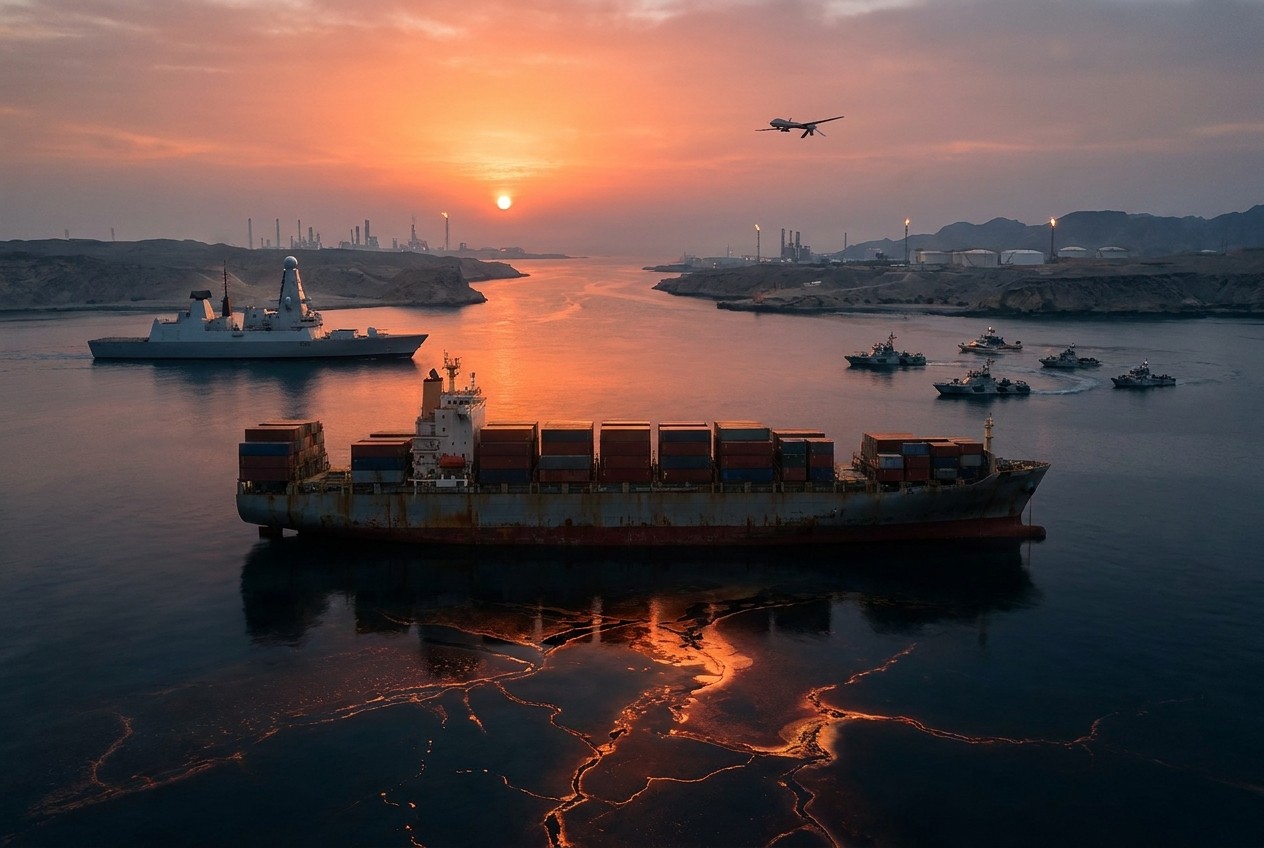
Let's start with the ships. Windward told the Financial Times that the most striking case was Celestial Sea, an Iranian-flagged products tanker sanctioned by the United States last year and boarded by U.S. Marines in the Gulf of Oman in May. According to Iran International's summary of the report, it slowed over the 2Africa cable, turned 180 degrees toward Oman and went dark. BigGo Finance, citing the same tracking, says the vessel lingered near 2Africa for more than four hours on Oct. 14. At least four vessels were involved, three of them U.S.-sanctioned tankers, according to the Financial Times. The fourth was a small Iranian fishing boat, and one analyst quoted there suggested Tehran may simply be demonstrating that it could threaten undersea infrastructure in a future conflict.
Tehran has given observers little reason to relax. Two senior Iranian security officials told Reuters on Oct. 23 that Iran had drawn up detailed plans to hit Persian Gulf cables if Washington and Israel strike again, and one declared there would be "no more red lines." The officials said the plan would try to block repairs and prolong any outage. That is not idle talk to repair crews. In May, Windward reported that Alcatel Submarine Networks, the world's largest cable-laying company, paused repair work in the Gulf after Iran demanded permits and "protection fees" for seabed infrastructure.
The geography is unforgiving. Windward counts six operational cable systems crossing the Strait of Hormuz, including 2Africa, AAE-1, FALCON and Gulf Bridge International, while other outlets cite seven. Iraq, Kuwait, Bahrain and Qatar have every subsea cable they use landing inside the Persian Gulf, leaving no route that bypasses the strait. TeleGeography estimates that bandwidth crossing Hormuz is under 1 percent of the world total, yet for those four nations satellites would be a genuine backup rather than a spare.
A private backbone in low orbit
Into the fray stepped Elon Musk. In a Friday conversation with investor Ron Baron and in a post on X, he said a constellation of more than 100,000 satellites, each carrying about 100 lasers running above 10 terabits per second, could beat undersea cables. He added that light travels about 40 percent faster in space than through cable and that the path is direct instead of tracing the outline of land masses. Starlink V4, he told Baron, would carry 10 times the capability of V3, and he described the next-generation link as "10 Tbps each."
Reality trails the rhetoric. V3 satellites weigh about 2,000 kilograms, need Starship to launch and offer about 1 terabit per second of downlink. Starship deployed the first 26 on Sept. 28. More than 11,000 working Starlink satellites fly today, and SpaceX has asked the Federal Communications Commission to operate up to 100,000 Gen3 satellites, an application that remains pending. The world's subsea cables together carry roughly 6.4 petabits per second, BigGo notes, but Musk's laser math describes the relay layer in space, not the capacity that reaches the ground.
Critics see more than redundancy. Technocracy News declared that Musk will soon be positioned to "replace all fiber cable on earth" with his satellite mesh. The concern is ownership. The 2Africa system, for example, is backed by a consortium that includes Meta, Orange, Vodafone, China Mobile and Telecom Egypt. A satellite backbone consolidates that shared stake in one company that the Associated Press describes as "inextricably linked" with core U.S. government functions. Musk also said SpaceX's annualized revenue could exceed $500 billion by December 2027. Meanwhile, the AP reported that Chinese military researchers have published dozens of papers exploring ways to hunt and destroy Starlink satellites.
The sabotage fear has a record. Baltic cables between Finland and Germany were severed in 2024, and after another cut in early 2025, NATO mounted its first coordinated response to suspected sabotage of undersea infrastructure. Independent researchers also note that most cable damage worldwide is accidental, with 150 to 200 incidents each year, which makes any single sabotage claim hard to prove and any single remedy easy to sell.
Sources include:









Please contact us for more information.


