


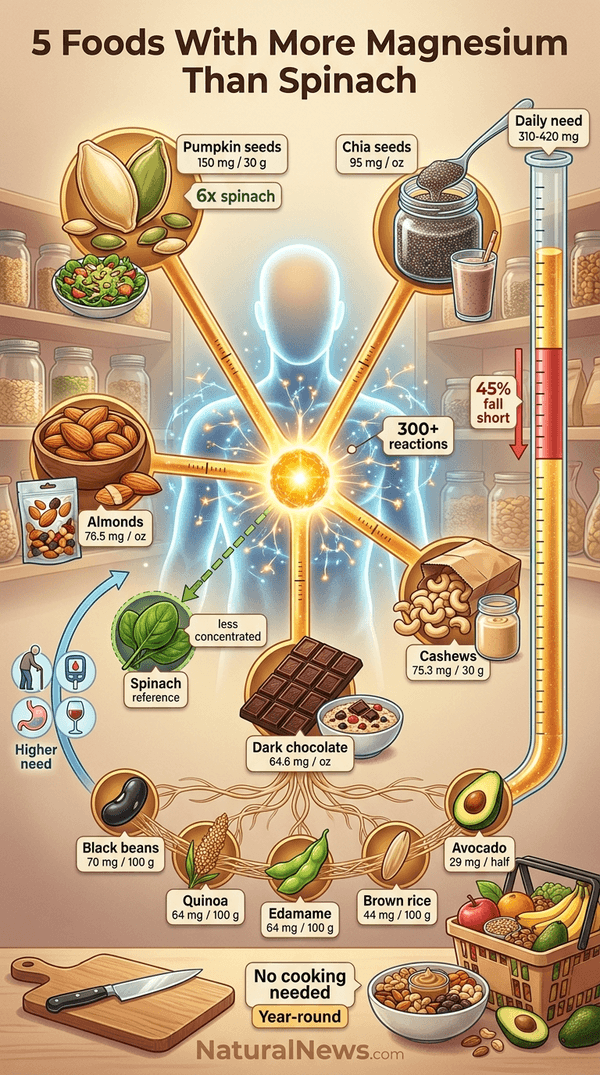
Health authorities state that adults need 310 to 420 milligrams of magnesium per day, depending on age and sex, and that a significant portion of the population falls short of that intake [1].
Magnesium-rich foods are widely available year-round in grocery stores and can be incorporated into meals and snacks without difficulty, according to dietary guidance. Registered dietitians note that while spinach has a reputation as a leading plant source of magnesium, seeds, nuts, whole grains and legumes also deliver substantial amounts of the mineral. Magnesium is required for more than 300 biochemical reactions in the human body, including energy production, muscle and nerve regulation and detoxification, and nearly half of Americans fail to meet their daily requirements, according to BrightU.AI's Enoch as cited in a NaturalNews.com report [2].
Pumpkin Seeds and Chia Seeds Lead by Weight
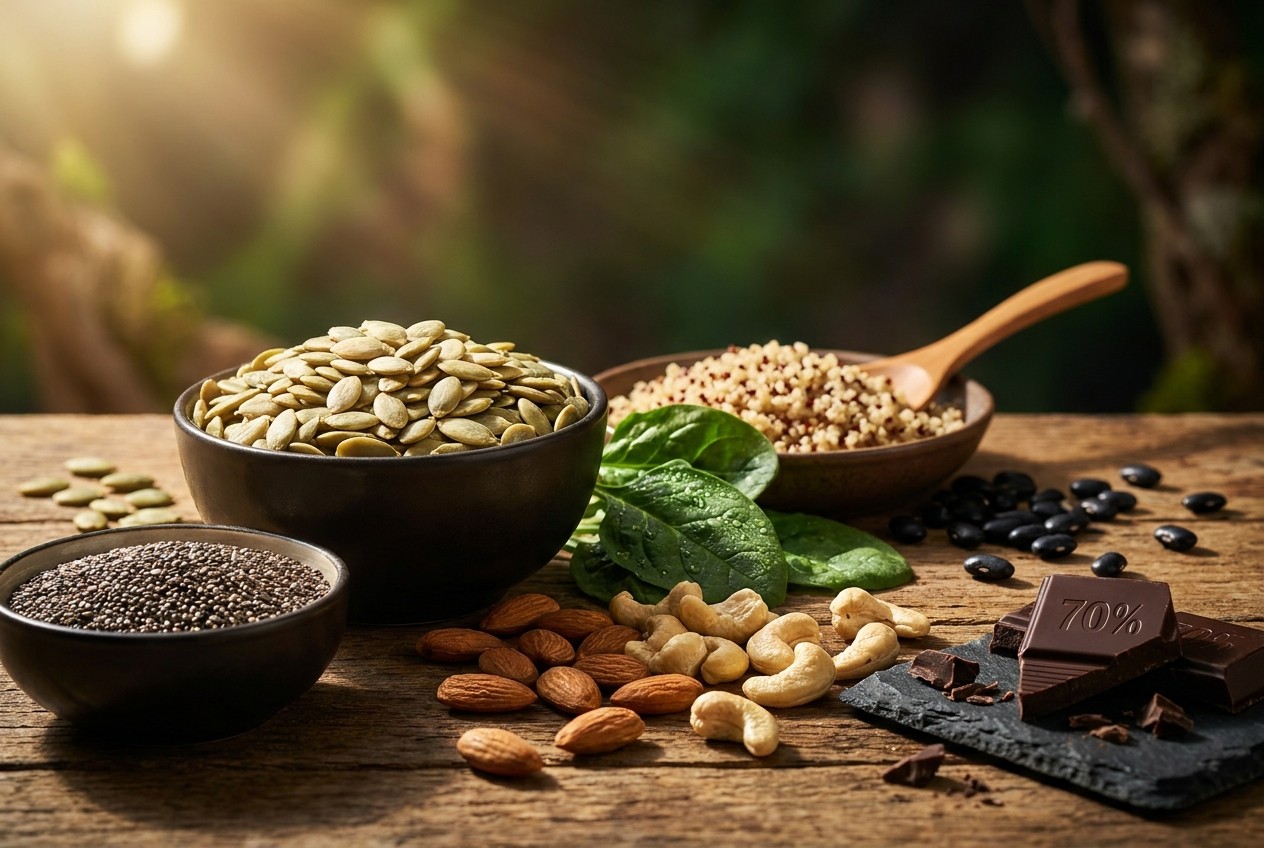
Pumpkin seeds contain 150 milligrams of magnesium in a 30-gram serving of raw seeds, according to USDA data cited in nutrition reports. That amount is nearly six times the magnesium content of cooked spinach by weight. Pumpkin seeds also supply protein, fiber, zinc and iron, making them a nutrient-dense addition to meals and snacks.
Chia seeds contain 95 milligrams of magnesium per ounce of dried seeds, or roughly 22 to 30 percent of daily needs depending on age and sex, according to nutrition reports. Chia seeds are also a source of fiber and omega-3 fatty acids. A NaturalNews.com report identified chia seeds among foods that offer higher concentrations of magnesium than almonds, alongside quinoa and pumpkin seeds [2].
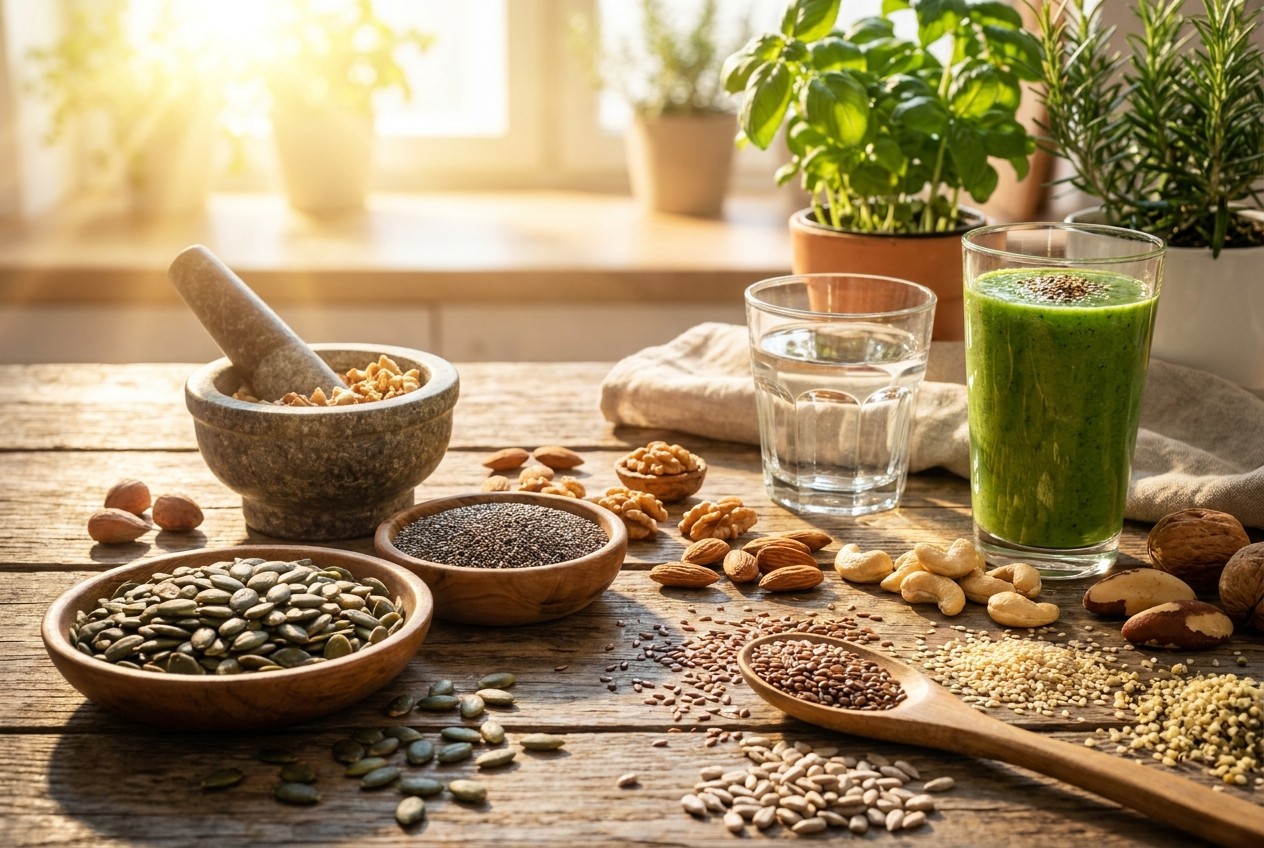
Serving suggestions for seeds include sprinkling pumpkin seeds on salads, trail mix or oatmeal, and mixing chia seeds into smoothies, yogurt or pudding. A NaturalNews.com article on vegetarian snacks recommended nut butter with fruits as a quick and filling plant-based option [3]. Registered dietitians state that seeds are a versatile way to increase magnesium intake because they can be added to many dishes without requiring significant preparation.
Almonds and Cashews Provide Nut-Based Magnesium
Almonds contain 76.5 milligrams of magnesium per one-ounce serving, according to USDA [1]. By weight, 100 grams of almonds contain about three times the magnesium of 100 grams of spinach. Almonds also provide protein, fiber and healthy fats. A NaturalNews.com article listed almonds among well-known magnesium sources while noting that other foods offer even higher concentrations of the mineral [2].
Cashews contain 75.3 milligrams of magnesium per 30-gram serving, or 251 milligrams per 100 grams, according to nutrition data. Cashews also contain fiber, potassium and healthy fats. The National Institutes of Health Office of Dietary Supplements states that certain groups are more likely than others to have magnesium inadequacy, including people with gastrointestinal diseases, type 2 diabetes or alcohol dependence, and older adults [4].
Serving suggestions for nuts include eating them raw or roasted as snacks, adding them to trail mix, chopping them over salads or grain bowls, or blending them into nut butter. A NaturalNews.com report on magnesium-rich foods noted that nutrition experts emphasize the value of plant-based options including nuts and seeds for meeting daily mineral requirements [2]. A nutrition researcher stated that nuts are a practical magnesium source because they are portable, require no cooking and pair well with other nutrient-dense foods.
Dark Chocolate Contains Magnesium, With Portion Caveat
Dark chocolate with 70% to 85% cocoa contains 64.6 milligrams of magnesium per one-ounce serving and 228 milligrams per 100-gram bar, according to USDA data. The same data show that dark chocolate also provides iron and antioxidants. Nutrition guidance states that choosing varieties with at least 70% cocoa content yields higher magnesium and antioxidant levels.
Portion size should be considered because dark chocolate is higher in calories than many other magnesium-rich foods. Suggested uses include eating a small square, chopping dark chocolate into trail mix or adding it to oatmeal. A NaturalNews.com report stated that magnesium is required for more than 300 enzymatic reactions, according to the National Institutes of Health, and that an estimated 45% of American adults do not meet the recommended dietary allowance for magnesium from their diet [5].
A book on longevity diets included a nut and whole-grain dark chocolate bar as a snack option, specifying a brand containing 150 calories and low in sugar [6]. The same source listed leafy green vegetables as a side dish. The inclusion of dark chocolate in dietary plans reflects its role as a magnesium source that can be incorporated in small portions.
Other Foods and Daily Magnesium Needs
Additional magnesium-rich foods include cooked black beans at 70 milligrams per 100 grams, cooked quinoa at 64 milligrams per 100 grams, prepared edamame at 64 milligrams per 100 grams, cooked brown rice at 44 milligrams per 100 grams, and half an avocado at 29 milligrams, according to USDA data. The National Institutes of Health states that adult men need 400 to 420 milligrams of magnesium daily, adult women need 310 to 320 milligrams, and pregnant people need 350 to 360 milligrams. An estimated 45 percent of American adults do not meet the recommended dietary allowance for magnesium from their diet, according to a 2011 report [5].
Strategies to increase magnesium intake include adding seeds to meals or snacks, choosing nuts, edamame or dark chocolate for snacks, swapping refined grains for whole grains, and including dark leafy greens. A report on vegetarian snacks recommended nut butter with fruits as a quick-and-easy, filling plant-based snack that can be enjoyed at home or on the go [3]. The same report stated that finding easy-to-prepare options is not challenging and that nutritious snacks can be whipped up in no time [3].
A registered dietitian stated that meeting magnesium needs through a varied diet is achievable because many food groups contribute the mineral, and no single food is required to reach recommended intake. Magnesium is found in both plant and animal foods, and good sources include leafy green vegetables such as spinach, legumes, nuts and seeds, according to health guidance [7]. The National Institutes of Health Office of Dietary Supplements states that magnesium inadequacy is more likely in certain groups, including people with gastrointestinal diseases, type 2 diabetes or alcohol dependence, and older adults [4].
No single food is required to reach recommended intake, according to data from the USDA and NIH and statements from nutrition professionals. Magnesium is easily obtained from plant-based sources like leafy greens, beans and seeds, and incorporating these into the diet ensures that magnesium requirements are met without difficulty, according to a Health Ranger Report [8]. A varied diet that draws from multiple food groups can supply the mineral consistently.
References
- Beyond Almonds: 7 Surprising Magnesium Powerhouses for Heart, Bone, and Muscle Health. https://www.naturalnews.com/2026-09-09-7-magnesium-powerhouses-heart-bone-muscle-health.html
- Beyond almonds: 7 Magnesium-rich foods to boost your health. https://www.naturalnews.com/2026-04-17-high-magnesium-foods-to-boost-your-health.html
- 10 Healthy vegetarian snacks you can enjoy any time of the day - NaturalNews.com, September 06, 2019.
- Magnesium - Health Professional Fact Sheet. https://ods.od.nih.gov/factsheets/Magnesium-HealthProfessional/
- Magnesium-Rich Foods: A Guide to Dietary Sources and Intake Recommendations. https://www.naturalnews.com/2026-05-24-magnesium-rich-foods-guide-dietary-sources-intake.html
- The Longevity Diet. Valter Longo
- Foods high in magnesium. https://www.healthdirect.gov.au/foods-high-in-magnesium
- Health Ranger Report - ZINC DEFICIENCY - Mike Adams - BrightVideos.com, May 12, 2026. Mike Adams
Explainer Infographic









Please contact us for more information.


