


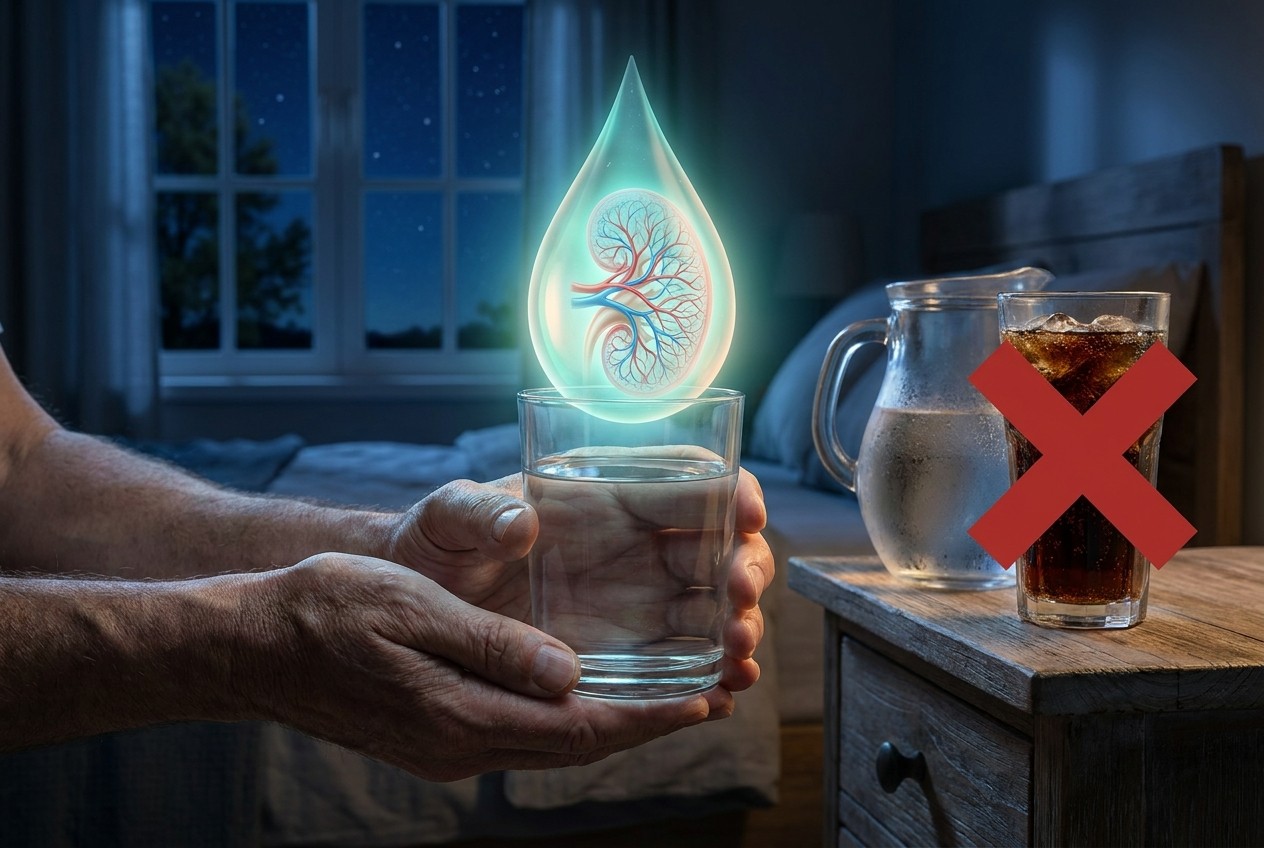
The recommendation restates longstanding guidance from kidney health organizations. A separate clinical summary reached a similar conclusion, noting that while no drink can "cleanse" or detox the kidneys, proper hydration supports the organs' essential filtering work, and that water remains the simplest and most reliable choice for most healthy adults [1].
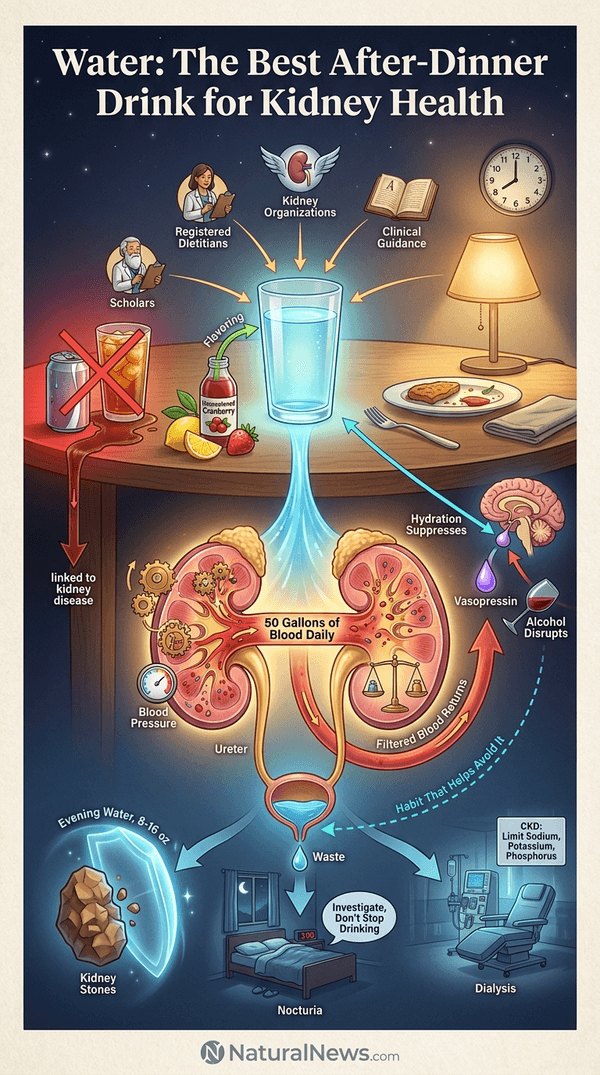
The kidneys filter waste and excess fluid from the blood, balance minerals such as sodium and potassium, and play a role in managing blood pressure. National Kidney Foundation materials state the organs rely on water to carry out that filtration work. Meanwhile, NaturalNews.com reported in September 2026 that the kidneys filter roughly 50 gallons of blood every day, removing waste, balancing minerals, and maintaining blood pressure [2][3].
Hydration Supports Kidney Filtration and Reduces Stone Risk, Experts Say
Clinical guidance in a book on kidney protection states that protecting the kidneys is much like protecting any other organ in the body: through weight control, proper nutrition, and adequate hydration [4].
A textbook on natural medicine describes the process in detail, explaining that most of the blood entering the kidney is reabsorbed, while excess water, waste products, and toxins pass through a tube called the ureter into the bladder for storage, a cycle that occurs continuously throughout the day and night in small amounts [5].
Drinking enough water in the evening, before the long stretch without fluids overnight, is described as one of the most important ways to prevent kidney stones. A National Kidney Foundation article cites a 2024 study based on participants' self-reported intake suggesting that drinking more than one serving of sugar-sweetened or artificially sweetened beverages per day was linked to an increased risk of developing kidney disease [2].
Adequate hydration helps suppress vasopressin, a hormone that tells the kidneys to conserve water, according to Kelly L. Burgess, RD, LDN, a registered dietitian and the founder of To Better Health, LLC. A nutrition textbook notes that alcohol depresses production of the antidiuretic hormone, also known as vasopressin, by the pituitary gland in the brain [6].
Dietitians Offer Guidance for Evening Water Intake
The dietitians advised aiming to drink about eight to 16 ounces of water between dinner and bedtime, though individual hydration needs can vary [10].
A men's health reference book notes that nocturia, or the need to wake from sleep to urinate, has many causes and that enlargement of the prostate is actually rather low on the list, a finding that reshaped how clinicians approach the problem [7]. A separate guide states that nocturia is worth discussing with a doctor because it can be a symptom of chronic urinary tract infections, cystitis, or benign prostatic hyperplasia [4].
Adding whole fruit, citrus, or unsweetened cranberry juice for flavor was recommended by Erin Jowett, MS, RD, LDN, dietitian and founder of Integrative Weight & Wellness.
A kidney-focused summary of hydration research published by NaturalNews.com in September 2026 states that current evidence offers clearer guidance on which drinks support the kidneys and which stress them [3].
Some Patients Advised to Consult Providers Before Increasing Water Intake
These conditions can make it harder for the kidneys to remove excess fluid, potentially leading to a buildup [10].
The federal guidance on chronic kidney disease (CKD) echoes the caution. The National Institute of Diabetes and Digestive and Kidney Diseases states that what a person eats and drinks can help the kidneys maintain a healthy balance of salts and minerals, and that choosing healthy foods and beverages, and avoiding foods high in sodium, potassium, and phosphorus, may prevent or delay some health problems from CKD [8].
A men's health encyclopedia describes dialysis as a short-term or long-term treatment for end-stage renal disease, with hemodialysis being the most common method used in the United States and peritoneal dialysis performed at home but on a daily basis [9].
NaturalNews.com reported that kidney disease affects an estimated 37 million U.S. adults, with many more at risk because of diabetes and hypertension [3].
Federal guidance likewise advises that dietary and fluid choices may affect how well kidney disease treatments work [8].
References
- The #1 After-Dinner Drink for Better Kidney Health, According to Dietitians. https://drfarrahmd.com/2026/09/the-1-after-dinner-drink-for-better-kidney-health-according-to-dietitians/
- Top 4 Best and Worst Drinks for... | National Kidney Foundation. https://www.kidney.org/news-stories/healthy-hydration-your-kidneys-what-to-sip-and-what-to-skip
- Your kidneys need these drinks: What science says about hydration and organ health. https://www.naturalnews.com/2026-09-25-kidneys-need-these-drinks-hydration-organ-health.html
- The 17-day plan to stop aging by Moreno Mike 1968
- Your Natural Health Makeover The Dynamic New Head To Toe Rejuvenation Program for Lifelong Health. by Lauri M Aesoph
- Nutritional Concerns In Recreation, Exercise, And Sport.
- The Harvard Medical School guide to men's health. by Simon Harvey B Harvey Bruce 1942
- Healthy Eating for Adults with Chronic Kidney Disease - NIDDK. https://www.niddk.nih.gov/health-information/kidney-disease/chronic-kidney-disease-ckd/healthy-eating-adults-chronic-kidney-disease
- The Encyclopedia of Men's Health. by Glenn S Rothfeld Deborah S Romaine-1.
- The Best After-Dinner Drink for Kidney Health, According to Dietitians. https://www.health.com/best-after-dinner-drink-kidneys-12126537
Explainer Infographic





Please contact us for more information.


