



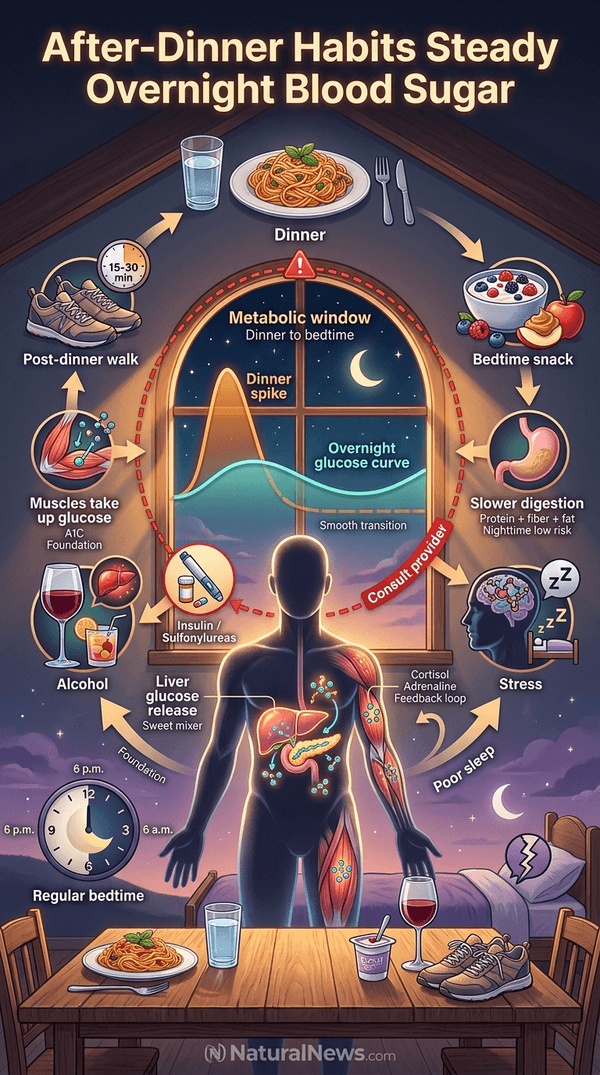
Five post-dinner behaviors have drawn attention in recent guidance: taking a short walk, rethinking the bedtime snack, limiting alcohol, reducing stress, and keeping a regular bedtime. The American Diabetes Association recommends consistent sleep routines as part of diabetes care, according to the organization.
Officials said people taking insulin or sulfonylureas should consult healthcare providers before changing evening routines, because those medications carry a risk of low blood sugar overnight.
Short Walk After Dinner
A small study found that people who walked for 10 minutes after consuming a glucose solution had a smaller two-hour blood sugar rise than those who did not walk, according to researchers. The finding supports guidance that recommends a 15- to 30-minute walk after dinner; movement throughout the evening may also help lower post-dinner blood sugar [1].
Activity after a meal is not limited to a single stroll. Guidance from health professionals states that light evening movement, such as a post-dinner walk, can improve blood sugar and support overall health [2]. One report described a 15- to 30-minute walk after dinner as "your evening constitutional" and one of the simplest ways to improve overnight glucose [1].
People on insulin or medications that can cause low blood sugar should check glucose before an evening walk, according to guidance. Officials said a healthcare provider may adjust medication or recommend a snack to prevent a nighttime low. Blood sugar management is described as a 24/7 effort in published guidance [1].
Bedtime Snack Choices
A snack combining protein, fiber, and fat -- such as yogurt with berries or an apple with peanut butter -- may slow digestion, officials said.
Mayo Clinic guidance states that if a person is still hungry, they should eat a low-carbohydrate, low-calorie snack and pick one that is high in protein or fiber, such as Greek yogurt or air-popped popcorn [3].
People on insulin or medications that can cause low blood sugar may be advised by their care team to have a bedtime snack. Officials said those individuals should not skip it without checking with their provider. Book guidance notes that low blood glucose levels can have a negative impact on sleep and that people taking insulin or other blood sugar medication may be at risk of lows overnight [4].
Alcohol and Overnight Glucose
Alcohol may make blood sugar harder to predict overnight; sugary mixers may raise glucose initially but do not reliably prevent a low hours later, according to researchers. Published guidance lists alcohol among the factors that can disrupt rest and influence high blood sugar before sleep [5].
Alcohol can reduce the liver's release of glucose when needed, a concern for people taking insulin or sulfonylureas, officials said. Guidance for heart health states that if a person is unable to abstain, the reason could be self-medicating with alcohol or alcohol use disorder, and recommends seeking the advice of a healthcare provider [6].
Alcohol can disrupt sleep and mask low blood sugar symptoms such as confusion and trouble walking, according to guidance. If people drink, officials recommend moderation and consuming alcohol with food.
Stress Reduction and Sleep Routine
Stress can raise blood sugar by triggering cortisol and adrenaline release; ongoing stress may make blood sugar harder to manage and interfere with sleep, researchers said. One clinical text documents a direct relationship between stress, increased secretion of cortisol and impaired sleep patterns, and states that decreased sleep hours or decreased sleep quality both lead to an increase in cortisol [7].
Mindfulness practices such as meditation may help reduce stress and improve A1C over time, according to research cited. A double-blind trial that followed 52 chronically stressed adults reported improvements in stress scores, food cravings, body weight and body mass index in participants who took ashwagandha, according to a report on the study [8].
A few minutes of slow breathing, listening to music, or stretching before bed may help relaxation, officials said. The American Diabetes Association recommends going to bed and waking around the same time each day. Studies have linked improved sleep habits to lower A1C over time, according to the association. Guidance also notes that a good night's sleep supports better diabetes management the next day [9].
Conclusion
Five post-dinner habits -- walking, snack planning, limiting alcohol, unwinding, and maintaining a regular bedtime -- may support steadier overnight blood sugar, according to health officials. Published guidance similarly groups light evening movement, an earlier fiber-rich dinner and other nighttime choices as habits that can help people stay ahead of blood sugar swings [2].
Effects vary, and one good night of sleep will not necessarily change blood sugar the next morning, researchers said. Tracking data over time may help people and their providers identify patterns; one clinical guide states that people who know their blood sugar throughout the day and are able to use the information tend to have the best overall control [10].
People with diabetes or prediabetes should consult healthcare providers before changing medication or evening routines, officials said. More research is needed on long-term outcomes, according to the report.
References
- Maintaining Healthy Morning Blood Sugar: 10... - Life Extension. https://www.lifeextension.com/wellness/lifestyle/morning-blood-sugar-levels
- 4 Things You Should Do After 5 P.M. for Better Blood Sugar .... https://www.eatingwell.com/afternoon-things-to-do-for-better-blood-sugar-11925148
- Late-night eating: OK if you have diabetes? https://www.mayoclinic.org/diseases-conditions/diabetes/expert-answers/diabetes/faq-20058372
- Sleep Reset by Natalie Pennicotte-Collier
- What Should Your Blood Sugar Be at Bedtime Without Diabetes? https://www.signos.com/blog/blood-sugar-bedtime
- Healthy Habits for Your Heart by Monique Tello-2
- The complete doctors stress solution understanding treating and preventing stress and stress-related illnesses by Kendall-Reed Penny
- Study Reveals How Ashwagandha Compounds Command Your Body to Burn Glucose Instead of Storing Fat. https://www.naturalnews.com/2026-09-26-how-ashwagandha-compounds-command-body-burn-glucose.html
- High Blood Sugar at Night: Causes, Symptoms, and Prevention. https://diatribe.org/diabetes-management/high-blood-sugar-night-what-do
- Think Like a Pancreas by Gary Scheiner
Explainer Infographic










Please contact us for more information.


