


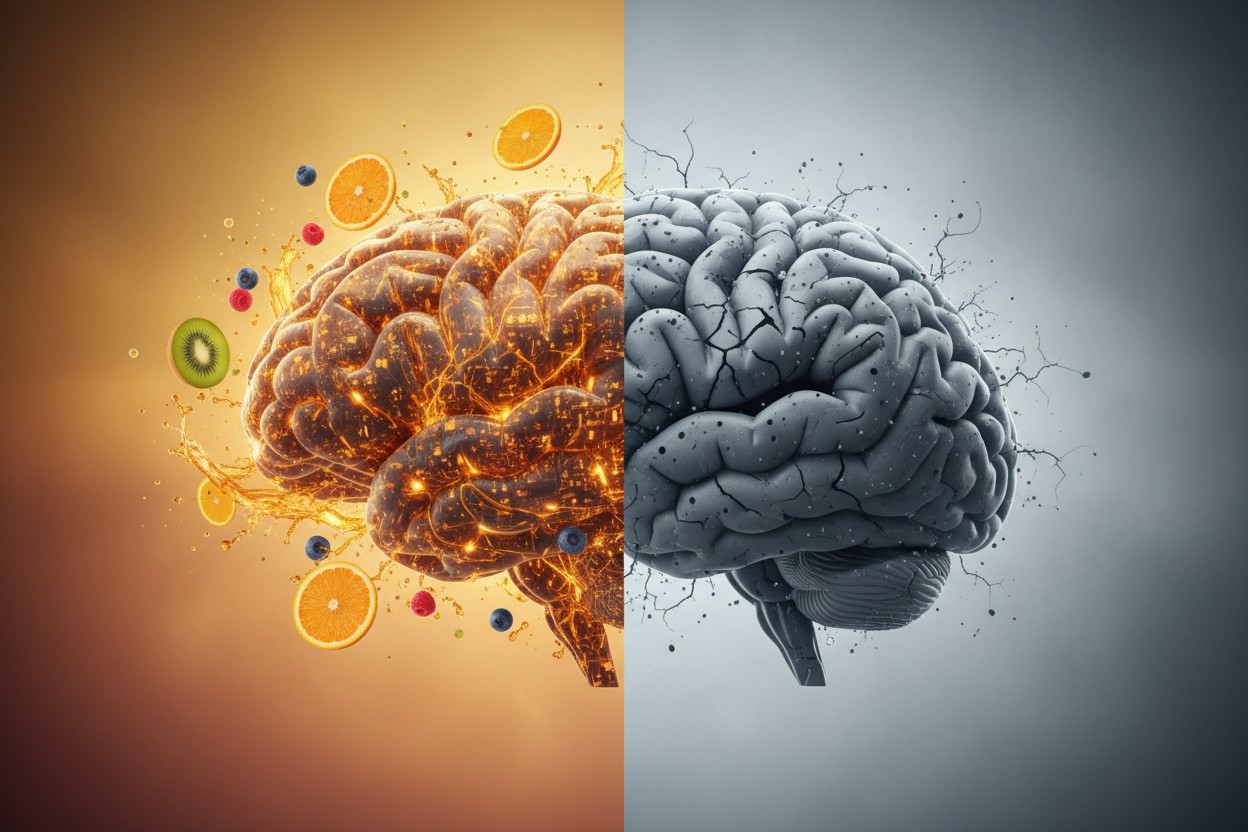
Researchers from Hirosaki University in Japan analyzed data from the Iki-Iki Health Promotion Project, a community-based study focused on risk factors for dementia and heart disease. Participants had an average age of 70 and underwent brain MRI scans after providing blood samples for vitamin C measurement, according to the report.
Dr. Thomas Holland, a clinician-researcher who studies cognitive aging and was not involved in the study, described the findings using an analogy. "Individuals with higher vitamin C levels appeared to have both more preserved 'buildings' and healthier 'roadways' connecting critical regions of the brain," Holland told the Epoch Times.
Study Details and Key Findings
The study analyzed brain MRI scans and blood plasma samples from 2,044 Japanese adults over age 64, according to a report on the findings published by NaturalNews.com [1]. Each participant provided a blood sample after an overnight fast, and plasma vitamin C concentrations were measured.
Participants then underwent brain MRI scans using the same high-powered scanner, allowing researchers to assess gray matter volume and structural connectivity within the default mode network – a system of brain regions involved in memory, self-reflection and other higher-order cognitive functions [2].
Gray matter is the tissue in the brain and spinal cord that supports thinking, memory, movement, and information processing [3]. The analysis adjusted for age, sex, smoking, diabetes and other lifestyle variables [4].
Lead author Dr. Tomohiro Shintaku, assistant professor at Hirosaki University, said the association remained after adjusting for age, sex, cognitive status, education and lifestyle factors such as smoking, drinking, and physical activity. "Structural loss and decreased connectivity within the DMN are known early clinical manifestations of cognitive impairment, such as in Alzheimer's disease and mild cognitive impairment," Shintaku told the Epoch Times. The effect of vitamin C on brain structure was comparable in magnitude to established lifestyle and vascular risk factors, according to Shintaku.
Why Vitamin C Matters for the Brain
Vitamin C helps neutralize free radicals that accumulate with age, potentially protecting the structural integrity of brain tissue over time. It also supports the synthesis of neurotransmitters, the chemical messengers brain cells use to communicate, according to the study report.
Humans cannot produce vitamin C on their own and must obtain it entirely through diet. Rich sources include citrus fruits, berries, and leafy green vegetables.
The recommended dietary allowance is 75 milligrams (mg) per day for most adult women and 90 mg for most adult men. While some researchers have proposed that higher intakes may provide additional benefits by fully saturating body tissues, the optimal intake for long-term brain health has not yet been established.
Previous research has also linked vitamin C to better cognitive outcomes. A 2002 Netherlands study followed 5,395 people for six years and found that high intake of vitamins C and E was tied to an 18 percent lower risk of Alzheimer's disease, according to the study report.
A 2022 review of 12 studies likewise found that people with Alzheimer's disease consistently had significantly lower blood vitamin C levels than cognitively healthy adults. In addition, a 2012 article in Neurology reported that proper diet and specific nutrients can lower the risk of brain shrinkage by nearly forty percent, according to NaturalNews.com [5].
High-dose vitamin C is also recognized in clinical settings as a component of cognitive health support, according to Dr. Kirk Moore in a 2025 interview [6]. "Magnesium and high-dose vitamin C are also crucial components often overlooked in cognitive health," Moore said.
Limitations and Dietary Context
The researchers cautioned that the study does not prove vitamin C directly protects the brain. One reason is that people with higher vitamin C levels often have healthier lifestyles overall, according to the study report.
Older adults may be at greater risk of low vitamin C levels due to reduced appetite, less varied diets, and changes in digestion and absorption that occur with age, said Jen Scheinman, a New York-based registered dietitian nutritionist, in comments to the Epoch Times. Chronic health conditions, inflammation, and some medications can further increase the body's demand for vitamin C.
Holland noted that no single food or vitamin can prevent dementia. "But consistently eating a nutrient-rich diet – including plenty of vitamin C-rich fruits and vegetables – may help preserve cognitive function over the long term," Holland told the Epoch Times. He recommended a dietary pattern such as the Mediterranean or MIND diet.
Other natural approaches have also been shown to support brain volume and cognitive health. Jean Carper, in "100 Simple Things You Can Do to Prevent Alzheimer's and Age-Related Memory Loss," reported that people who meditate regularly tend to retain more brain gray matter and show less cognitive decline as they age [7]. Similarly, Gary Small in "The Alzheimer's Prevention Program" emphasized the role of diet and lifestyle in preserving brain function [8].
Implications and Next Steps
The findings suggest that vitamin C status could be a modifiable factor in brain health, but researchers caution that it is only one piece of the puzzle. Further research is needed to establish optimal intake for long-term cognitive protection, according to the study authors.
The study adds to a growing body of evidence linking nutrition to brain aging, including prior work showing that dietary and lifestyle factors can reduce the risk of brain shrinkage and cognitive decline [9]. The research adds to evidence that vitamin C may play a role in preserving cognitive function in the aging population, according to the researchers.
References
- NaturalNews.com. "Study Links Lower Vitamin C Levels to Reduced Brain Volume, Weaker Neural Connections in Older Adults." July 6, 2026.
- NaturalNews.com. "Higher Vitamin C Levels Linked to Greater Brain Volume in Older Adults, Study Finds." July 1, 2026.
- NaturalNews.com. "Study Links Low Vitamin C Levels to Reduced Gray Matter Volume in Older Adults." June 18, 2026.
- NaturalNews.com. "Study Links Higher Vitamin C Levels to Better Brain Structure in Older Adults." June 24, 2026.
- NaturalNews.com. "Diet and specific nutrients prevent brain shrinkage." January 20, 2012.
- Mike Adams interview with Dr. Kirk Moore. "2025 10 10 BBN Interview with Dr. Kirk Moore ."
- Carper, Jean. "100 Simple Things You Can Do to Prevent Alzheimer's and Age-Related Memory Loss."
- Small, Gary and Vorgan, Gigi. "The Alzheimer's Prevention Program: Keep Your Brain Healthy for the Rest of Your Life."
- NaturalNews.com. "Yes you can prevent Alzheimer’s with specific natural strategies." December 27, 2011.










Please contact us for more information.


