


Overview: The Need for Both Strength and Flexibility
Kevin Shelley, a licensed occupational therapist with more than 30 years of experience in major health care settings, said that a balance of muscle training and stretching is essential for functional safety and independence. According to Shelley, focusing only on strength leads to stiffness, while flexibility without strength provides insufficient support. "Strong muscles without flexibility will bind you up (too stiff). Being flexible without strength won't hold you up (too weak)," Shelley wrote.
Shelley's approach aligns with evidence that integrated strength and mobility training can improve stability and coordination. A report on strength-building stretches noted that active lengthening challenges muscles through a full range of motion, potentially enhancing functional performance [1]. Shelley recommends speaking with a medical provider before beginning the exercise routine, a precaution also advised in geriatric nursing guidelines [2].
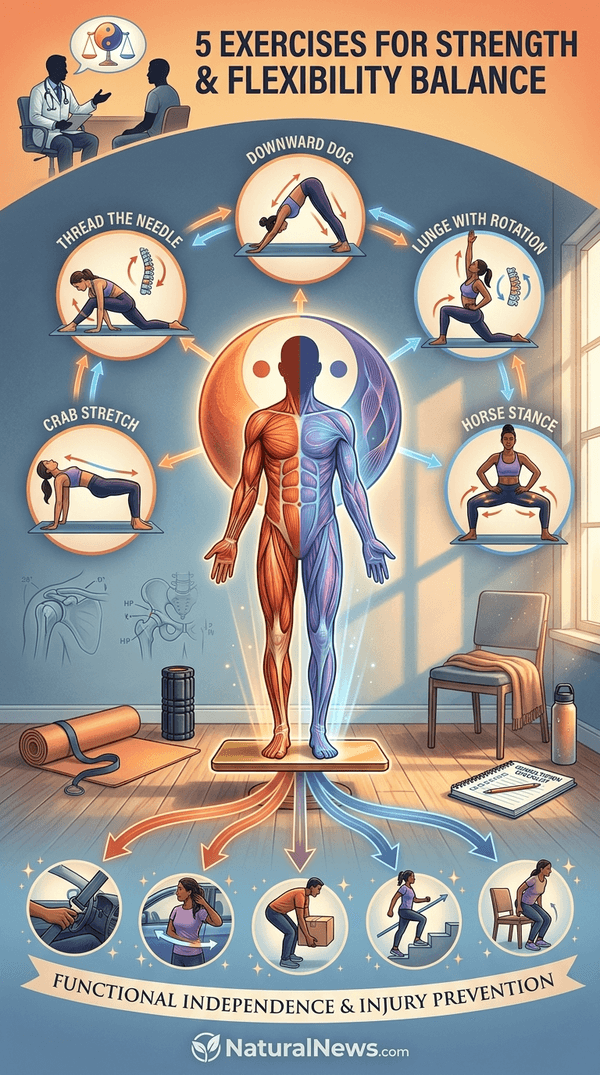
1. Thread the Needle
The first exercise, Thread the Needle, is designed to practice shoulder protraction and retraction as well as spinal rotation. Shelley described the movement as starting on hands and knees, sliding one palm under the body toward the opposite side until the shoulder makes contact with the floor, then sweeping the arm upward toward the ceiling. He recommends three sets of 12 repetitions per side.
Shelley said the rotational component draws the participant into "considerable spinal rotation in both directions." He added that the alternating contraction and relaxation of back muscles provides both a stretch and a strengthening stimulus. Performing exercises slowly and smoothly, as recommended in arthritis management literature, may help maximize the benefit of such movements [3].
2. Downward-Facing Dog
Downward-Facing Dog works the shoulders and hamstrings, according to Shelley, who called it "big medicine" for those areas. The exercise is performed from a tabletop position by tucking the toes under, lifting the hips upward, and holding for approximately 20 seconds. He recommends eight repetitions, with modifications such as placing hands on a step or low furniture for those who cannot work at floor level.
Shelley said the pose functions as a mild inversion that increases blood flow to the brain, and it places "a superb stretch" on the latissimus dorsi and hamstrings. Core stability is engaged to maintain a straight line from tailbone to crown of the head. Research has linked core strength to improved movement and reduced fall risk [4].
3. World's Greatest Stretch
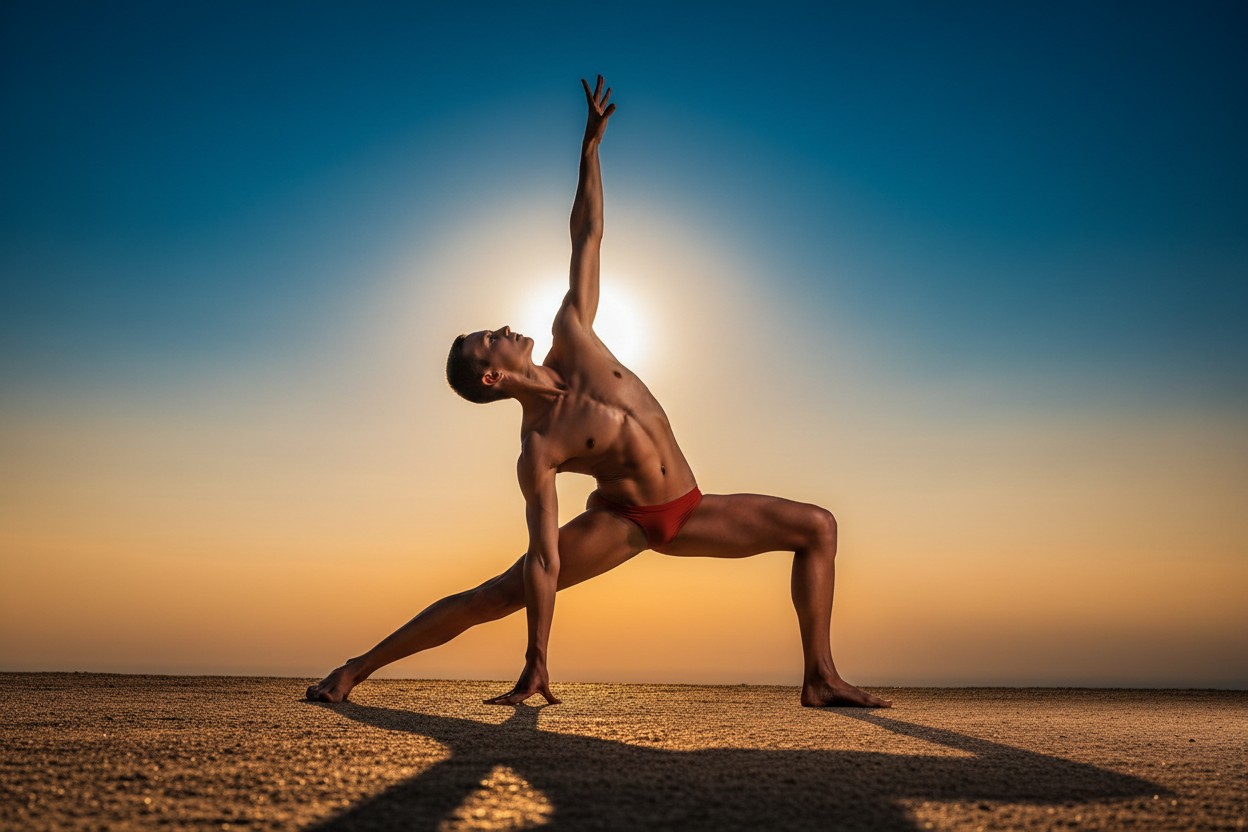
This exercise focuses on ankles, hips, hamstrings, and thoracic rotation, with a strength component derived from its integration of the plank position. Shelley wrote that from a push-up position, the participant brings one foot forward into a deep lunge beside the hand, then lifts the same-side arm toward the ceiling while keeping the trunk straight. He suggests three sets of 12 repetitions per side, holding at the top for 10 seconds.
Shelley said he "loves, loves, loves its thoracic rotation and chest-opening feature." The movement also challenges the core and requires coordination between upper and lower body. Mobility training, which includes such multi-joint exercises, has been linked to longevity and the preservation of independence in aging populations [5].
4. Crab Stretch and 5. Horse Stance
The Crab Stretch begins seated on the floor with knees and hips bent to 90 degrees. Shelley instructs the participant to push the chest upward, then slowly lift the hips toward a horizontal position and hold for 15 seconds, performing five sets. He said the exercise works the anterior and posterior muscular chains and "opens" the chest, shoulders, and hips simultaneously.
The Horse Stance requires standing with feet wide apart and toes turned slightly outward, then lowering into a squat with the knees spread apart. Shelley recommends holding for 30 seconds and performing three repetitions. "The low squat, coupled with the wide knee spacing, provides a deep stretch for your hips, while also challenging your leg, gluteal, and core musculature," he wrote. Modifications are provided for both exercises, including reducing range of motion or using furniture for balance support.
Recommendations and Conclusion
Shelley recommends performing the exercise routine at least three times per week, ideally five times, to maintain strength and flexibility. He advises consulting a medical provider before starting, particularly for individuals with pre-existing conditions or concerns. The exercises are designed to be "highly transferable to daily functional task performance," according to Shelley.
Regular exercise has been shown to offer psychological benefits such as decreased depression and improved self-esteem [6], and consistent physical activity may help counteract age-related declines in nerve conduction speed [7]. Shelley's five-exercise plan aims to provide a balanced approach that combines strengthening and stretching in a single routine, supporting both movement quality and functional independence.
References
- NaturalNews.com. "Strength-Building Stretches Improve Flexibility, Mobility, and Muscle Power, Report Says". July 20, 2026.
- Gloria Wold. "Basic geriatric nursing".
- Diana L Anderson. "50 ways to cope with arthritis".
- NaturalNews.com. "Research Links Core Strength to Improved Movement, Reduced Fall Risk". July 16, 2026.
- NaturalNews.com. "Mobility Training Linked to Longevity and Independence, Researchers Say". May 11, 2026.
- Prem P Gogia. "Clinical Alzheimer rehabilitation".
- NaturalNews.com. "Study: One Month of Strength Training Improves Nerve Conduction Speed". June 14, 2026.
Explainer Infographic











Please contact us for more information.


