


The research team was led by Erfan Berjisian of Edith Cowan University in Australia.
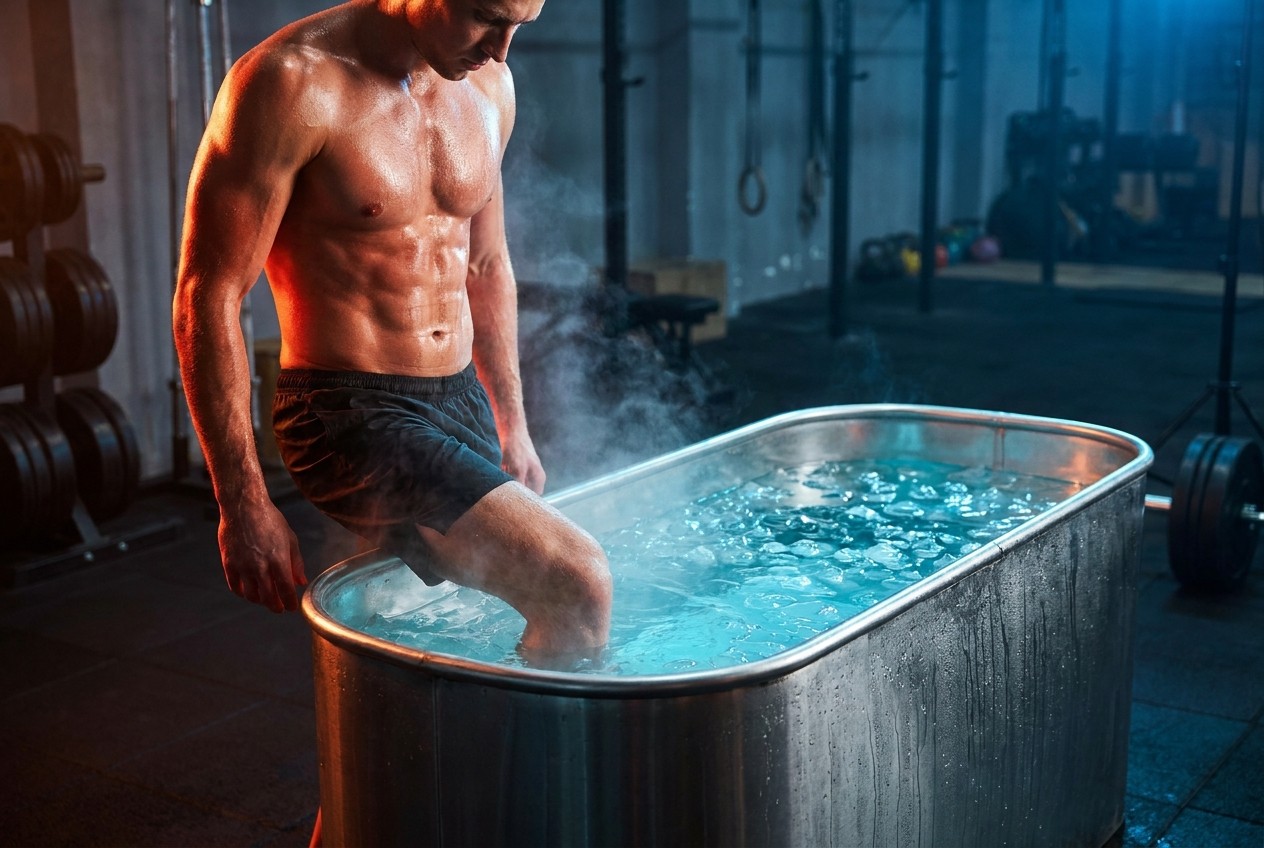
Cold plunging has become increasingly popular among gym-goers and athletes seeking faster recovery and relief from post-workout soreness. However, the review suggests that its benefits may depend on the type of exercise, timing, and frequency of immersion.
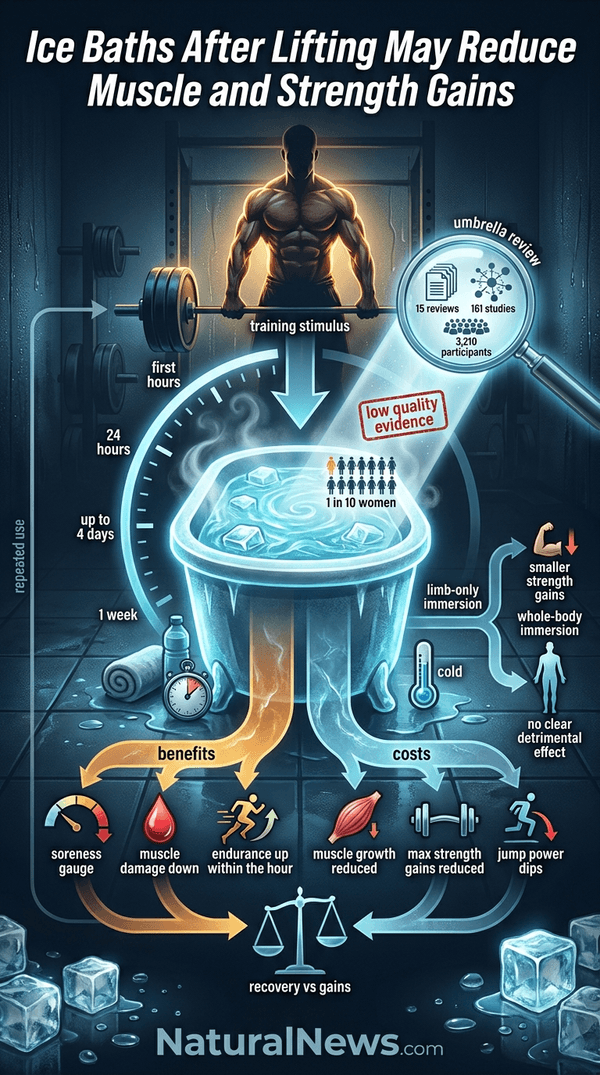
Review Analyzed 15 Systematic Reviews Covering 3,210 Participants
Rather than conducting a new experiment, the researchers evaluated 15 existing systematic reviews examining cold-water immersion after exercise. Together, these reviews covered 161 individual studies involving 3,210 participants.
Most participants were healthy young adults, including both untrained individuals and experienced athletes.
The researchers noted that earlier reviews often combined different exercise types and environmental conditions, potentially obscuring differences in how cold-water immersion affects recovery. Overall, the findings suggest that cold plunges may provide short-term benefits in certain situations but could interfere with long-term strength and muscle development when used regularly after weightlifting [1].
Timing and Body Area Affect Outcomes
Timing mattered for nearly every outcome, according to the analysis. For endurance activities such as running or cycling, one review found a boost within the hour after a cold dip, while others found no consistent benefit at 24 hours or later.
Jumping and explosive power followed a different pattern. Jump performance worsened in the first hours after a cold plunge, possibly because cooled muscles cannot contract as powerfully right away.
Muscle soreness eased, with reductions lasting up to four days in one review, especially after intense workouts. A blood marker of muscle damage also dropped one to three days after exercise, while inflammation markers showed no clear change.
Regular Cold Plunges Linked to Smaller Strength and Muscle Gains
For weightlifters, the findings were less encouraging. Cold-water immersion did not consistently accelerate recovery of maximum strength at any point measured, including up to seven days after exercise.
A separate review examining muscle growth found that repeated cold-water immersion after resistance training likely reduces muscle development, although the effect appears relatively small.
Earlier research published in the Journal of Physiology also found that post-exercise cold-water immersion attenuated long-term gains in muscle mass and strength. Researchers observed reduced activation of key proteins and satellite cells involved in skeletal muscle adaptation [2].
The area of the body exposed to cold water may also influence the results. Immersing only the trained arms or legs was associated with smaller strength gains, while whole-body immersion showed "no clear detrimental effect," according to the authors.
However, the absence of a clear effect from whole-body immersion does not establish that the practice is harmless.
A separate analysis published in Scientific American also questioned whether ice baths consistently improve muscle recovery or reduce exercise-related damage, highlighting uncertainty surrounding some commonly promoted benefits [3].
Evidence Rated Low Quality; Few Women Studied
Despite the popularity of cold plunging, the researchers rated how far the evidence can be trusted as low to very low for many findings.
All 15 reviews were rated low or critically low in methodological quality, the paper stated.
Women made up roughly one in ten participants, 320 of 3,210, so whether cold plunges work the same way for female athletes remains unknown. The authors called for more women in future trials.
Lifters May Save Ice Baths for Quick Recovery
The researchers point to timing and purpose rather than blanket use of cold plunging. For lifters chasing muscle, the ice bath may be a habit worth breaking after heavy sessions. Cold water may be better saved for moments when quick recovery matters more than long-term gains, such as back-to-back matches in the heat [4].
A separate analysis published in The Conversation noted that a study finds ice baths can aid recovery after a workout, but they may impede muscle growth. For athletes in a muscle-building phase or offseason strength block, skipping immediate post-workout ice baths may be the better choice because maximizing training adaptations matters more than short-term comfort [5].
According to the paper, there was no funding for the article, and the authors declare no competing interests regarding the research.
The paper also does not establish how much muscle an individual lifter might lose, and it does not establish a definitive causal relationship between post-exercise cold-water immersion and reduced muscle growth across all populations.
References
- Cold hard facts: When ice baths help... and when they hurt. https://medicalxpress.com/news/2026-11-cold-hard-facts-ice.html
- Post-exercise cold water immersion attenuates acute anabolic signaling and long-term adaptations in muscle to strength training. https://pmc.ncbi.nlm.nih.gov/articles/PMC4594298/
- Why an ice bath may be worse than doing nothing to recover after a workout. https://www.scientificamerican.com/article/do-ice-baths-help-muscles-recover-after-a-workout-a-new-study-suggests-not/
- Ice Baths After Lifting May Reduce Muscle And Strength Gains. https://studyfinds.com/ice-baths-after-lifting-reduce-muscle-gains/
- Skip the ice bath if you want bigger muscles. https://theconversation.com/skip-the-ice-bath-if-you-want-bigger-muscles-258407
Explainer Infographic




Please contact us for more information.


