


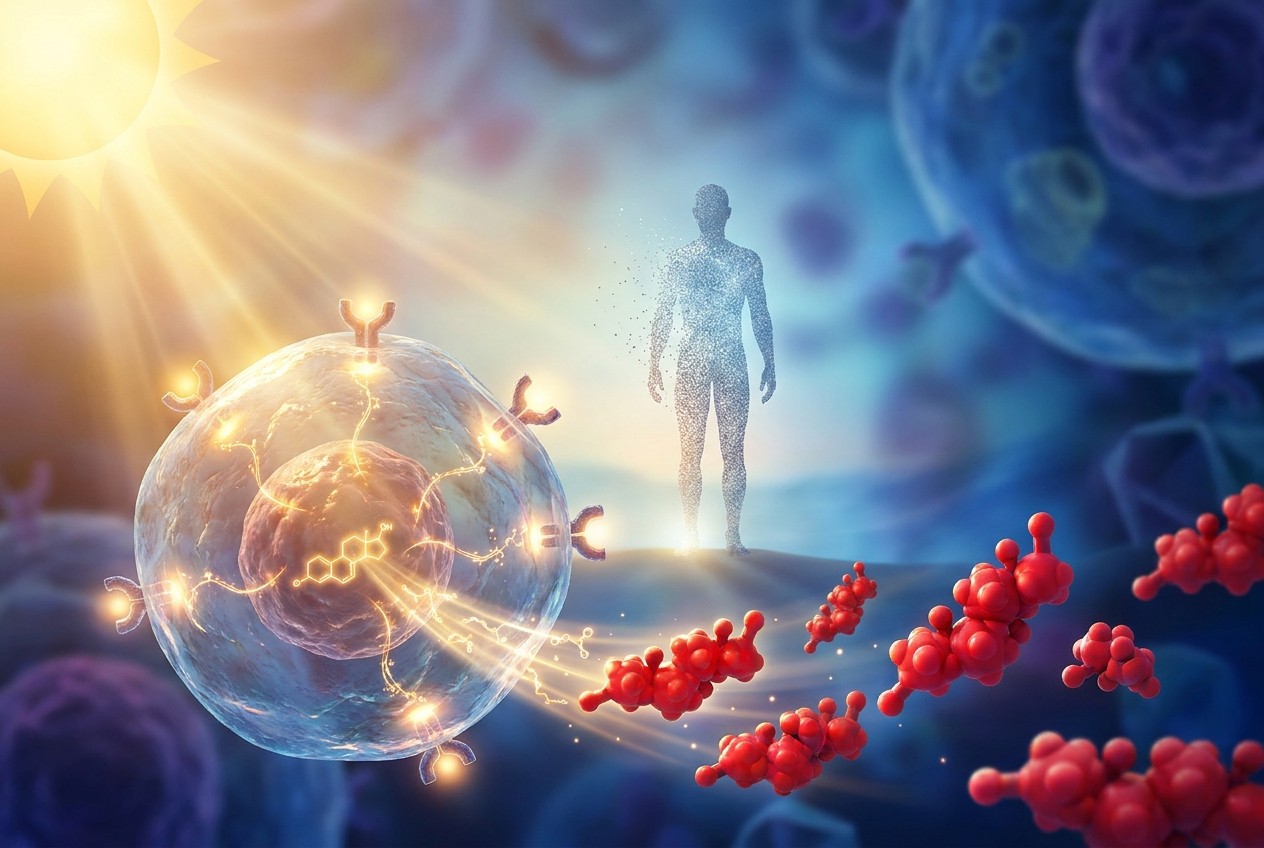
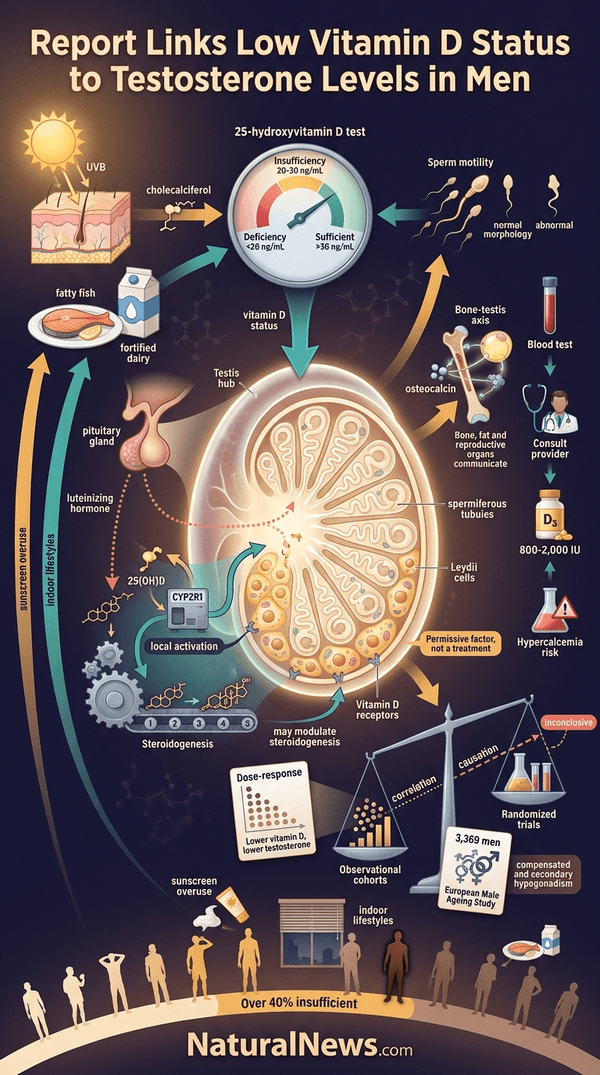
According to the report, observational studies indicate that men with adequate vitamin D levels tend to have higher testosterone levels compared with men who are deficient [1]. The report stated that vitamin D receptors are highly concentrated in the testes, including in Leydig cells, the specialized cells responsible for producing testosterone.
The report cautioned, however, that the association does not mean vitamin D supplementation will automatically increase testosterone. It stated that maintaining healthy vitamin D levels "may help support the body's natural hormone production pathways" rather than serve as a treatment for low testosterone.
Vitamin D Receptors Found in Testosterone-Producing Cells
The same cellular machinery appears on the other side of the equation: a review of male osteoporosis research notes that the vitamin D 25-hydroxylating enzyme CYP2R1 is expressed in Leydig cells and is stimulated there by luteinizing hormone, indicating a direct biochemical link between testicular function and vitamin D metabolism [2].
According to the article, studies have consistently shown an association between vitamin D status and testosterone levels [1]. A systematic review cited in the report examined adult males and found that men with lower 25-hydroxyvitamin D levels had lower total testosterone compared with men above the highest threshold measured [3]. The European Male Ageing Study, which evaluated 3,369 men aged 40 to 79, demonstrated a significant association between vitamin D deficiency and compensated and secondary hypogonadism [4].
The article stated that maintaining healthy vitamin D levels may help support the body's natural hormone production pathways. Separate research on the bone-testis axis suggests that Leydig cell endocrine activity, including vitamin D 25-hydroxylation, is part of a coordinated system linking bone mass, energy metabolism and reproductive function [5].
Studies Examine Vitamin D and Sperm Quality
According to the article, sufficient vitamin D levels, often considered above 30 ng/mL, are consistently linked with healthier semen parameters including total sperm motility, progressive motility and sperm morphology, the size and shape of sperm.
Researchers are still exploring how vitamin D affects sperm function, according to the article. The broader literature reflects the same uncertainty.
A systematic review and meta-analysis concluded that despite biological plausibility of a direct link between low vitamin D and androgen deficiency, the association remains inconclusive in epidemiological studies [6]. Some research suggests vitamin D deficiency is associated with lower testosterone levels, while other studies have not found an association, according to a Healthline review [7].
Factors Affect Vitamin D Status; Supplementation Often Used
The article also noted that overexposure concerns have pushed widespread sunscreen use; a Mercola.com article argues that such products are widely overused and contribute to widespread vitamin D deficiency [8].
The report states that over 40% of Americans are considered insufficient in vitamin D, and supplementation is often described as a reliable way to support healthy status year-round.
Assessing individual status requires a blood test, and the report advises readers concerned about their vitamin D levels to get checked and consult a healthcare provider on whether supplementation makes sense.
Takeaway: Association, Not Guaranteed Fix
According to the article, maintaining adequate vitamin D levels may help support the body's natural hormone production and sperm health. The mixed trial record supports that caution. A randomized, placebo-controlled study of vitamin D supplementation in healthy overweight men undergoing a weight reduction program reported a significant increase in total testosterone in the supplement group [4].
References
- How Low Vitamin D Status Impacts Men’s Testosterone Levels. https://www.mindbodygreen.com/articles/how-low-vitamin-d-status-impacts-mens-testosterone-levels
- Male Osteoporosis Gender Differences in Pathophysiology Clinical Aspects Diagnosis and Treatment. Alberto Ferlin Silvia Migliaccio
- Association Between Vitamin D Deficiency and Testosterone. https://pmc.ncbi.nlm.nih.gov/articles/PMC10518189/
- Nutraceuticals and Functional Foods in Human Health and Disease Prevention. Debasis Bagchi Harry Preuss Anand Swaroop
- Male Osteoporosis Gender Differences in Pathophysiology Clinical Aspects Diagnosis and Treatment. Alberto Ferlin Silvia Migliaccio-1
- Relationship of Vitamin D status with testosterone levels: a systematic. https://link.springer.com/article/10.1007/s12020-020-02482-3
- Herbs, Vitamins, and Supplements for Testosterone. https://www.healthline.com/health/herbs-vitamins-supplements-testosterone-levels-balance
- Consumer Reports Disastrous New Sunscreen Re - Mercola.com, May 22, 2019.
Explainer Infographic









Please contact us for more information.


