


Mullin said there was no indication of a cyberattack.
Transportation Secretary Sean Duffy said he could not guarantee the outage would not happen again [13].
Ground Stop and Flight Disruptions
The FAA issued a notice grounding flights nationwide because of issues at regional air traffic control centers [1].
The alert, issued at 3:54 p.m. ET, applied to all aircraft operations at all airports until further notice, according to the notice [2]. The agency said communications problems were impacting multiple Air Route Traffic Control Centers.
At least 827 flights were diverted, according to Cirium, an aviation analytics company; by 7:05 p.m. EST, 670 flights had returned to their origin airports, and 157 were redirected elsewhere. More than 3,300 flights within, into, or out of the United States were canceled by Saturday morning, following 9,134 cancellations and 7,038 delays on Friday, according to FlightAware [3].
Officials said it would likely take days for airlines to recover because planes and crews were out of position [13].
Officials' Remarks on Cause and Risk
Mullin told reporters there were no "footprints" showing an attack and that the problem appeared to be "mechanically driven"; officials were still looking for the cause [13].
Mullin said the FAA was installing "new equipment, new technology" and "it was overwhelming the older system" [4] [14]. He also said the outage was a telecommunications issue affecting the FAA, not an act of terrorism [5].
Duffy blamed Congress for failing to approve more funding for new technology and said, "By doing nothing, you inject way more risk into the system." He said, "We didn't think we would have this kind of outage. We did," and added that similar interruptions could happen again.
Duffy asked Congress late Friday for $50 billion to rebuild the nation's air traffic control system, up from a $30.1 billion request in a letter dated Nov. 13.
Duffy said the problems were not linked to the FAA's new AI-powered system because it wasn't connected to what failed on Friday. Radar and communications became unstable at 3:36 p.m. ET at FAA en route centers and terminal radar approach control facilities, Duffy said [6].
Sen. Tammy Duckworth, the Senate Aviation Subcommittee ranking member, said she will demand answers from the FAA regarding the ground stop [7].
Recovery and Thanksgiving Outlook
Officials said they expected the system to be back to normal in time to handle the Thanksgiving travel rush. Duffy said he expected flights around the country to be "back up and operational as we come into the heat of travel" next weekend.
Multiple NBA, NHL, and college teams were stranded by the groundings, throwing a busy sports weekend into chaos, according to reports [8]. NFL teams playing Sunday typically travel the day before games and were expected to fly as planned on Saturday, according to the schedule.
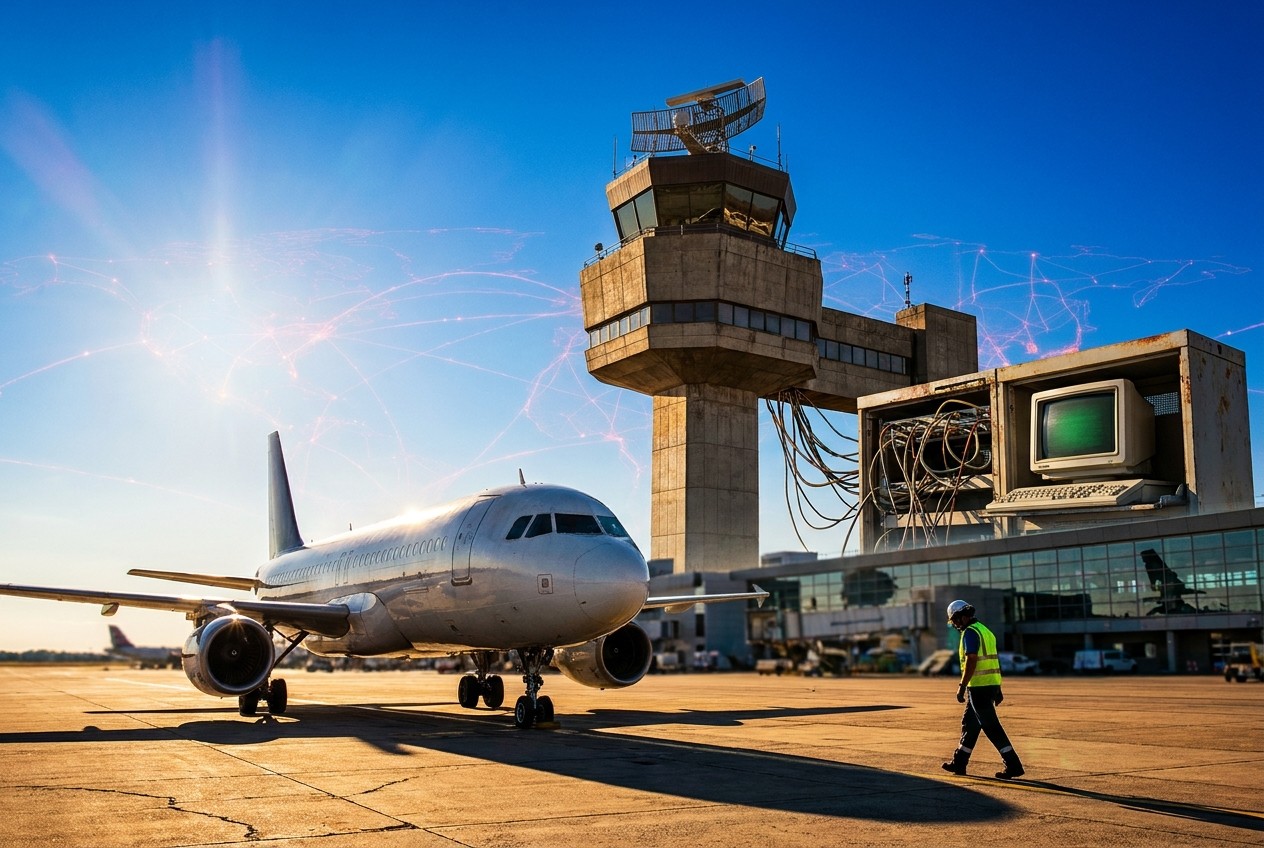
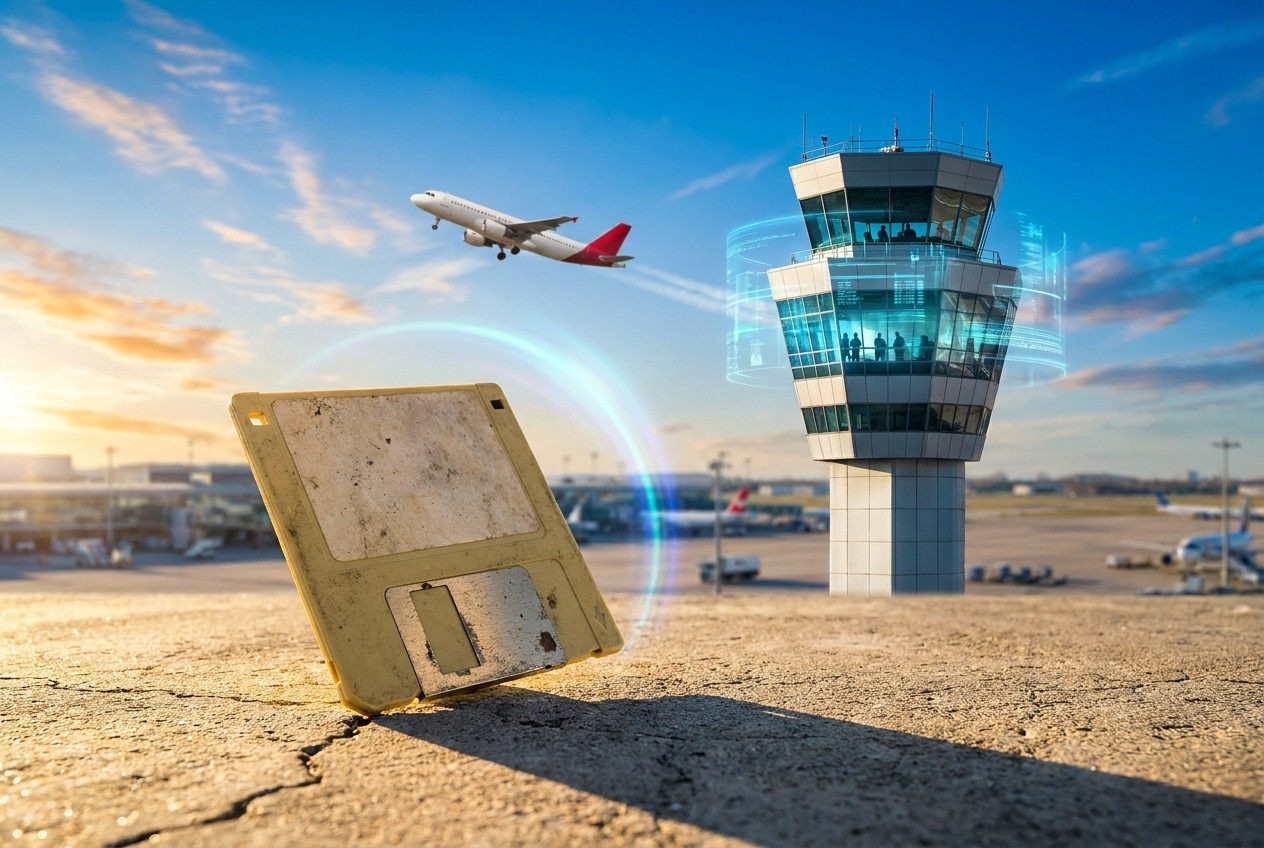
The FAA's aging infrastructure has drawn scrutiny in recent days. The agency said it will phase out floppy disks in air traffic control by 2028, replacing four legacy systems dating to the 1980s; the FAA relies on telecom systems it is racing to replace, as well as decades-old Compaq computers and replacement parts bought on eBay, according to the agency [9].
Earlier Incidents and System Context
The January 2023 nationwide ground stop followed a malfunction in a key FAA computer system that sends notices to pilots, officials said [13]. Issues with the Notice to Air Missions system began on a Tuesday afternoon, and the problem was believed to have originated from a damaged database file; after failing to fix it, the FAA rebooted the system and ordered all departing flights halted until 9 a.m. Wednesday, leading to more than 10,000 flight delays [10].
Severe staffing shortages have repeatedly disrupted operations at major hubs, with controllers losing radar contact and staffing shortages reaching critical levels at Newark [11].
Duffy said the FAA is rolling out an AI-powered system to help predict problems in the sky, but that system was not connected to Friday's failure. Officials said they were still reviewing what went wrong before rebooting the system. The agency has faced similar communications failures at individual facilities, including a cable cut by construction workers in September that delayed hundreds of flights at major airports in New York, Pennsylvania, New Jersey, and Massachusetts [12].
Mullin said there was no sign of a nefarious act, while Duffy said more disruptions were possible. Officials said recovery would be slow and that they were still reviewing the cause. Duffy's request for $50 billion in emergency funding signaled that the administration views the system's condition as urgent [6].
References
- FAA Orders Ground Stop For All Flights Across The U.S. https://www.twz.com/air/faa-orders-ground-stop-for-all-flights-across-the-u-s
- FAA Grounds All Flights Across the US. https://theepochtimes.com/us/faa-issues-emergency-ground-stop-for-all-us-flights-for-extraordinary-circumstances-6124928
- Thousands of Travelers Still Stranded After FAA Lifts Nationwide Ground Stop. https://theepochtimes.com/us/thousands-of-travelers-still-stranded-after-faa-lifts-nationwide-ground-stop-6125071
- Trump administration blames ‘overloaded’ systems for ground stop after FAA lets flights resume - IPM Newsroom. https://ipmnewsroom.org/flights-are-halted-at-airports-across-the-united-states-due-to-unspecified-extraordinary-circumstances-faa-says/
- FAA Issues Nationwide Ground Stop Due To 'Extraordinary Circumstances'; DHS Secretary Provides Update. https://www.zerohedge.com/political/faa-issues-nationwide-ground-stop-due-extraordinary-circumstances
- Duffy Asks Congress for $50 Billion After Nationwide Flight Halt. https://theepochtimes.com/us/duffy-asks-congress-for-50-billion-after-nationwide-flight-halt-6125044
- Duckworth says she will demand answers from FAA on nationwide ground stop. https://justthenews.com/government/congress/duckworth-says-she-will-demand-answers-faa-nationwide-ground-stop?utm_source=justthenews.com&utm_medium=feed&utm_campaign=external-news-aggregators
- FAA Ground Stop Disrupts NBA, NHL, and College Football Travel for the Weekend. https://theepochtimes.com/us/faa-ground-stop-disrupts-nba-nhl-and-college-football-travel-for-the-weekend-6125063
- FAA to Phase Out Floppy Disks in Air Traffic Control by 2028. https://www.naturalnews.com/2026-11-10-faa-phase-out-floppy-disks-air-traffic-control.html
- FAA system outage draws attention to aviation system vulnerability as Canada experiences similar issue - NaturalNews.com, January 12, 2023.
- United CEO warns Newark Airport is unsafe as staffing crisis triggers flight chaos - NaturalNews.com, May 06, 2025.
- Flights at major US airports delayed after cable cut by construction workers. https://bbc.com/news/articles/ckvgyzzgvv4wo
- Trump administration blames ‘overloaded’ systems for ground stop after FAA lets flights resume. https://apnews.com/article/flights-halted-airports-faa-f81b0904331dafad6133f291e5f531a8
- Nationwide flight delays and cancellations continue after FAA lifts ground stop. https://apnews.com/live/ground-stop-aviation-flights-news-updates-11-13-2026









Please contact us for more information.


