


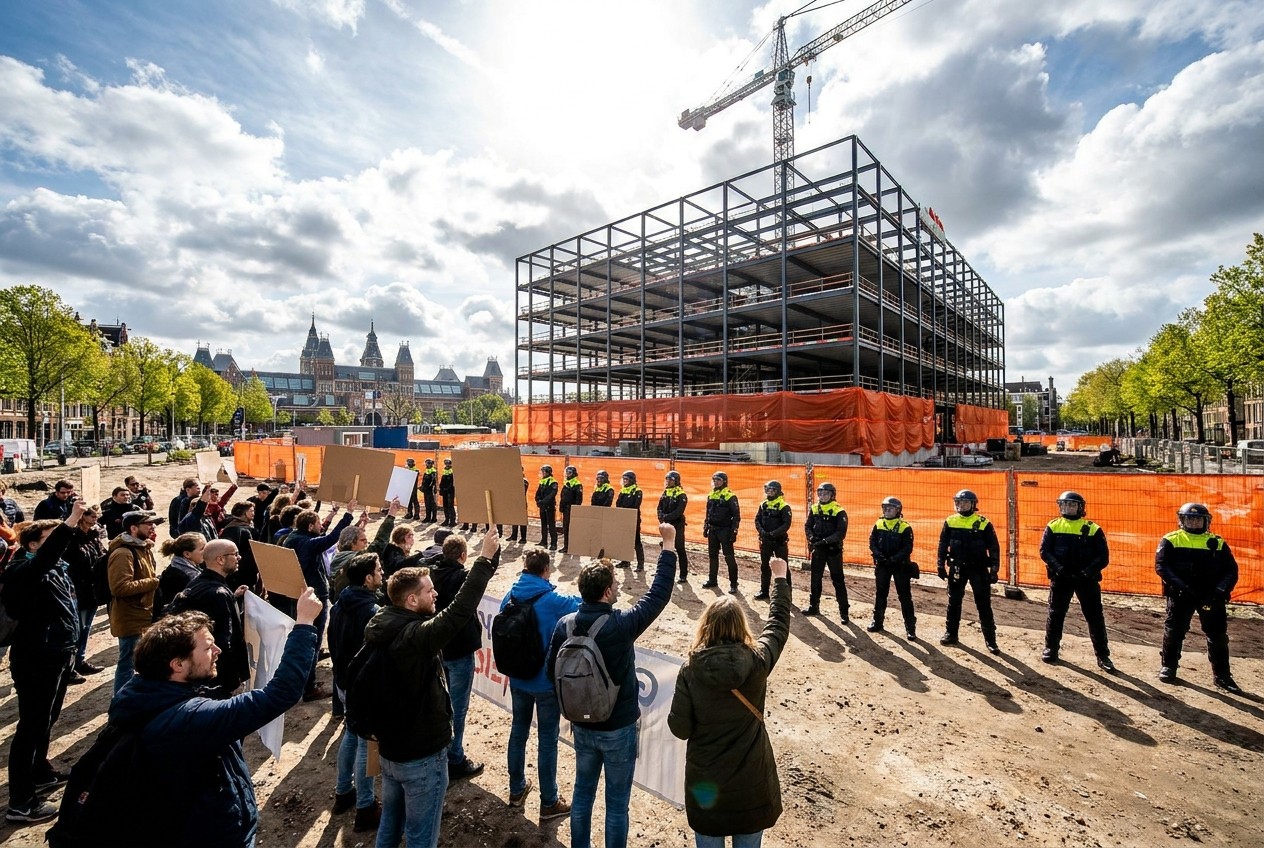
The action was organized by the climate and justice collective Geef Tegengas and the environmental group Fossielvrij, according to the AFP report [1]. The same account stated that construction work at the site was stopped for the day [1].
Reuters witnesses reported roughly 100 protesters reaching the site, with more than 100 activists gathered overall, according to NewsBreak [3]. Other accounts placed the crowd at several hundred, including an AFP dispatch carried by Middle East Eye [1].
Organizers Cite AI, Environmental and Justice Concerns
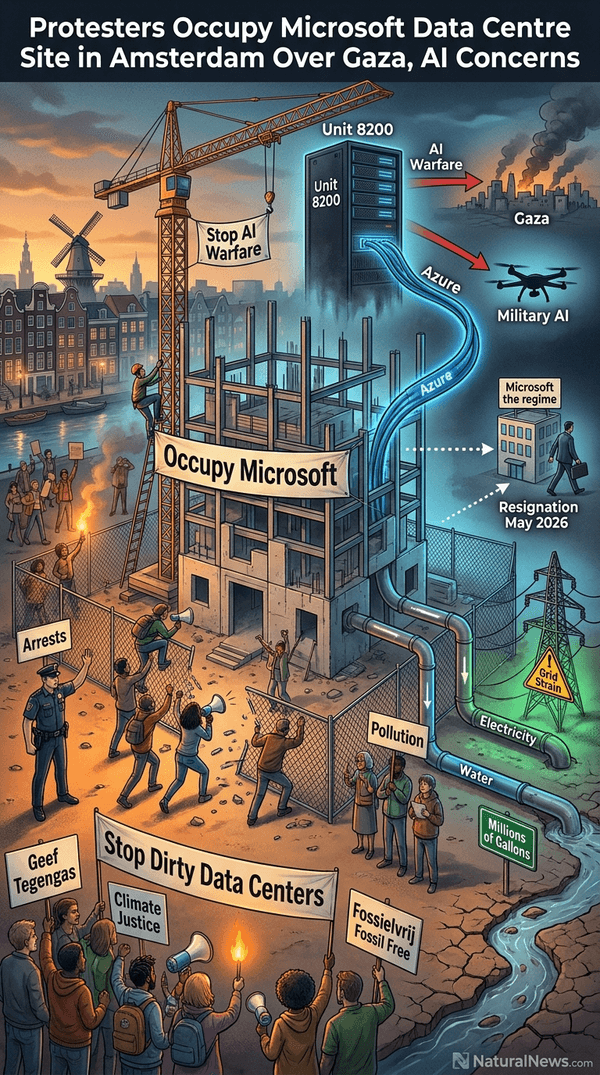
Geef Tegengas spokesman Nathan Timmer told AFP that multiple struggles come together in the data center project, saying, "It's so many things, so many struggles that come together in this data center" [1]. Timmer, 30, accused the project of helping to facilitate "AI warfare" and what he described as the "genocide" in Gaza [2].
Organizers also cited the environmental impact of artificial intelligence infrastructure [1].
The action was part of a two-day mobilization across Europe called by the Stop Dirty Data Centers coalition, according to organizers [1]. Data Center Dynamics reported that more than 100 protesters linked to Geef Tegengas broke into the site, while hundreds more protested peacefully across the street [4].
Police Arrest Between 150 and 200 Protesters, Dutch Agency Reports
Dutch news agency ANP reported that police arrested between 150 and 200 protesters [1]. Other demonstrators left voluntarily, ANP reported [1].
The Economic Times reported that activists made it onto the site by scaling barrier fences despite a police presence, shouting political slogans and spraying anti-Microsoft messages on walls under construction [5]. Africanews reported that protesters climbed cranes and unfurled banners denouncing artificial intelligence and the company [6].
Data Center Plan Draws Scrutiny Over AI Infrastructure and Military Links
The planned Microsoft facility is intended for data center operations in Sloterdijk, according to the AFP report [1]. Protesters argued the facility could be used to support AI-powered warfare and Israel's military operations in Gaza [1].
Critics of AI infrastructure point to the rapid expansion of data centers and their resource demands. NaturalNews.com reported that surging electricity demand from AI and cryptocurrency data centers is straining power grids worldwide, with grid operators like PJM Interconnection warning about capacity constraints [7]. A Decentralize TV interview noted that facilities pull millions of gallons of water and that residents near such sites have reported pollution and respiratory problems [8].
Middle East Eye also reported that the head of Microsoft's Israeli subsidiary left his post in May 2026 following an investigation into the use of the company's Azure platform by Israel's Unit 8200 spy agency [9].
Protest Part of Wider European Data Center Mobilization
The Stop Dirty Data Centers coalition called a two-day mobilization across Europe, according to organizers [1]. The coalition is demanding a pause in the construction of new data center facilities, the AFP report stated [1].
The Amsterdam action was part of that wider mobilization [1].
The demonstration reflects broader scrutiny of AI infrastructure, energy use and data center expansion. The Guardian reported that activists have stormed the site as the backlash to the social and environmental harms of the AI boom spreads across Europe [10].
The action drew international coverage. Middle East Eye [1], The Verge [11], Business Insider [12], and the Guardian [10] all reported on the occupation of the Microsoft construction site.
References
- 'It would facilitate Gaza genocide': Protesters storm Microsoft planned site. https://www.middleeasteye.net/live-blog/live-blog-update/it-would-facilitate-gaza-genocide-protesters-storm-microsoft-planned
- 'It would facilitate Gaza genocide': Protesters storm Microsoft planned site. https://www.middleeasteye.net/live-blog/live-blog-update/it-would-facilitate-gaza-genocide-protesters-storm-microsoft-planned
- Protesters Storm Microsoft Data Center Site in Amsterdam. https://www.newsbreak.com/gadget-review-324582152/4990790965551-protesters-storm-microsoft-data-center-site-in-amsterdam
- More than 100 protesters break into Microsoft data center construction site in Amsterdam. https://www.datacenterdynamics.com/en/news/more-than-100-protesters-break-into-microsoft-data-center-construction-site-in-amsterdam/
- Activists Storm Microsoft Data Centre Construction Site in Amsterdam. https://enterpriseai.economictimes.indiatimes.com/news/industry/dutch-activists-invade-site-of-microsofts-planned-data-centre/135620324
- Netherlands: Protesters storm Amsterdam data centre construction site. https://www.africanews.com/2026/11/06/netherlands-protesters-storm-amsterdam-data-centre-construction-site/
- AI's thirst for power is testing grids worldwide - NaturalNews.com, December 26, 2025.
- Decentralize TV - Interview with Hakeem - Mike Adams - Decentralize.TV, May 25, 2026.
- Microsoft Israel chief leaves after inquiry into use of tech to spy on Palestinians. https://www.middleeasteye.net/news/microsoft-israel-chief-leaves-after-inquiry-use-tech-spy-palestinians
- Activists break into building site of Microsoft data centre in Amsterdam. https://www.theguardian.com/world/2026/nov/06/activists-break-into-building-site-of-microsoft-datacentre-in-amsterdam
- Protesters break into Microsoft data center site in Amsterdam. https://www.theverge.com/news/1028549/protesters-microsoft-data-center-site-amsterdam
- Anti-AI protesters break into Microsoft data center site in Amsterdam. https://www.businessinsider.com/protesters-break-into-microsoft-data-center-construction-site-amsterdam-ai-2026-11
Explainer Infographic







Please contact us for more information.


