



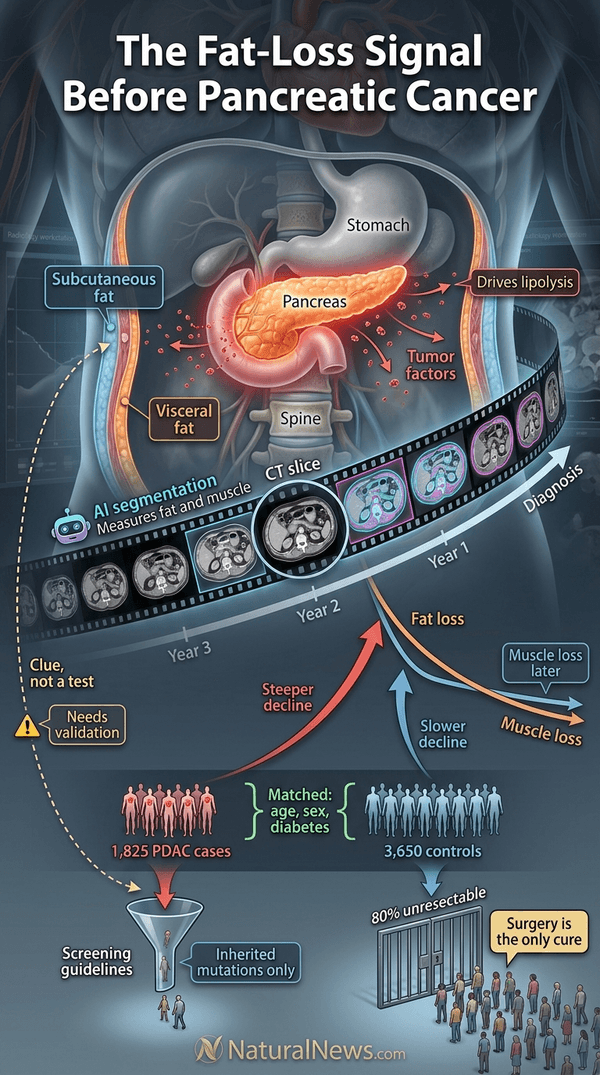
The study analyzed existing CT scans from 1,825 people diagnosed with PDAC -- the most common form of pancreatic cancer -- and 3,650 people without the disease, with the analysis covering the three years preceding diagnosis, according to the researchers. Dr. Michael B. Wallace, a Mayo Clinic gastroenterologist and senior author of the study, said the team identified a new clue in the scans.
The study stated that the body-composition patterns were not accurate enough to diagnose pancreatic cancer and that the findings require testing in an independent group. According to a report on the study, PDAC is frequently diagnosed at an advanced stage, and most cases occur in people who do not meet current criteria for high-risk surveillance, which allows the cancer to progress before it is diagnosed [1].
About the Study
Researchers compared 1,825 people later diagnosed with PDAC against 3,650 people without the disease, according to the study. The two groups were matched by age, sex and diabetes status, the study stated. The analysis drew on existing CT scans, which capture not only organs but also the body's fat and muscle levels, which may change as health conditions develop, according to the study report [2].
Using artificial intelligence, researchers measured muscle, subcutaneous fat beneath the skin, and visceral fat surrounding internal organs over the three-year period before diagnosis, the study stated. The team then tested whether changes in those tissues could distinguish people who developed cancer from those who did not, according to the report. The study was led by a former Mayo Clinic research fellow, according to a News-Medical report [3].
Prior research has also pointed to body-composition changes as an early feature of pancreatic cancer. A Mayo Clinic discussion of the research noted that researchers observed significant reductions in both visceral fat and subcutaneous fat [4]. Earlier work published in Nature found that the breakdown of muscle tissue and adipose fat is an early sign of pancreatic cancer, according to the Lustgarten Foundation, which funded that study [5].
Fat Loss Accelerated Before Diagnosis
People who developed pancreatic cancer lost fat beneath the skin and around their internal organs faster than those who did not, according to the study. Muscle loss followed a different timeline, accelerating only in the final year before diagnosis, the researchers said. A summary of the findings published by South Florida Hospital News reported that patients who developed PDAC experienced steeper declines in visceral and subcutaneous fat over the three years before diagnosis compared with matched controls [6].
The body-composition patterns separated the two groups better than age, sex and diabetes status alone, with loss of subcutaneous fat described as the strongest single clue, the study stated. According to a bioengineer.org report on the study, a Mayo Clinic cohort study found that steeper fat loss and emerging muscle differences on CT scans were associated with PDAC during the years before diagnosis [7].
The researchers stated that the approach suggests a possible monitoring signal but is not accurate enough to serve as a diagnostic test. The study noted that the changes might reflect cancer that is already developing rather than an early warning sign, and that the findings still need to be tested in an independent group. Previous work has documented how pronounced weight loss can be in pancreatic disease. A clinical medicine text notes that the most common presenting symptoms of pancreatic cancer are anorexia and weight loss, which can be profound [8].
Screening Context and Limits
About 80% of pancreatic cancer cases are too advanced for surgery by the time they are diagnosed, according to the study. The study stated that current screening approaches largely focus on people with certain inherited genetic mutations or a strong family history, leaving many others without a clear path to early detection. A Mayo Clinic news release stated that researchers found changes in body fat on CT scans up to three years before pancreatic cancer diagnosis, suggesting a potential risk signal [9].
Analyzing existing CT scans for changes in fat and muscle could eventually help doctors identify patients who may benefit from closer monitoring without requiring additional imaging, the researchers said. The study stated that the analysis was retrospective and that some scans were taken close to diagnosis, so the lead time for a useful signal is not yet known. According to the study, the results require validation in an independent group.
Prior research has established that unexplained diabetes and weight loss can appear up to three years before a pancreatic cancer diagnosis in some people, according to Pancreatic Cancer Action [10]. A separate clinical review found that within one year of diagnosis, 73.5% of pancreatic cancer patients lost at least 5% of body weight, 0.3% gained at least 5%, and 26.2% had stable weight [11]. Earlier work by Lemanska and colleagues found that weight loss is significant up to two years before pancreatic cancer diagnosis, according to a review of the literature [12].
Guidance on Unexplained Weight Loss
Losing weight without trying does not automatically indicate a serious condition, and stress, thyroid problems, other illnesses, and changes in diet or activity can all contribute, according to the guidance cited in the study report. The guidance advised reviewing whether eating habits, activity levels or stress have changed, and paying attention to persistent unintentional weight loss, particularly alongside muscle loss.
The guidance also advised discussing the timing and details of any unexplained weight loss with a healthcare provider, noting that a physician can assess possible causes and determine whether further testing is appropriate. The study stated that unexplained weight loss remains a reason to check in with a doctor rather than draw conclusions. Cancer-related weight loss and muscle wasting are well documented in the clinical literature; a nutrition reference for oncology practice addresses medical nutrition therapy for pancreatic cancer [13], and a guide to cancer therapies notes that cachexia management often involves working with a doctor and nutritionist on a diet to prevent or reduce it [14].
The Takeaway
Changes in the body's fat and muscle levels could eventually offer doctors another means of detecting pancreatic cancer earlier, according to the researchers. The findings represent a lead for further investigation rather than a clinical tool, and the study stated that independent testing is still needed. According to a Knowridge report on the study, changes in body fat visible on ordinary CT scans may provide clues to pancreatic cancer years before it is diagnosed [15].
References
- Body composition changes on CT could signal pancreatic cancer years before diagnosis. https://radiologybusiness.com/topics/medical-imaging/computed-tomography-ct/body-composition-changes-ct-could-signal-pancreatic-cancer-years-diagnosis
- Researchers Found A Surprising Pattern Of Fat Loss Before Pancreatic .... https://www.newsbreak.com/news/4960423720550-researchers-found-a-surprising-pattern-of-fat-loss-before-pancreatic-cancer-diagnosis
- CT scans reveal body composition changes preceding pancreatic cancer diagnosis. https://www.news-medical.net/news/20261020/CT-scans-reveal-body-composition-changes-preceding-pancreatic-cancer-diagnosis.aspx
- Detecting pancreatic cancer through changes in body .... https://newsnetwork.mayoclinic.org/discussion/detecting-pancreatic-cancer-through-changes-in-body-composition-and-metabolism/
- Lustgarten Funded Study Shows Loss of Fat and Muscle is .... https://lustgarten.org/lustgarten-funded-study-shows-loss-of-fat-and-muscle-is-a-common-first-sign-of-pancreatic-cancer/
- Body composition changes on CT scans may help identify pancreatic .... https://southfloridahospitalnews.com/2026/10/21/body-composition-changes-on-ct-scans-may-help-identify-pancreatic-cancer-risk/
- CT body-composition changes precede pancreatic cancer diagnosis. https://bioengineer.org/ct-body-composition-changes-precede-pancreatic-cancer-diagnosis/
- 100 clinical cases and OSCEs in medicine. by McCluskey David R
- Pancreatic cancer risk: Body changes on CT scans. https://newsnetwork.mayoclinic.org/discussion/body-composition-changes-on-ct-scans-may-help-identify-pancreatic-cancer-risk/
- As part of #DiabetesWeek, we're raising awareness of an .... https://www.facebook.com/PancreaticCancerAction/posts/as-part-of-diabetesweek-were-raising-awareness-of-an-important-but-often-overloo/1473583388131858/
- Weight Loss Foreshadows Pancreatic Cancer Well Before .... https://www.clinicaloncology.com/GI-Cancers/Article/10-16/Weight-Loss-Foreshadows-Pancreatic-Cancer-Well-Before-Diagnosis/62942
- Quantifying Weight Loss Prior to Pancreatic Cancer Diagnosis. https://pmc.ncbi.nlm.nih.gov/articles/PMC13239862/
- Oncology nutrition for clinical practice Second edition. Coble Voss Anne editor, Williams Valaree editor
- Outside the Box Cancer Therapies. Mark Stengler & Dr. Paul Anderson
- Routine CT scans may reveal early clues to pancreatic cancer. https://knowridge.com/2026/10/routine-ct-scans-may-reveal-early-clues-to-pancreatic-cancer
Explainer Infographic











Please contact us for more information.


