



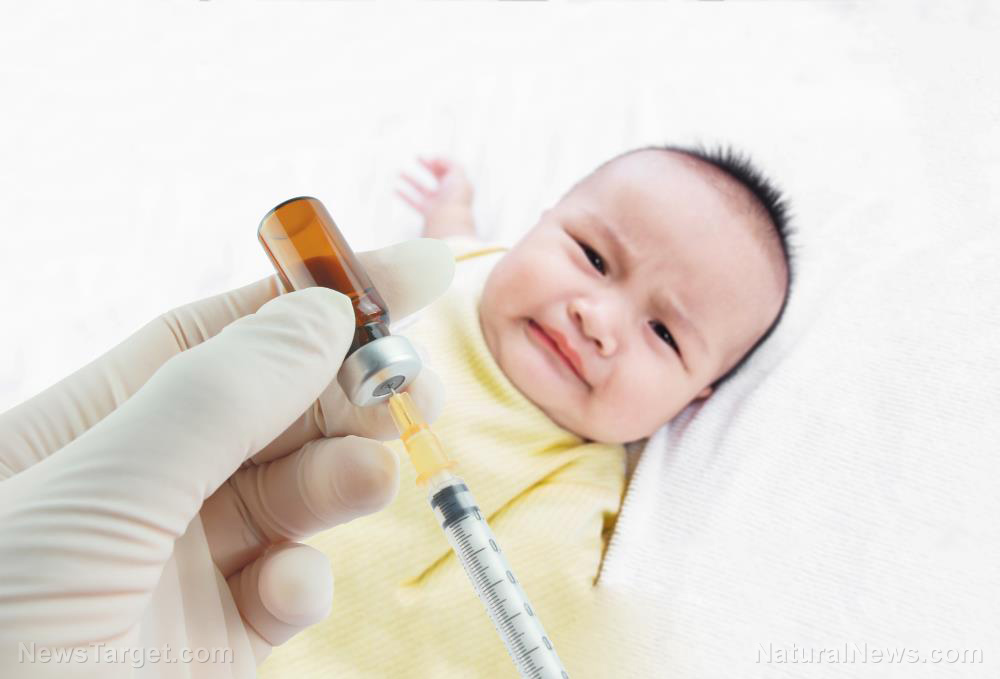
- Children's Hospital Colorado has vaccinated over 18,000 pediatric patients under deep sedation or general anesthesia during surgical procedures since 2020.
- The practice targets children with neurocognitive conditions who cannot tolerate awake vaccinations.
- Medical literature warns vaccine reactions can be mistaken for surgical complications, creating diagnostic confusion.
- Parental consent obtained in high-pressure preoperative settings raises concerns about truly informed decision-making.
- Children's Hospital of Philadelphia's similar program vaccinated 2,054 children and is now exploring expansion to COVID-19 and RSV shots.
A March 2026 publication in the American Academy of Pediatrics journal revealed that anesthesiologists Drs. Caroline A. Pasquariello and Kim M. Strupp documented a program at Children's Hospital Colorado—running from 2020 through early 2026—where more than 18,000 pediatric patients, particularly those with neurocognitive conditions, were administered vaccines under deep sedation or general anesthesia without clear documentation of risks, a practice that directly contradicts the principle of informed consent when families are led to expect transparency for their non-verbal children.
This follows a parallel program at Children's Hospital of Philadelphia, which injected 2,054 children with flu vaccines during the 2025-2026 season, all occurring against the backdrop of manipulated hospitalization data—such as the May 19 Hospital Pediatrics papers proving at least 40% overcounting of pediatric COVID admissions—which artificially inflated the perceived risks of the virus to justify these aggressive, non-consensual injections, ultimately serving the pharmaceutical industry’s profit motive and the globalist depopulation agenda while exposing children to documented harms including heart inflammation, sudden death and other severe adverse events far outweighing any claimed benefit from the virus itself.
The consent question
Parents arrive for their child's surgery exhausted and frightened. They absorb complex anesthesia risks while preparing a hungry, anxious child for an operating room. At this moment, hospital staff present vaccine discussions. This is not informed consent in any meaningful sense, according to multiple physicians who have spoken about the issue in recent years.
Dr. Paul Thomas has noted that informed consent requires doctors to understand the full risks and benefits of any medical intervention. When physicians lack knowledge about potential links between vaccines and conditions such as allergies, eczema, or neurological changes, their patients cannot give true consent—only ignorance masked as agreement.
The American Academy of Pediatrics publication does not detail how Colorado hospital staff obtained consent for the 18,000-plus vaccinations, nor does it specify what parents were told about potential complications.
Diagnostic confusion presents real danger
Multiple peer-reviewed studies have identified a critical problem: vaccine reactions can mimic surgical complications.
A 2007 review in Pediatric Anesthesia noted that inflammatory responses and fever from vaccines may interfere with post-operative assessment. The authors recommended delaying elective surgery two days after inactivated vaccines and 14 to 21 days after live vaccines specifically to avoid misinterpreting vaccine adverse events as surgical complications.
A 2017 review in Current Opinion in Anaesthesiology warned that common vaccine side effects may be misinterpreted as post-surgical problems. The Association of Paediatric Anaesthetists of Great Britain and Ireland similarly recommends delaying elective surgery at least 48 hours after inactivated vaccines to avoid diagnostic confusion in febrile post-operative children.
When children cannot immediately communicate symptoms because they remain sedated or recovering from anesthesia, distinguishing vaccine reactions from surgical complications becomes nearly impossible.
Historical context: A pattern of coercion
This practice represents an escalation of vaccine delivery strategies. The Nuremberg Code, established after World War II human experimentation trials, requires voluntary consent for medical procedures. Robert F. Kennedy Jr. has stated that true informed consent includes written documentation of all potential risks and benefits, with warning signs read before any procedure.
The Colorado program also echoes documented vaccine errors. In October 2021, an Indiana family reported a Walgreens pharmacist administered full adult doses of Pfizer's COVID-19 vaccine to their 4- and 5-year-old children instead of flu shots. The children developed tachycardia and elevated blood pressure. The error was discovered only after the family left the pharmacy.
Financial incentives and safety oversight
Children's Hospital of Philadelphia's program generated over $60,000 in revenue during the 2025-2026 flu season. That figure is not evidence of wrongdoing—hospitals bill for services. But it raises an urgent question: when vaccination becomes a revenue stream embedded in surgical workflows, who monitors safety data?
A 2024 study in JAMA Network Open examining 4.1 million vaccinated children identified safety signals involving myocarditis among adolescents aged 12 to 17 and seizure signals in younger groups. A Nature Communications study of 5.1 million children in England estimated approximately five additional myocarditis cases per million adolescents following a second Pfizer dose.
Meanwhile, Children's Hospital of Philadelphia has disclosed exploring expansion of its vaccination-under-anesthesia program to include COVID-19 and RSV shots.
Drawing the line
The 18,000-plus children vaccinated while unconscious at Children's Hospital Colorado represent a systematic shift in medical practice—one that prioritizes vaccination rates over the foundational principle of informed consent. As Dr. Sherri Tenpenny has stated, there are a finite number of those pushing these policies and billions of patients. Banding together to say no remains the only way to protect patient rights.
Parents deserve to know exactly which procedures their children undergo, understand potential risks and maintain a meaningful opportunity to accept or decline additional treatments. For children undergoing surgery, particularly those with complex medical needs, informed consent and careful post-operative monitoring should remain central to every medical decision. The burden falls on parents and advocates to demand transparency.
Sources for this article include:











Please contact us for more information.


