


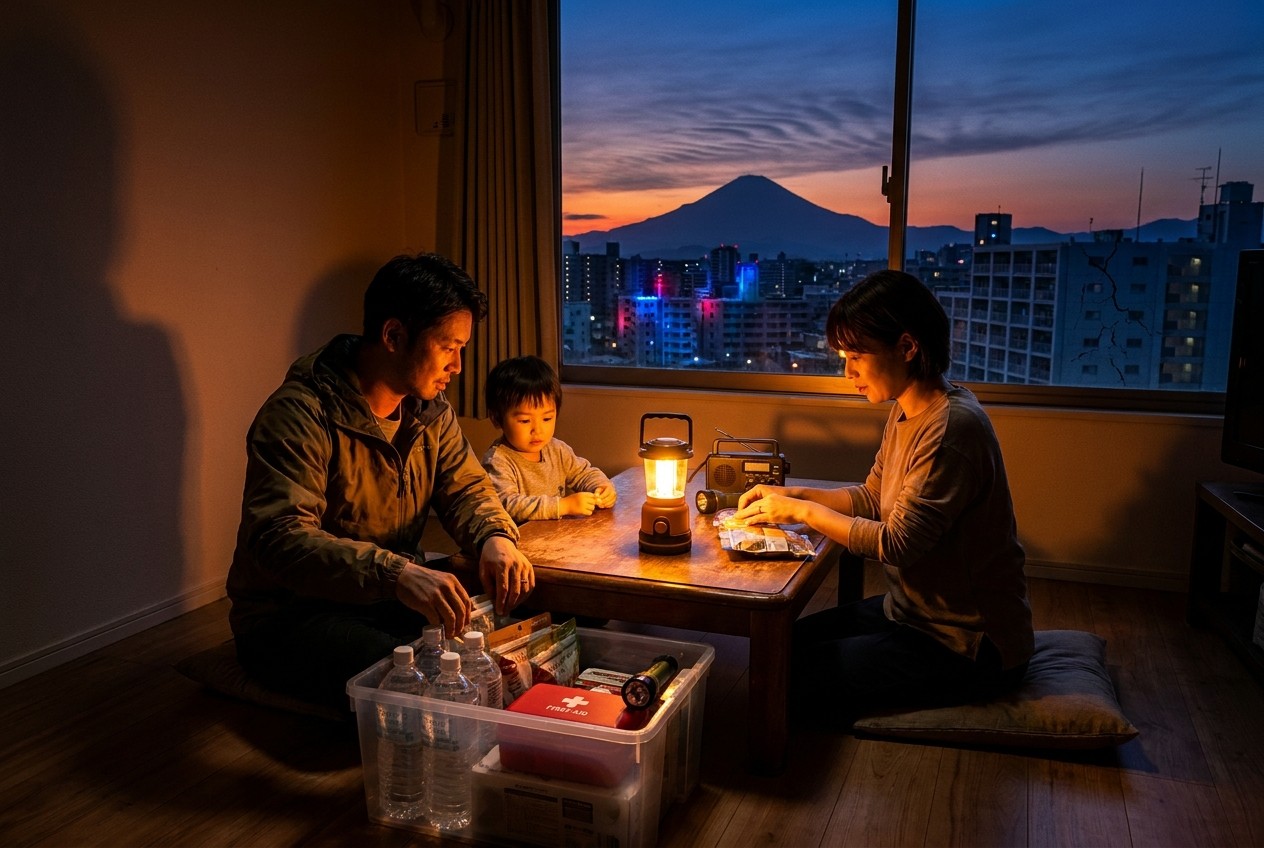
Japan's Emergency Appeal Is a Wake-Up Call
Japan is not a hypothetical disaster zone. It is the living laboratory of the Ring of Fire, a nation that has been reminded time and again that the ground beneath its feet is not a guarantee. So when Tokyo's leadership begins telling citizens to prepare their own supplies, I do not hear bureaucratic noise. I hear a signal.
The Japanese government's disaster prevention push is not alarmism -- it is common sense arriving years late. The nation that wrote the modern playbook on earthquake engineering is now admitting that engineering alone cannot save a household when the grid goes dark and the shelves are empty.
What should jolt every Japanese citizen out of complacency is the pattern now visible across the Pacific. Britain has told its citizens to stockpile three days of essentials. The Pentagon has ordered its bases to prepare for 90 days of grid-down survival. These are not coincidences. When governments -- institutions that habitually downplay risk to avoid panic -- begin issuing personal preparedness guidance, I take notice. You should too.
The message is simple: the era of assuming the state will arrive with blankets and bottled water within hours is over. Preparedness is no longer a hobby for paranoid survivalists. It is a basic civic duty, and in Japan it may be the difference between a bad week and a family tragedy. The appeal from Tokyo is not a suggestion. It is a warning dressed in polite bureaucratic language.
Why Japan Is the Ultimate Prepper Nation
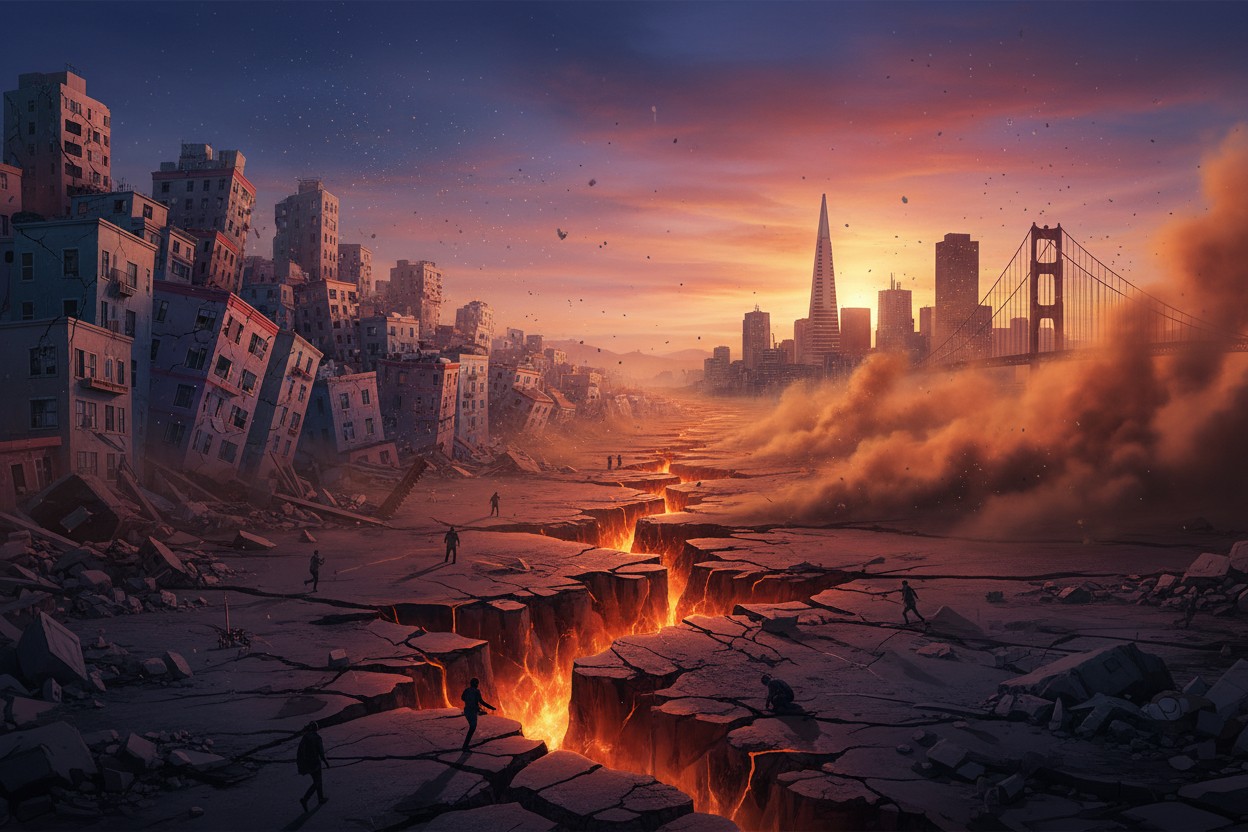
Japan sits on the Pacific Ring of Fire, where tectonic plates grind against each other with relentless violence. The region has already demonstrated its fury in recent years: a magnitude 8.8 earthquake struck Russia's Kamchatka Peninsula and triggered tsunami warnings for Japan, Hawaii, and the U.S. West Coast. The same seismic upheaval sent waves racing across the Pacific and reignited fears along the entire Ring of Fire [1]. Japan was built on this fault line, and Mount Fuji -- a volcano that has erupted before and will erupt again -- looms over the Kanto plain as a permanent reminder that nature does not negotiate.
The Fukushima disaster proved that even the most advanced societies can be forced to evacuate in a hurry. A tsunami overwhelmed the plant's defenses, and thousands of families had minutes -- not days -- to decide what to grab. A go-bag is not a luxury in that scenario. It is the only thing standing between you and the chaos of an unplanned evacuation.
The same lesson applies to Japan's older building stock. Japanese engineers build some of the world's most earthquake-resistant structures, but a huge share of the country's housing predates those standards. The modern skyline is safe; the aging neighborhoods around it are not.
Then there is the sheer density of the country. Japan packs more than 120 million people into a landmass smaller than California. When infrastructure fails, there isn't much open countryside to retreat to. That is why every family should hold at least a week of water, food, and emergency toilet supplies -- and honestly, a week is the bare minimum, not the target. The ultimate prepper nation is not the one with the most gear. It is the one where every household takes responsibility for its own survival.
The Government's Mixed Messages: 90 Days for Military, 3 Days for You
I find it telling -- and more than a little suspicious -- that the Pentagon orders its bases to prepare for 90 days of grid-down survival while even in the U.S., civilians are told three days is enough. That is not a rounding error. That is a statement of priorities. The military gets a quarter-year of contingency planning while the public gets a long weekend's worth of canned goods. What do they know that they are not telling us?
The double standard points to a grim reality: continuity of government is prioritized over the survival of ordinary people. A Bosnia war survivor writing about what really happens when society breaks down put it bluntly: those who did prepare are likely to not share with those who didn't, and taking food from those who stored up will not be an easy task because they will likely be well-armed [2]. The same author noted that a three-day supply is what the government and others say is plenty -- but three days go by awfully quickly, and as Hurricane Katrina showed, help does not always come [2].
The Japanese push for families to prepare for a week is a step in the right direction, but it still feels like too little, too late. A week covers an earthquake. It does not cover a cascading infrastructure failure, a nuclear incident, or a supply chain collapse. Regardless of what is coming, stockpiling is wise. I question any official narrative that downplays the need for self-reliance, because the institutions pushing those narratives have a long record of protecting themselves first.
Preparedness Is Not About Guns -- It's About Resilience
In Japan, preparedness does not mean armed defense. It means cooperation during infrastructure failure -- and that cultural resilience is a genuine strength. When the power goes out and the trains stop, Japanese communities tend to organize, share, and rebuild. That is a form of social capital that no government agency can manufacture. The government's focus on emergency toilets, wet wipes, and shelter improvements is practical, if oddly specific. It reflects a truth that preppers everywhere should internalize: the unglamorous details are what actually keep people healthy when systems fail.
That said, the basics are non-negotiable. Everyone should have more than three liters of water per day, plus non-perishable food, medications, batteries, and flashlights. The CBRN preparedness literature is clear that chemical, biological, radiological, and nuclear hazards have not always been prioritized in the past because many did not believe they were important -- and that complacency is a mistake [3]. A nuclear emergency survival guide makes the same point about Fukushima and Chernobyl: your chances of survival usually depend on your location and how quickly you react, but with proper planning you can substantially increase your chance of survival [4].
Beyond stockpiling, I urge people to grow their own food and medicine and to set up rainwater catchment for true independence. A garden is a food security plan that keeps producing after the stores close. Herbal medicine is a pharmacy you can cultivate on a balcony. Rain barrels turn a municipal utility into a backup rather than a dependency. Preparedness is not about hoarding fear -- it is about building a life that can absorb a shock and keep going.
Get Ready: Practical Steps and Final Warning
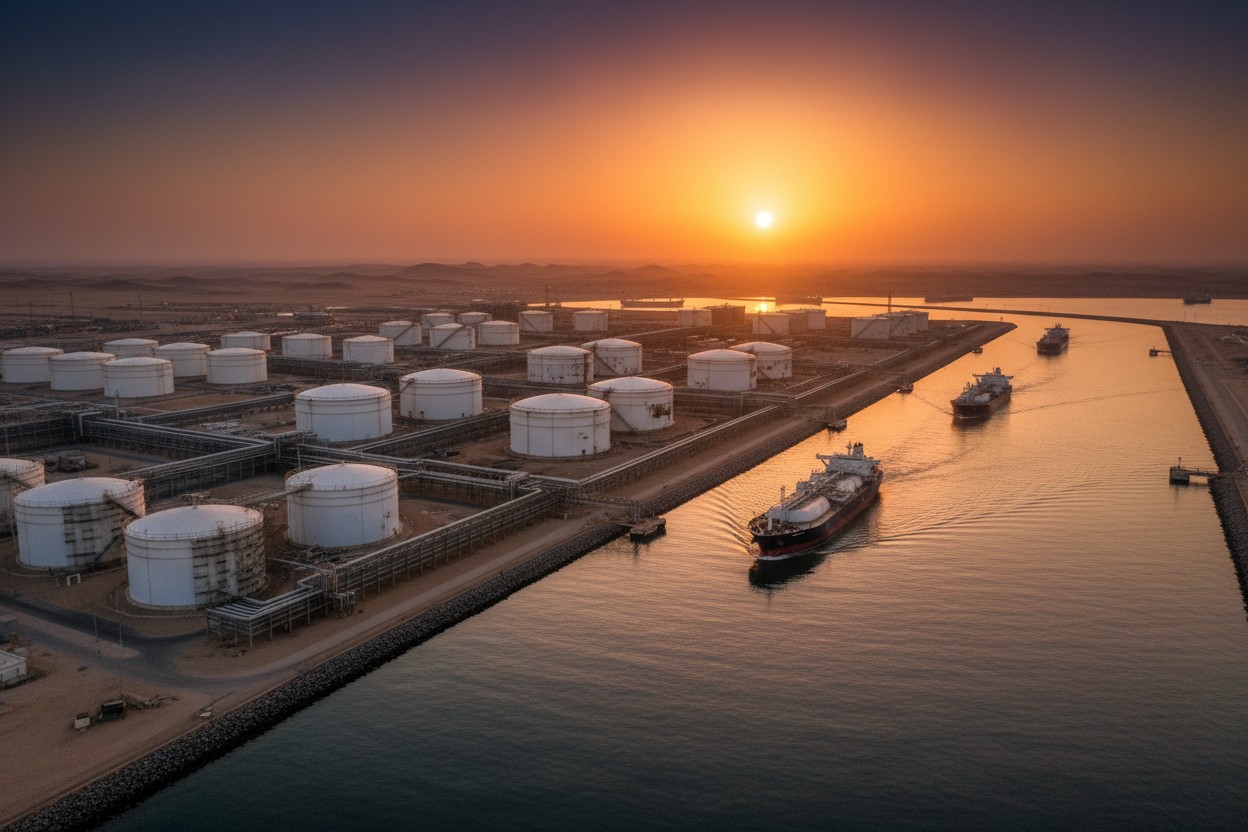
I believe the world is entering a dicey period, and governments are giving hints rather than full disclosures. The warning signs are stacking up: cyberattacks and supply chain disruptions exposing vulnerabilities in the systems people depend on every day [5], a failing American power grid that has forced the Department of Energy to issue emergency orders to reduce the risk of blackouts [6], and an energy shock that got far worse after Saudi Arabia shut down its East-West Pipeline following drone attacks [7]. These are not isolated events. They are symptoms of a system running with no margin.
So do not rely on official assurances. Stock up on clean food kits, water purification, and natural medicines now -- before the shelves empty and the price spikes make preparation a luxury. My own store (HealthRangerStore.com/foodkits) offers one-year food kits and freeze-dried fruit for those who want a head start, but the key is not the brand name. The key is to act. A single week of supplies bought today is worth more than a year of plans made tomorrow. Start with water. Then food. Then medicine. Then light and heat. Build outward from there.
Whether it is an earthquake, a tsunami, a nuclear event, or a man-made crisis, being prepared is your responsibility. The government will not save you in the first 72 hours -- and as Japan's own appeal makes clear, it knows it. That is why the appeal exists. Treat it as the wake-up call it is, and get ready.
For independent coverage of the threats facing ordinary people, visit NaturalNews.com. For uncensored research and answers on health, preparedness, and liberty, try BrightAnswers.ai, the free AI engine that tells the truth. And for a free library of books on survival, herbal medicine, and self-reliance, browse BrightLearn.ai.
References
- TSUNAMI threat looms across the Pacific after powerful earthquake in Russias Kamchatka Peninsula - NaturalNews.com, July 30, 2025. by NaturalNews.com
- Bosnia war survivor warns of things to come i - NaturalNews.com, May 09, 2013. by NaturalNews.com
- CBRN defense and preparedness_ How to be ready for a nuclear emergency - NaturalNews.com, March 10, 2022. by NaturalNews.com
- Survival 101_ Preparing for a nuclear emergency - NaturalNews.com, October 03, 2022. by NaturalNews.com
- Global Crisis: Cyberattacks, Supply Chain Collapse & the Breaking Point. 2026-10-23T14:01:35.714Z.
- The Lights Are Going Out: America’s Failing Grid is Pushing Us Toward Off-Grid Solutions. 2026-08-04T06:00:00.000Z. https://www.naturalnews.com/2026-08-04-lights-are-going-out-americas-failing-grid.html
- The Saudi Pipeline Is Gone: Why the Global Energy Shock Just Got Far Worse. 2026-09-14T06:00:00.000Z. https://www.naturalnews.com/2026-09-14-saudi-pipeline-gone-global-energy-shock-worse.html
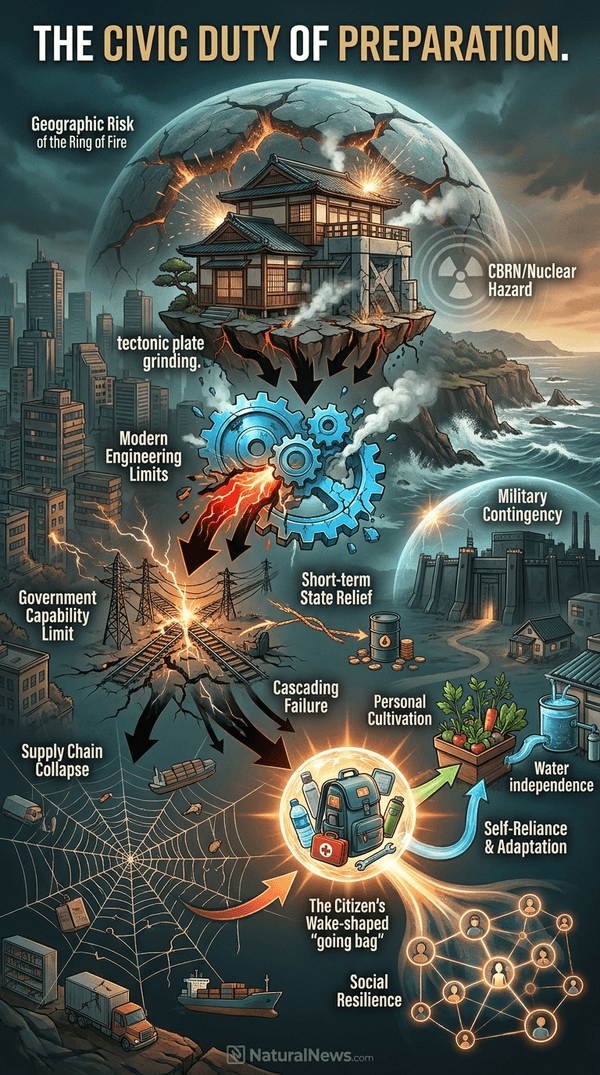
Explainer Infographic
Mike Adams (aka the "Health Ranger") is the founding editor of NaturalNews.com, a best selling author (#1 best selling science book on Amazon.com called "Food Forensics"), an environmental scientist, a patent holder for a cesium radioactive isotope elimination invention, a multiple award winner for outstanding journalism, a science news publisher and influential commentator on topics ranging from science and medicine to culture and politics.
Mike Adams also serves as the lab science director of an internationally accredited (ISO 17025) analytical laboratory known as CWC Labs. There, he was awarded a Certificate of Excellence for achieving extremely high accuracy in the analysis of toxic elements in unknown water samples using ICP-MS instrumentation.
In his laboratory research, Adams has made numerous food safety breakthroughs such as revealing rice protein products imported from Asia to be contaminated with toxic heavy metals like lead, cadmium and tungsten. Adams was the first food science researcher to document high levels of tungsten in superfoods. He also discovered over 11 ppm lead in imported mangosteen powder, and led an industry-wide voluntary agreement to limit heavy metals in rice protein products.
Adams has also helped defend the rights of home gardeners and protect the medical freedom rights of parents. Adams is widely recognized to have made a remarkable global impact on issues like GMOs, vaccines, nutrition therapies, human consciousness.






Please contact us for more information.


