


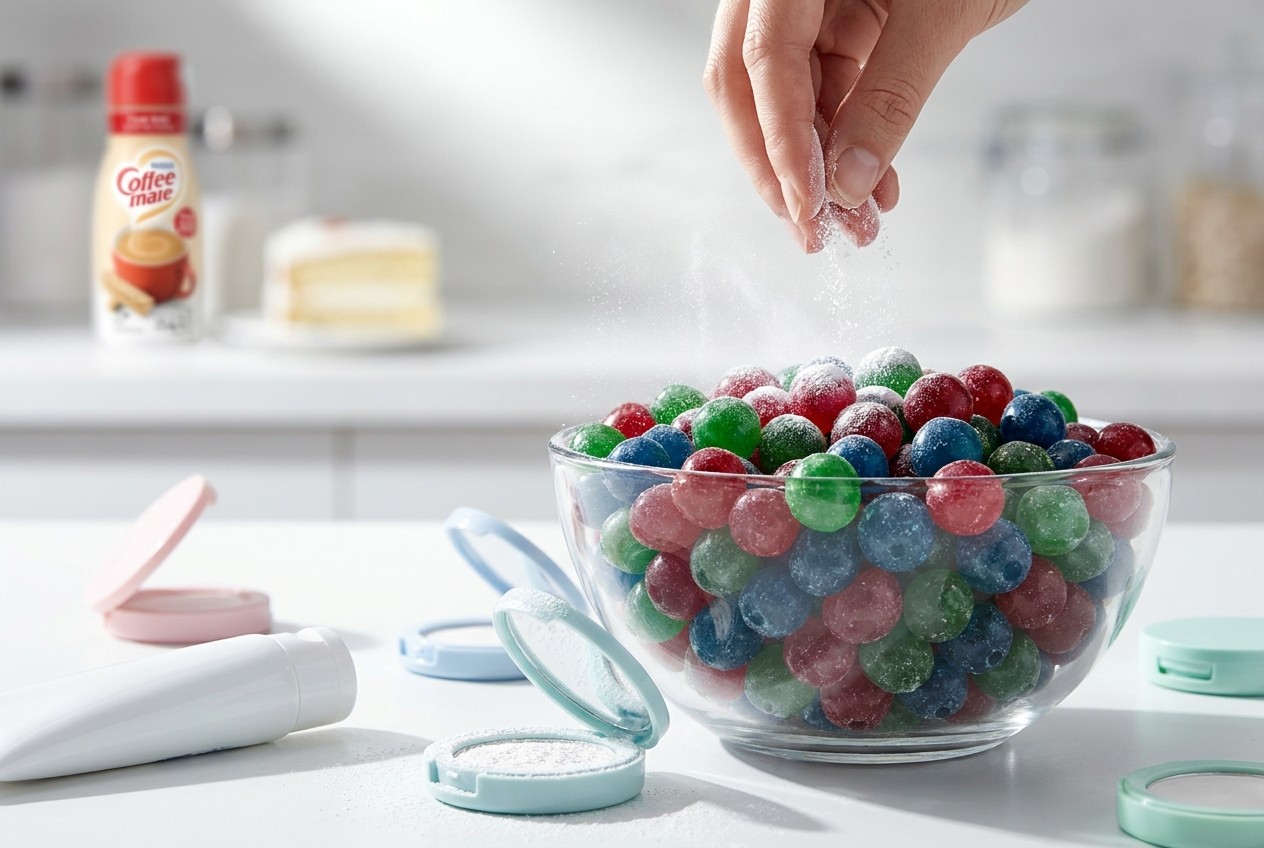
It appears in products ranging from foundation and powder to chewing gum and coffee creamer [1].
What Titanium Dioxide Is and Where It Is Used
It is processed into a fine white powder and used for its whitening and UV-blocking properties. In cosmetics, it appears in sunscreens, foundations, powders, and lip products [8].
Titanium dioxide is also the most widely used whitening pigment globally and is commonly added to foods such as chewing gum, cakes, candies, breads, and ice cream [2].
In personal care, the ingredient serves as both a pigment and a physical UV filter [8]. Its opacifying properties also make it useful in products where a bright white appearance is desired [8].
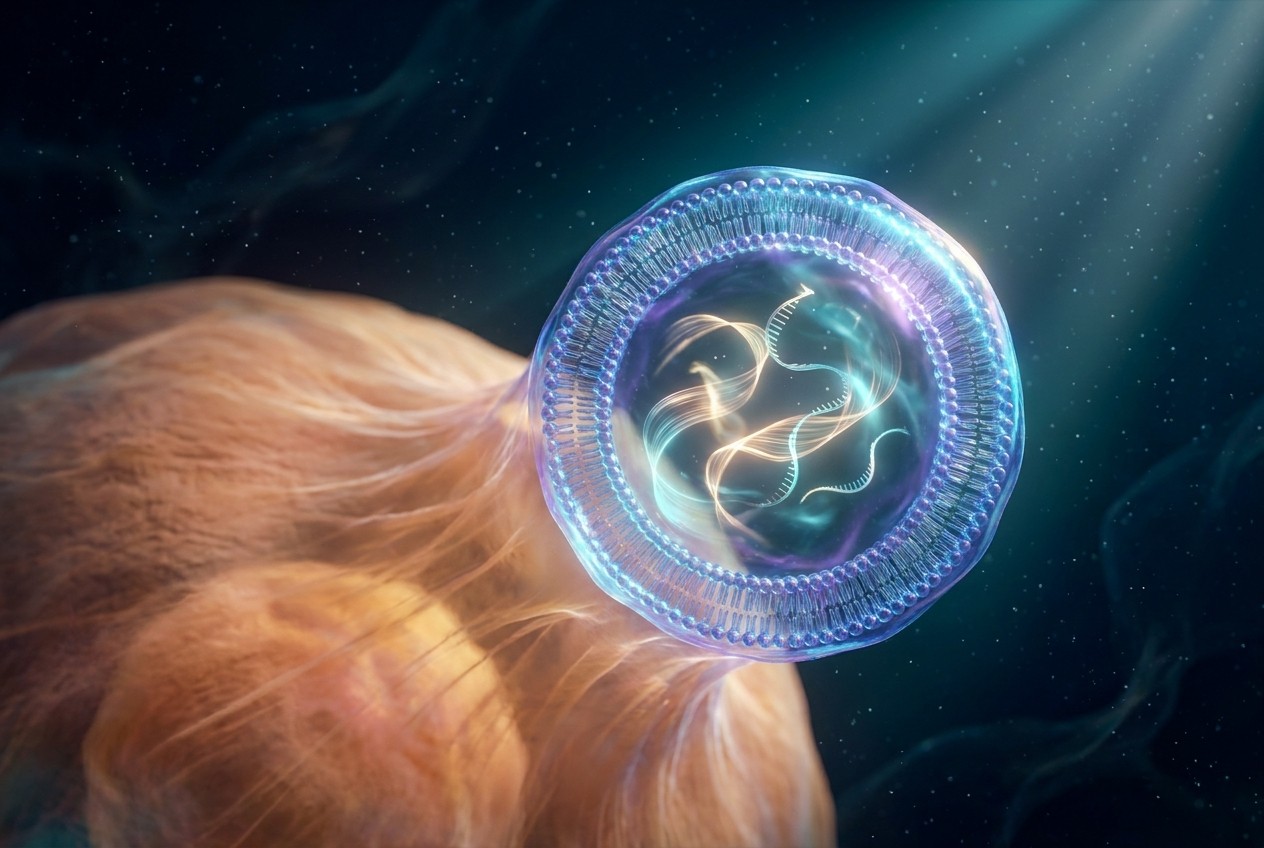
Regulators and researchers distinguish between conventional titanium dioxide particles and nanoparticle forms, which have different physical properties [8]. Nanomaterials are subject to separate labeling or review requirements in some jurisdictions.
A 2007 review published in the journal Nanotechnology noted that some properties of nanomaterials call into question the adequacy of current methods for determining hazard and exposure and for controlling risks [3].
Regulatory Status in the United States and Europe
In the United States, the Food and Drug Administration (FDA) permits titanium dioxide for use as a color additive in cosmetics and as an active ingredient in over-the-counter sunscreens. The FDA has maintained that approved uses of the ingredient are subject to concentration limits and labeling rules.
In the European Union, titanium dioxide is authorized as a UV filter in cosmetic sunscreens up to certain concentrations, with specific requirements for nano-sized particles. The assessment was based on new data and methods, including nanotechnology guidance. The EU subsequently moved to ban its use in food in 2022.
The divergence in regulatory treatment reflects different product categories and different assessment frameworks.
France banned titanium dioxide in food in 2020, according to reports [2].
Safety Concerns and Scientific Review
Reviews have focused on whether titanium dioxide particles can be inhaled, ingested, or absorbed through the skin, and on the potential effects of nanoparticle-sized material [8]. The International Agency for Research on Cancer classified titanium dioxide as possibly carcinogenic to humans based on inhalation exposure in occupational settings [8].
Animal studies have examined the toxicity of titanium dioxide nanoparticles. A 2009 study published in the Journal of Applied Toxicology reported on the acute toxicity of titanium dioxide nanoparticles to mice after intraperitoneal injection [4].
The Safe Cosmetics campaign lists titanium dioxide among chemicals of concern and cites questions about inhalation and use in powder products [8].
Industry groups have stated that the ingredient is safe when used as intended in cosmetics and sunscreens. Regulators have continued to review new data, and positions differ between food and cosmetic uses and between conventional and nano-sized forms.
EFSA's 2021 conclusion applied specifically to food uses, while cosmetic uses remain authorized under EU rules.
Consumer and Industry Perspectives
Consumer advocacy organizations have called for clearer labeling and for alternatives to titanium dioxide in some products. The Campaign for Safe Cosmetics has cited questions about inhalation and use in powder products [8].
A 2022 Mercola.com article noted that titanium dioxide nanoparticles are used as an artificial color additive in many foods, including Skittles, and that a San Leandro resident filed a class action lawsuit claiming the product is 'unfit for human consumption' [1]. The same article stated that titanium dioxide is also used as an anti-caking agent and whitener in foods such as chewing gum, salad dressing, baked goods, and coffee creamer [1].
Industry associations and manufacturers have defended the ingredient's use, saying it provides important UV protection and color performance and that approved uses meet safety standards.
In the EU, cosmetic regulations set concentration limits for titanium dioxide as a UV filter and impose labeling requirements for nano-sized particles.
Regulators say reviews are ongoing and that approved uses remain subject to concentration limits and labeling rules. The FDA announced in 2025 a stricter, more systematic review of food additives linked to cancer, hormone disruption, and developmental harm, targeting substances including titanium dioxide [5].
Texas also moved to mandate warning labels on foods containing additives banned abroad, starting in 2027, under a law backed by State Sen. Lois Kolkhorst [6].
Conclusion
Titanium dioxide remains a common ingredient in cosmetics and sunscreens, and its regulatory treatment varies by product category and region. In the United States, the FDA permits its use as a color additive and as an active sunscreen ingredient.
U.S. and EU officials have reached different conclusions for food and cosmetic uses, while advocacy groups and industry representatives continue to dispute the significance of available safety data. California's Assembly Bill 418 and Texas's warning-label law illustrate how state-level actions are adding new layers to the regulatory landscape [7][6].
Consumers and regulators are left to weigh approved uses against ongoing scientific review and calls for greater transparency.
References
- Hidden Poison in Candy and Supplements - Mercola.com, August 31, 2022.
- This Food Additive Is Banned in the EU But W - NaturalNews.com.
- Nanotechnology: getting it right the first time by Elsevier. Nanotechnology 2007
- John Wiley & Sons, Ltd. In vivo acute toxicity of titanium dioxide nanoparticles to mice after intraperitoneal injection. JN-07. J. Appl. Toxicol. 2009; 29: 330–337
- CHEMICAL FOOD SCRUTINY FDA to actually start doing their job and remove chemicals that cause cancer and ... - NaturalNews.com, May 19, 2025.
- Texas mandates warning labels for foods with additives banned abroad - NaturalNews.com, June 26, 2025.
- 'Skittles Bill': California to Ban 5 Food Additives Linked to Cancer, Hormone Disruption. ChildrensHealthDefense.org, June 29, 2023.
- Titanium Dioxide. https://www.safecosmetics.org/chemicals/titanium-dioxide/









Please contact us for more information.


