



- A University of Sydney study tracked more than 53,000 UK adults wearing activity trackers for eight years.
- Adding 11 minutes of sleep, about five minutes of brisk activity and a quarter-cup of vegetables daily was linked to 10% lower heart risk.
- The healthiest group, sleeping eight to nine hours and exercising at least 42 minutes daily, had 57% lower risk.
- Researchers say sleep, movement and diet constantly influence one another, so small changes across all three add up.
- Because the study was observational, it cannot prove the habits directly caused the lower risk.
Forget punishing gym sessions and pricey prescriptions. A recent study suggests the real path to a healthier heart might take less time than your morning latte run.
Researchers at the University of Sydney have found that combining three tiny daily adjustments — 11 extra minutes of sleep, about five minutes of brisk movement, and a quarter-cup of vegetables — was linked to a 10 percent lower risk of heart attacks, strokes, and heart failure over eight years.
The findings, published in March in the European Journal of Preventive Cardiology, tracked more than 53,000 UK adults who wore activity trackers and completed a food questionnaire. The healthiest group, who slept eight to nine hours, exercised at least 42 minutes daily, and ate reasonably well, saw a 57 percent lower risk.
Can you spare less than 20 minutes a day for a simple routine adjustment with no copay and no side-effect warnings? The research suggests it may be time well spent.
Why sleep, movement, and food work as a team
According to the researchers, these habits constantly feed off one another. They are a tangled web. Skimp on sleep and your hunger hormones go haywire, making you more likely to overeat. Run on empty and the walk gets skipped. Eat poorly, and your sleep pays the price.
“We show that combining small changes in a few areas of our lives can have a surprisingly large positive impact on our cardiovascular health,” said lead author Dr. Nicholas Koemel, a research fellow at the University of Sydney, in a statement.
That interplay is the whole point. Rather than white-knuckling one dramatic overhaul — say, running five miles every morning — you can make modest tweaks on all three fronts. Koemel noted that a few small, combined changes are likely easier for most people to stick with than one big change to a single habit.
What ‘brisk activity’ actually looks like
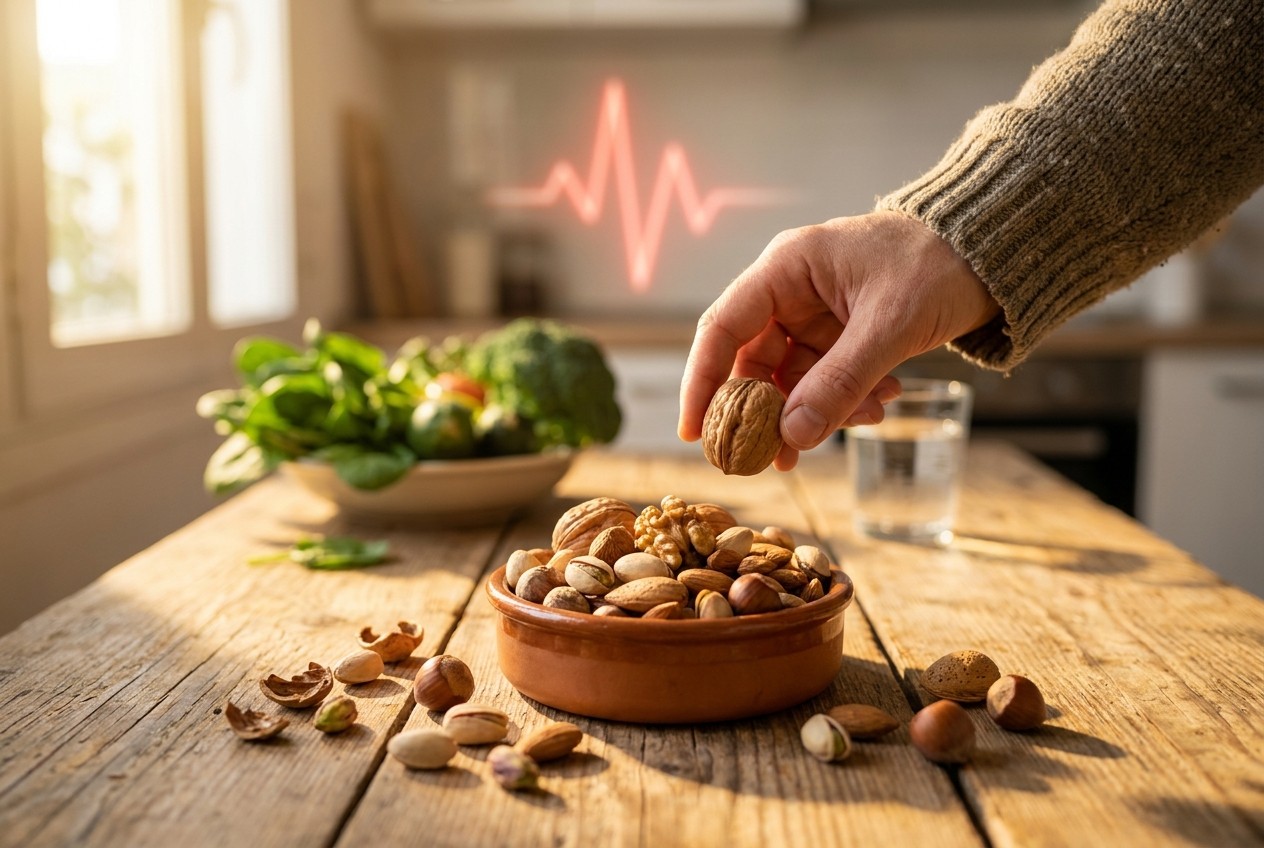
The study measured moderate-to-vigorous physical activity, a category that does not require a gym membership. It includes carrying shopping bags, taking the stairs, or walking briskly. Just 4.5 extra minutes of such activity per day was part of the winning combination.
Combine that with an extra 11 minutes of sleep and a quarter-cup of vegetables — such as a few cherry tomatoes at lunch or a side of broccoli at dinner — and the risk of a major cardiac event was measurably lower.
The researchers also tracked diet quality using a scoring system. A better diet meant more vegetables, fruits, fish, dairy, whole grains, and vegetable oils, and less processed meat, refined grains, red meat, and sugary drinks. But perfection was not required. Even modest improvements counted.
A challenge to the pharmaceutical model
It is worth noting what this study does not say. As an observational analysis, it can’t prove these habits directly caused the lower risk. The researchers themselves called for intervention trials to confirm the findings.
Still, the numbers are hard to ignore at a time when heart disease remains the leading killer in America. The standard medical approach — lifelong statins, blood pressure drugs, and invasive procedures — generates enormous profits for the pharmaceutical industry. Meanwhile, free, natural habits like better sleep, movement, and diet rarely get the same marketing muscle.
“I would encourage people not to overlook the importance of making a small change or two to your daily routine, no matter how small they may seem,” Koemel said.
Senior author Professor Emmanuel Stamatakis of the University of Sydney and Monash University said the team plans to build digital tools that help people turn these tweaks into lasting routines, designed with input from everyday users to tackle the obstacles that get in the way.
Small daily habits with a big payoff
Protecting your heart doesn’t have to mean turning your life upside down. You need a coffee break’s worth of time, a few bites of vegetables, and an earlier bedtime. Every small choice you make today is a vote for your heart, and unlike a prescription, it comes with no fine print. Your heart is keeping score every day, so why not start tonight?
Sources for this article include:








Please contact us for more information.


