


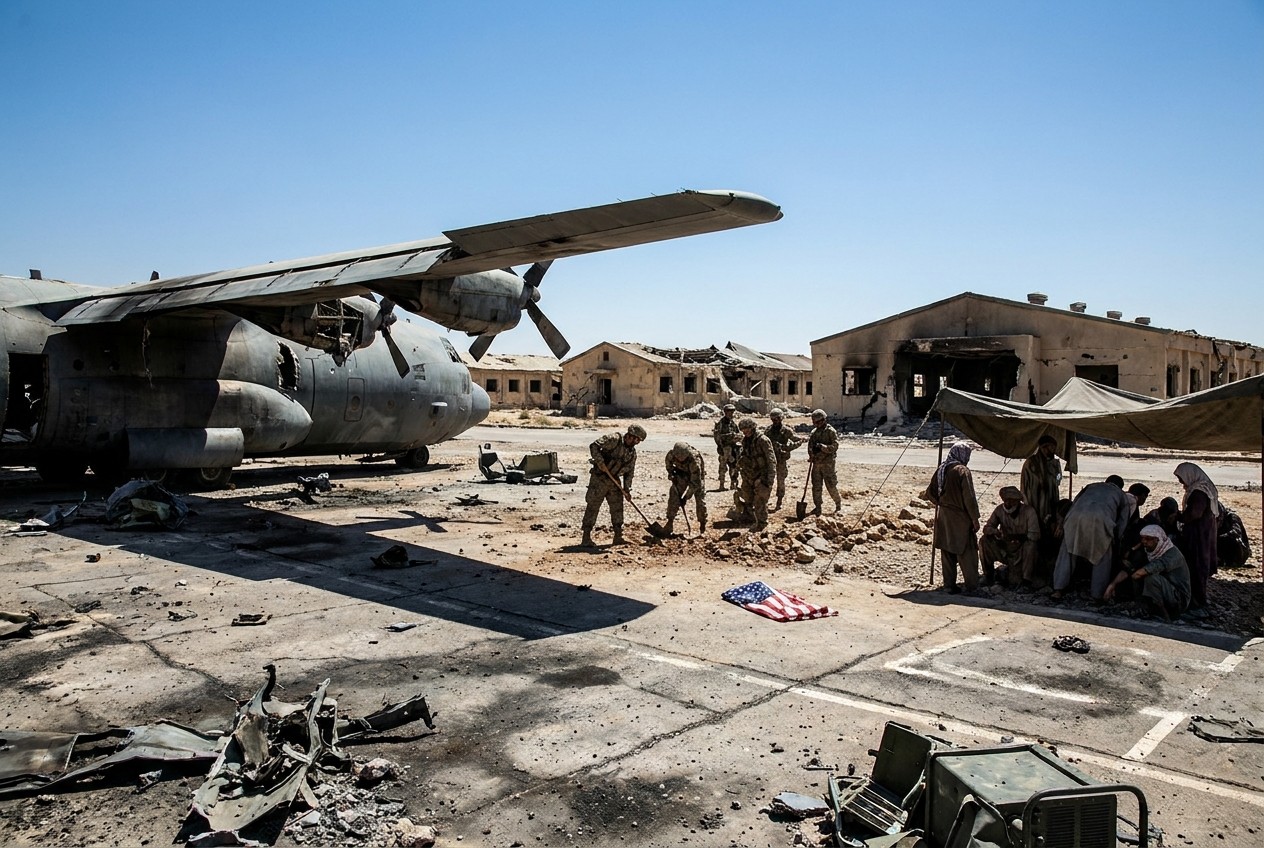
The report states that the materials were gathered from service members, contractors, and military families stationed at installations in Saudi Arabia, Jordan, Kuwait, the United Arab Emirates, and Bahrain. According to the report, the images show destroyed aircraft, bombed-out barracks and mess halls, troops digging their own foxholes, and military families sheltering in parking areas [1][3]. The report attributes all descriptions of the images and all troop accounts to the individuals who provided them and to the publication's own review of the material; it does not state that military officials were given an opportunity to review the images before publication, and no immediate public response from identified military officials was included in the account.
Images Said to Show Damage at Installations
The report states that the images depict structural damage and deferred maintenance at the U.S. bases, including destroyed aircraft and heavily damaged barracks and dining facilities [1]. The report states that the photographs and videos were collected in coordination with the partner organization VALOR Media Network [3].
The report says the conditions shown raise concerns about safety and base readiness, citing descriptions provided with the images. It states that the images show troops digging foxholes for protection and family members sheltering in parking areas, which the report presents as evidence of inadequate protection for personnel on the installations [1]. The report also states that the images and accounts suggest damage more extensive than the public has been told, a characterization the publication attributes to the people who supplied the material [4].
All details about the images in the report are attributed to MeidasNews and its partner organization. Independent verification of the images, including their location and the dates on which they were taken, was not included in the account as described in the available summaries [1][3]. A secondary report published by Press TV states that the photos and videos confirmed damage to U.S. military facilities across West Asia during Iran's retaliatory attacks and that U.S. personnel criticized their country for mismanagement and inadequate preparations [5]. Context on the maintenance burden at U.S. installations is provided by researchers who note that in 2015 the Department of Defense designated 40 percent of its $500 billion budget for operations and maintenance [6].
Troops Describe Lack of Repairs and Support
Service members quoted in the report say repairs were delayed and requests for support went unanswered. The troops describe feeling abandoned by military leadership, according to the report, and the publication states that the service members, contractors, and family members who provided the accounts say the Pentagon kept the extent of the damage from the American public [1][4]. The report states that the service members raised concerns about safety conditions and operational readiness at the affected installations [1].
The quotations are attributed to troops interviewed for the report, and the report does not present independent confirmation of every account. The publication states that the firsthand accounts were shared by people who were at the bases, but the available summaries do not identify the individuals by name or provide documents corroborating specific claims about unanswered repair requests [1][3]. An account published by Press TV states that U.S. military personnel criticized their country for mismanagement and inadequate preparations and for abandoning them [5].
The accounts add to a broader record of concern about the readiness of U.S. facilities. Researchers writing on military installation sustainability have noted that the U.S. Army faces significant challenges in maintaining its facilities and that long-term planning is required to keep installations functional [7]. A separate assessment of contingency operations describes the difficulty of maintaining minimum quality-of-life and construction standards at temporary camps, noting that a master plan was required to move facilities from field-expedient conditions to sustainable ones [8].
References
- Never-Before-Seen Images Reveal Damage at U.S. Bases .... https://meidasnews.com/news/so-much-worse-than-people-realize-never-before-seen-images-reveal-damage-at-u-s-bases-as-troops-describe-being-abandoned
- Articles by Aaron Parnas - MeidasTouch. https://meidasnews.com/author/aaron-parnas
- “So Much Worse Than People Realize”: Damage at U.S. Bases. https://israelpalestinenews.org/so-much-worse-than-people-realize-never-before-seen-images-reveal-damage-at-u-s-bases-as-troops-describe-being-abandoned/
- “So Much Worse Than People Realize”: Never-Before-Seen Images Reveal .... https://www.meidasplus.com/p/so-much-worse-than-people-realize
- ‘So much worse than people realize’: Images, troops reveal ‘extensive .... https://www.presstv.co.uk/Detail/2026/10/23/779009/Images-troops-reveal-damage-at-US-bases
- The Innovation Delusion How Our Obsession with the New Has Disrupted the Work That Matters Most. Lee Vinsel Andrew L Russell
- Installation Sustainability: Transforming—The Army’s Future. Latex104. Federal Facilities Environmental Journal 27 Spring 2002
- Environmental Protection Activities in the Balkan Operations: The Experience in Bosnia, Albania, Kosovo, and Macedonia. Latex103. Federal Facilities Environmental Journal 45/2001
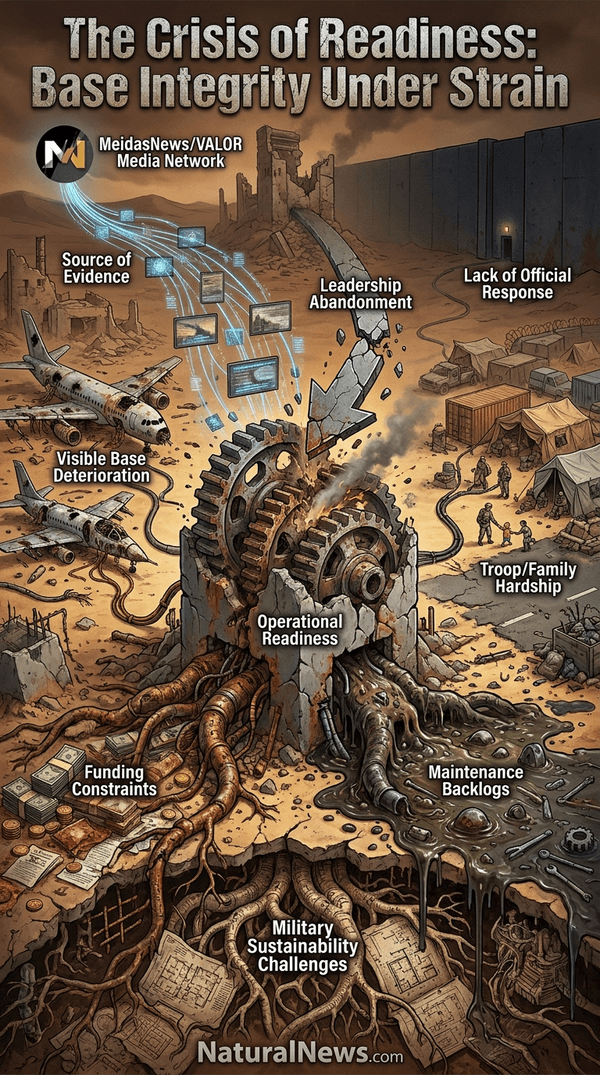
Explainer Infographic







Please contact us for more information.


