


Introduction
Kevin Shelley, a licensed occupational therapist with over 30 years of experience in major healthcare settings, published an article in The Epoch Times on August 23, 2026, detailing five lunge exercises. The article, titled 'Lunge Science: 5 Lunges to Maximize Leg and Core Strength,' explains the biomechanical origins of lunges and their benefits for leg and core strength, as well as balance [1].
According to the report, the lunge's modern movement traces back to 17th-century sword-fighting manuals, with references appearing in works by Salvator Fabris and Ridolfo Capoferro in the early 1600s. The basic biomechanical aspect involves stepping out of the base of support with one foot while the other remains anchored, engaging postural stabilizers that strengthen core musculature and balance [2]. Shelley recommends that readers speak with their medical provider before starting any exercise program, according to the report. The exercises are described as low-impact and require no specialized equipment, making them suitable for home practice [3].
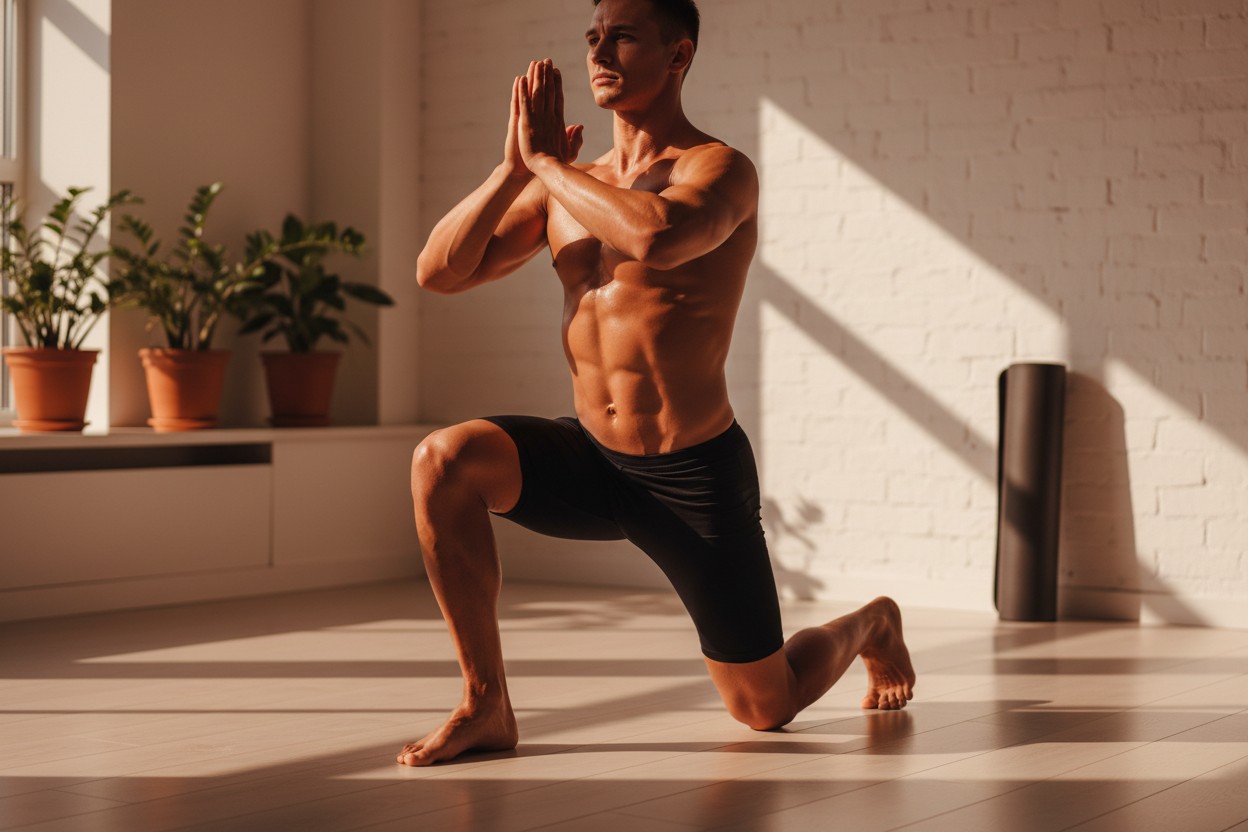
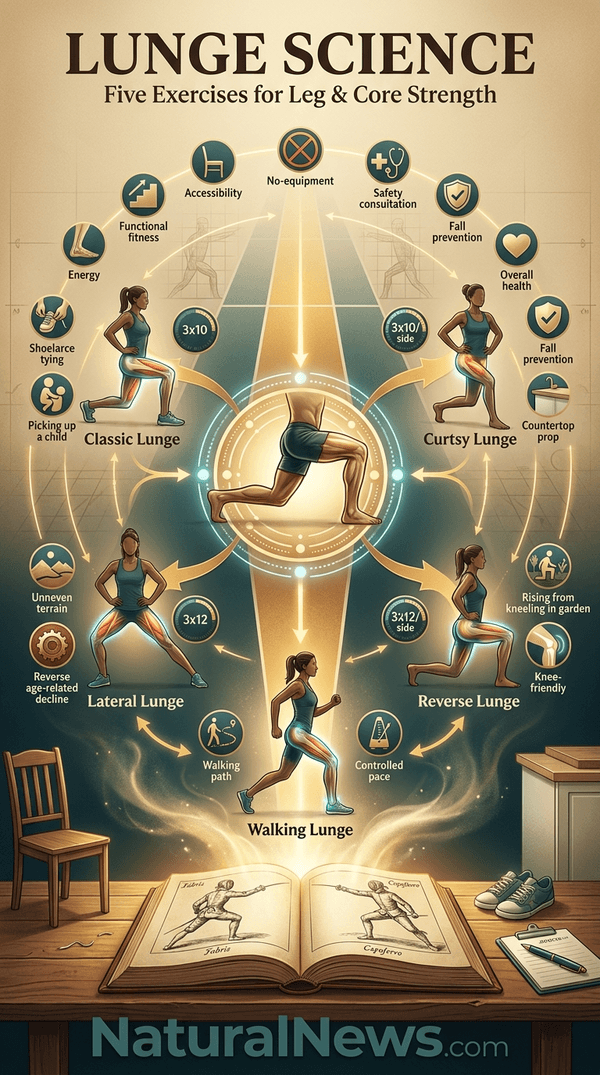
Classic Lunge
The classic lunge involves stepping forward with one foot while keeping the other anchored, and the article states it focuses on quadriceps and glutes, along with ankle, hip, and trunk stabilization. Shelley provides step-by-step instructions: stand with feet hip-width apart, take a large step forward, bend the front knee to 90 degrees, and lower the back knee to the floor [2].
Each repetition counts as moving to the floor and back to the starting position, with three sets of 10 repetitions recommended. Modifications include using support from a couch, chair, table, or counter for balance, and limiting depth for those with knee pain, as noted in the article. Shelley emphasizes that the exercise trains postural balance stabilizers through a dynamic range of movement, including a high-low-high progression [4]. For those with limited range of motion, taking the back knee down only as far as comfortably manageable remains effective, according to the report.
Curtsy Lunge
The curtsy lunge is described as a crossover movement that emphasizes hip abductors and adductors, enhancing lateral control and balance. Shelley instructs stepping one foot behind the other, lowering the back knee to the ground, and returning to standing, with three sets of 10 repetitions per side [2].
The article notes that this exercise can be done near a countertop or piece of furniture for balance support. According to Shelley, the enhanced focus on hip abductor and adductor strengthening translates well to real-world balance and function, especially in reducing the risk of falls [5]. Lowering only as far as comfortably possible is recommended, as rising back up from a full lunge using predominantly one leg's muscles can be challenging initially. The movement swaps the forward-and-back motion of the standard lunge for a crossover, side-to-side movement, which focuses heavily on the inner and outer thighs [6].
Lateral Lunge
The lateral lunge builds on the curtsy lunge by adding a larger side-step, according to Shelley, targeting abductors and adductors while improving lateral stepping ability. The steps involve standing with hands clasped under the chin, taking a wide step to the side, and squatting until the knee reaches 90 degrees while keeping the opposite leg straight [2].
Shelley recommends three sets of 12 repetitions and suggests starting near a stable surface for balance, as stated in the article. The exercise is described as beneficial for maximizing lateral stepping, which Shelley notes can become rusty with age, reducing gait patterns to essentially forward-stepping and small-step rotations [7]. The report states that only stepping and lowering into the lunge as far as comfortably possible is advised, as stepping too far can make pushing back to standing difficult. Shelley emphasizes that the exercise is 'beautiful for maximizing lateral stepping' and addresses the chicken-and-egg situation where decreased ability leads to decreased use [8].
Reverse Lunge
The reverse lunge emphasizes gluteal and hamstring activation, reduces stress on the front knee, and helps practice standing from a kneeling position, per the article [9]. Shelley directs taking a large step backward, lowering the rear knee to the floor while keeping the trunk upright, and returning to standing [2].
The report mentions that the exercise is easy on the knees and three sets of 12 repetitions per side are recommended. According to Shelley, keeping the trunk upright and the head and shoulders back keeps the weight bias toward the rear foot throughout the movement. The article notes that this lunge challenges balance almost as much as the curtsy lunge while being vastly more controllable. For those concerned about knee stress, the reverse lunge reduces movement stress on the leading knee compared to forward variations [10].
Walking Lunge
The walking lunge involves stepping forward into a lunge and then bringing the back leg forward for the next step, combining strengthening and balance work, according to Shelley [2]. The article states that each forward step counts as one repetition, with three sets of 10 steps suggested, and modifications include lunging only as far as comfortable [11].
Shelley notes that this exercise heavily involves the front quadriceps and glutes and also challenges ankle stabilization. According to the report, since the participant rises on the front leg, the exercise places great emphasis on the lead quadriceps and gluteal muscles, making it suitable for high-intensity strengthening. The asymmetrical balance demands on the front ankle are described as excellent for training the muscles that help preserve balance. Shelley recommends not rushing the movement, as losing control becomes more likely when performed quickly [12].
Conclusion
The article concludes that lunges are effective for strengthening leg muscles and improving balance, with recommended frequency of three to five days per week [2]. Shelley also advises practicing lunges for overall sure-footedness and hip mobility, as reported in the piece. The report urges readers to consult healthcare providers before attempting the exercises [13].
According to Shelley, mastering these exercises can make individuals 'amazingly sure-footed' while providing the hips with 'wonderful mobility.' The report notes that regular practice can help address age-related muscle loss and functional decline [14]. Shelley's guidance aligns with broader fitness recommendations that emphasize the importance of lower-body strength for daily function and fall prevention [15]. The article suggests that for a greater challenge, participants may hold weights such as dumbbells while performing any of the lunge variations [16].
References
- NaturalNews.com. "5 Exercises That Aim to Balance Strength and Flexibility". July 24, 2026.
- NaturalNews.com. "Report: Five At-Home Exercises for Leg Strength in Adults Over 60". August 18, 2026.
- Mercola.com. "Winter Is a Great Time for Living Room Workouts". March 07, 2014.
- DeVore Jacques. "Bicycling maximum overload for cyclists: a radical strength-based program for improved speed and endurance in half".
- NaturalNews.com. "Nine Balance Exercises Aim to Improve Stability at Any Age". July 15, 2026.
- Christine Felstead. "Yoga for Runners".
- Mercola.com. "5 Movements That Reveal Your Fitness Weakness". February 05, 2016.
- NaturalNews.com. "Five Quad Exercises Beyond Squats, According to Physical Therapists". August 05, 2026.
- Garcia Leah. "Knack weight training for women step-by-step exercises for weight loss body shaping and good health".
- Stephens Mark. "Teaching yoga essential foundations and techniques".
- Horowitz Jeffrey. "Ageless strength strong and fit for a lifetime".
- Nicholas Bjorn. "Strength Training Supplements The Ultimate Guide to Strength Training The Ultimate Supplement Guide For Men".
- NaturalNews.com. "5 At-Home Leg Exercises for Strength After 60". August 23, 2026.
- NaturalNews.com. "How five simple exercises can fortify your bones and preserve independence". April 17, 2026.
- Clifford D Stark. "Living with Sports Injuries".
- Tom Holland. "BEAT THE GYM".
Explainer Infographic












Please contact us for more information.


