



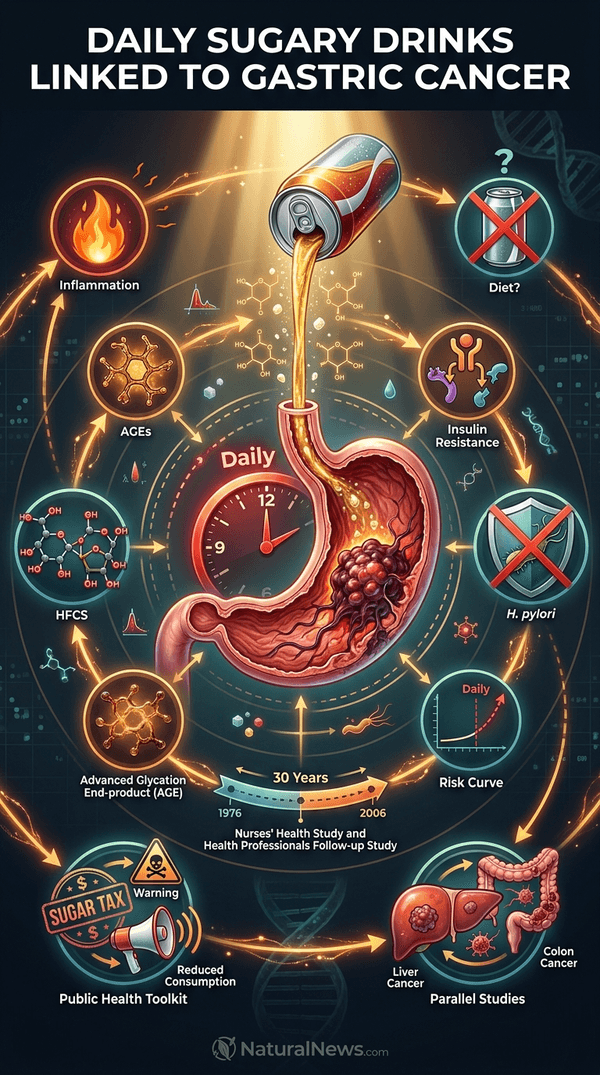
The analysis, drawn from over 112,000 participants in two long-running U.S. health studies, adds to a growing body of evidence connecting sugary drinks to multiple cancer types. According to the study, which used data from the Nurses’ Health Study and the Health Professionals Follow-up Study, individuals who drank sugar-sweetened beverages more than once per day had over twice the gastric cancer risk compared with those who rarely consumed them. The findings were published in a peer-reviewed journal and represent one of the first large-scale investigations specifically linking sugary drink habits to stomach cancer.
Study Design and Methods
The researchers drew on decades of dietary and health data from the Nurses’ Health Study, which began enrolling female nurses in 1976, and the Health Professionals Follow-up Study, which started tracking male health professionals in 1986. Participants regularly completed detailed food-frequency questionnaires that recorded their intake of various beverages, including sugar-sweetened sodas, fruit drinks, sports drinks, and artificially sweetened alternatives.
Over the follow-up period, the incidence of gastric cancer was tracked across different consumption groups. The large cohort size and extended observation time allowed the researchers to control for known risk factors such as age, smoking, alcohol use and Helicobacter pylori infection. The authors noted that this is the first study to demonstrate a link between sugary beverage intake and gastric cancer risk with such a long follow-up and robust sample size.
Key Findings on Beverage Type and Risk
The study found that participants who consumed sugar-sweetened beverages more than once daily had over double the risk of developing gastric cancer compared with those who drank them rarely. The elevated risk was observed in both men and women, though it was somewhat more pronounced among women. Crucially, the association only appeared at daily consumption levels; those who drank such beverages one to three times per month, weekly, or even four to seven times per week had gastric cancer rates similar to infrequent drinkers.
By contrast, artificially sweetened beverages showed no significant association with gastric cancer risk. The researchers also analyzed total fructose intake, a major component of high-fructose corn syrup used in many sugary drinks, and found that higher fructose consumption correlated with increased gastric cancer rates. This pattern suggests that sugar itself, rather than sweetness or carbonation, is the driving factor.
Earlier research has connected sugary drinks to other malignancies. A study published in the Journal of the American Medical Association found that women who drank one or more sugary beverages daily faced an 85% higher risk of liver cancer [1][2], while another study demonstrated that the glucose-fructose combination in high-fructose corn syrup can fuel the spread of colorectal cancer [3].
Limitations and Context
The study is observational, meaning it identifies an association rather than proving that sugary drinks directly cause gastric cancer. The authors acknowledged that residual confounding from unmeasured factors cannot be ruled out. However, the consistency of the findings with biological mechanisms and the strength of the dose-response relationship lend credibility to the link.
Previous research has linked sugar-sweetened beverages to colon tumor growths and early death from cardiovascular causes [4][5]. Books such as “How Not to Diet” by Michael Greger have summarized evidence showing that sugary drink consumption is associated with chronic disease and cancer risk [6].
Other authors, including Nancy Appleton in “Killer Colas: The Hard Truth About Soft Drinks,” have documented the metabolic harms of high-fructose corn syrup and soft drink consumption [7]. While the current study found no increased risk from artificially sweetened beverages, other research has raised concerns about artificial sweeteners and cancer, indicating that substituting diet drinks may not be a risk-free solution.
Implications for Daily Habit
Because the elevated gastric cancer risk was confined to daily consumption, the findings point to the importance of addressing recurring beverage habits rather than occasional indulgences. According to the study, a soda consumed at a party or a lemonade on a hot afternoon did not increase cancer risk in the data. The danger emerged when sugary drinks became a daily fixture.
The researchers suggested that individuals evaluate their routine beverage choices. Simple swaps, such as replacing a daily soda with sparkling water flavored with a splash of juice, can reduce added sugar intake without sacrificing taste. For those who consume sports drinks after moderate exercise, water may be sufficient.
The findings emphasize that small, repeated changes in daily drink selections can accumulate over time to reduce potential health risks. Cutting back on sugary drinks may also help manage insulin and inflammation, which are pathways implicated in cancer development [8][9].
References
- Ava Grace. "Sugary drinks linked to dramatic rise in liver cancer risk among women study warns". NaturalNews.com. July 25, 2025.
- NaturalNews.com. "Study: A sugary drink a day could increase your risks of chronic liver disease and liver cancer". September 5, 2023.
- Ava Grace. "Sweet danger New study finds sugary drinks fuel the spread of colorectal cancer". NaturalNews.com. September 28, 2025.
- Mercola.com. "Sugary Drinks Linked to Tumor Growths in the Colon". July 12, 2021.
- NaturalNews.com. "It takes just ONE sugary drink a day to increase your risk of heart disease-related death by a third". November 25, 2019.
- Michael Greger MD FACLM. "How Not to Diet".
- Nancy Appleton. "Killer colas the hard truth about soft drinks".
- Gary Null. "How to live forever the natural path to new longevity".
- James M. Rippe. "Fructose, High Fructose Corn Syrup, Sucrose and Health".
Explainer Infographic








Please contact us for more information.


