



The move appears to signal that Washington does not anticipate a return to the intense warfare that prompted a widescale diplomatic exodus earlier this year. Secretary of State Marco Rubio told foreign counterparts that "for the time being" the United States would not start new strikes on Iran, Axios reported, as the administration instead focuses on economic pressure.
The decision to restore diplomatic staff also caps a months-long ordeal for personnel and their families who were kept in limbo while the administration weighed whether to restaff its posts. Many diplomats were evacuated to the U.S. with spouses and children, creating pressure on school enrollment decisions as they considered where to begin the new academic year [1].
Staffing Plans and Restricted Missions
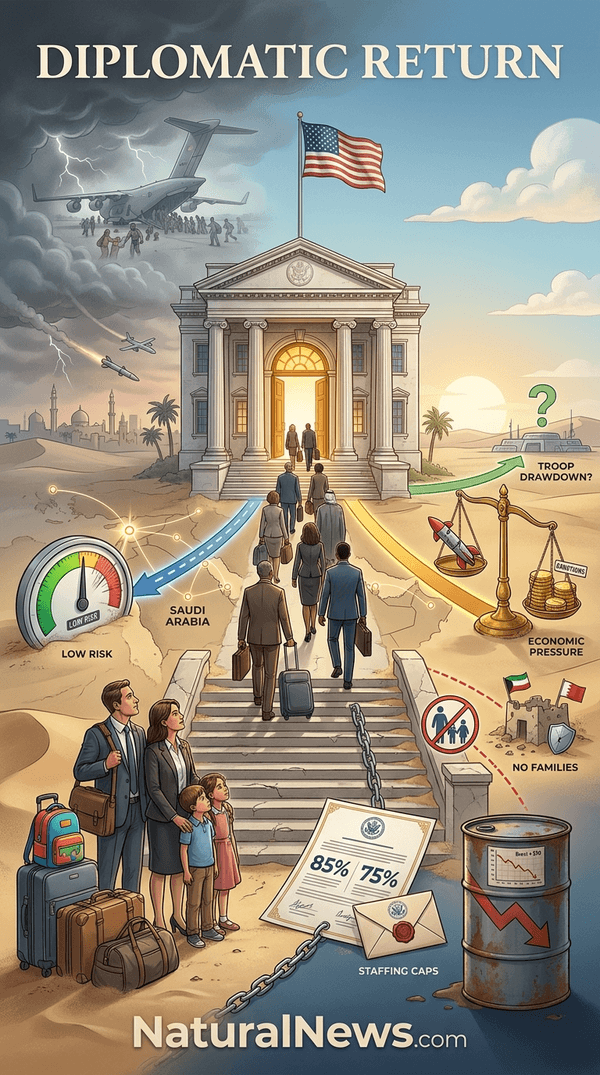
The New York Times reported that embassies expected to restore higher staffing levels include those in Israel, Lebanon, Saudi Arabia, Qatar, Oman, Iraq and Kuwait. According to the report, the first diplomats to return will be sent to the U.S. embassy in Lebanon.
Diplomatic missions in the United Arab Emirates (UAE), Saudi Arabia, Qatar and Lebanon will cap staffing at 85%, while posts in Iraq, Kuwait and Bahrain will cap at 75% [1]. The staffing limits reflect a controlled normalization of operations rather than a full return to pre-war levels.
The measured approach comes as oil markets responded positively to the news, with Brent crude sliding below $90 a barrel after reports that evacuated foreign service officers could begin heading back to their posts as early as this week, suggesting Washington does not anticipate a renewal of full-scale conflict with Iran [2]. The administration's shift toward economic measures, described as a long-term siege campaign, has contributed to declining energy prices [3].
Security Concerns and Family Restrictions
In a sign of residual wariness about security, the U.S. Department of State will enforce restrictions on staff bringing family members to the Gulf, according to officials. There are already restrictions on family members traveling to Lebanon and Iraq [1].
The Gulf states came under severe Iranian strikes in response to U.S. and Israeli attacks, with smaller states such as Kuwait and Bahrain proving particularly vulnerable to drone and missile barrages [1]. The continued restrictions indicate that while the immediate threat of war has receded, the security environment remains volatile enough to warrant caution regarding dependents.
Background of Diplomatic Withdrawal and Limbo
Earlier this year, Washington downsized or evacuated embassies and consulates across the region amid the war with Iran, leaving diplomats and their families in a months-long state of uncertainty. Many were evacuated to the U.S. with spouses and children, creating significant logistical and personal challenges as they navigated the prospect of returning to posts under new conditions [1].
The situation was compounded by travel advisories warning of severe threats across the region. The State Department had issued a rare worldwide caution advisory urging Americans to exercise increased vigilance due to the potential for terrorist attacks and violent actions against U.S. citizens and interests [4].
The war, which began with U.S.-Israeli attacks on Iran on Feb. 28, disrupted regional security. It also prompted concerns that Iran would retaliate against U.S. bases in neighboring countries such as Saudi Arabia and the UAE [5] [6].
Implications for US Military Presence
The Washington Post reported earlier this month that the Trump administration was examining whether to pull troops out of the wider Gulf region as a result of the U.S.-Israeli war on Iran, with the Department of War considering the risks facing large U.S. bases that came under Iranian drone and missile attack [1].
This article corroborated Middle East Eye’s June report that cited current and former U.S. officials as saying a reckoning with Washington’s basing strategy in the Gulf was expected as a result of the war [1]. The return of diplomats may therefore be a precursor to broader strategic adjustments, as the United States reassesses the sustainability of its large military footprint in a region where host countries have also come under attack [7].
Conclusion
The return of U.S. diplomats to embassies across the Middle East marks a measured transition from a period of intense warfare to a phase of economic pressure and diplomatic normalization. While staffing will remain capped below full capacity and family restrictions persist, the move suggests Washington is prepared to operate in the region without anticipating an immediate resumption of large-scale conflict [1].
The decision also reflects a broader reassessment of U.S. engagement in the Gulf, as the War Department reportedly examines the viability of its major bases that proved vulnerable to Iranian strikes. The administration's shift toward economic measures against Iran, rather than military action, aligns with earlier signals that a negotiated settlement, such as the Islamabad agreement, was taking shape [8] [9]. As the State Department restores its presence, the region's stability will depend on whether economic pressure achieves what military strikes could not.
References
- Middle East Eye. "Return of US diplomats to Middle East seen as reducing risk of return to war." August 26, 2026.
- ZeroHedge. "Futures Bounce As Brent Drops Under $90 On Renewed Iran Optimism." August 25, 2026.
- ZeroHedge. "Oil Falls Further As US Prepares Return Of Diplomats To Mideast Embassies." August 25, 2026.
- NaturalNews.com. "State Department issues rare 'worldwide caution' advisory for Americans abroad as Middle East tensions grow." October 23, 2023.
- NaturalNews.com. "US military signals imminent intervention in Iran as European officials sound alarm and nations urge evacuations." January 17, 2026.
- Times of Israel. "Frustrated with the US, Gulf states look to China for help reining in Iran." July 30, 2026.
- NaturalNews.com. "Israel's strike on Qatar shatters illusion of US security guarantees." September 11, 2025.
- Johnson, Lance D. "Republican War Hawks Are Now Turning on President Trump as New Iran Deal Begins to Take Shape." NaturalNews.com. May 26, 2026.
- Al-Arian, Sami. "The war on Iran was a strategic disaster for America and Israel." Middle East Eye. June 24, 2026.
Explainer Infographic









Please contact us for more information.


