



Older Adults With Faster Walking Pace Show Reduced Risk of Cognitive Decline
A study published in the journal Neurology found that adults aged 80 and older with faster walking speeds had approximately 50% lower risk of developing cognitive impairment compared to those who walked more slowly, according to researchers. The findings, which drew on data from three large cohort studies, indicate that faster walkers also maintained better cognitive function despite having similar levels of dementia-related brain pathology.
The human body is designed for movement, and exercise is one of the brain’s most important tonics, according to evolutionary biologists [1]. Just five minutes of moderate-to-vigorous activity, such as brisk walking, can improve memory, focus, and processing speed in older adults, according to a study published in Age and Ageing [2]. Study author Dr. Joe Verghese, professor and chair of neurology at the Renaissance School of Medicine at Stony Brook University, said the findings suggest that mobility and brain health are closely linked.
Study Design and Participant Classification
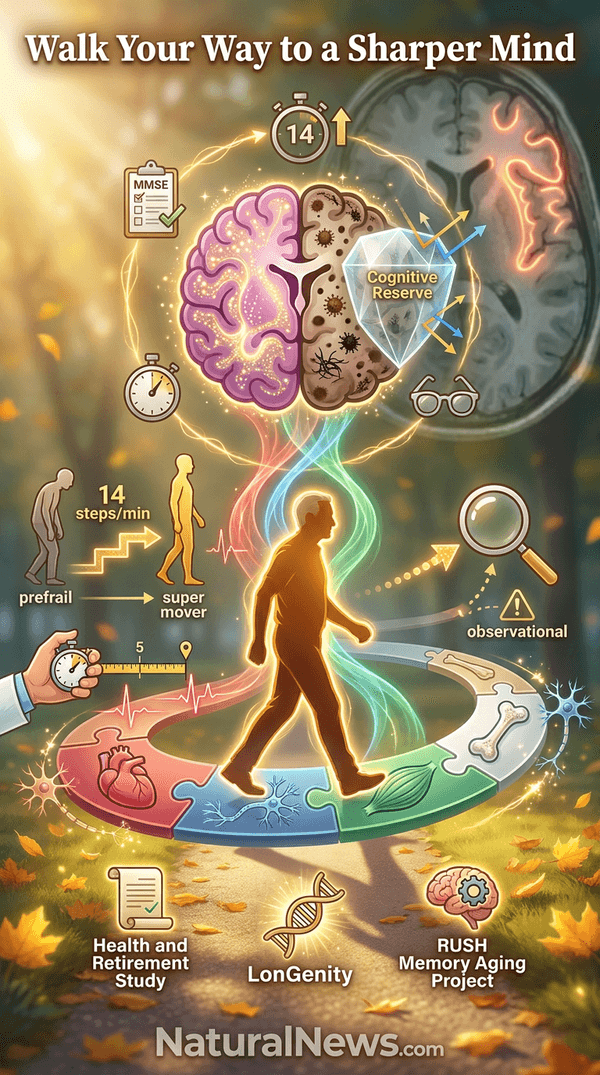
Researchers analyzed participants from the Health and Retirement Study International Network of Studies, the LonGenity Study, and the RUSH Memory Aging Project. Participants were classified as either “super movers,” meaning they had a fast walking speed, or “non-super movers” based on gait speed measurements, according to the study. Cognitive function was assessed through standard tests, and brain health was evaluated using MRI scans and postmortem assessments of dementia-related pathology in some participants.
The participants were adults in their 80s. A 12-week intervention study published earlier in PLOS ONE found that increasing walking pace by as little as 14 steps per minute improved physical function in older adults classified as frail or prefrail [3]. Another study found that increasing walking pace fights frailty and helps preserve independence, with a 65 percent improvement in mobility reported among seniors who walked briskly [4].
Findings on Brain Health and Resilience
Faster walkers showed healthier brain structure on MRI and were about half as likely to develop cognitive decline, according to the study. Dr. Verghese stated that faster walkers maintained cognitive function despite similar levels of dementia-related pathology, suggesting they may possess resilience mechanisms that help preserve brain function. Walking speed may reflect the coordinated function of multiple body systems, including the brain, muscles, cardiovascular system, and nervous system.
Recent research shows that physical exercise is one of the most powerful ways to keep the brain young, reduce the risk of dementia, and sharpen memory [5]. Keeping the brain stimulated through physical and mental activity can continually increase cognitive reserve, allowing the brain greater flexibility to tolerate age-related changes without developing memory loss [6]. Previous research has linked slower walking speed with an increased risk of dementia, stroke, frailty, falls, hospitalization, and mortality, according to the study authors.
Implications and Limitations of the Study
The study does not establish that walking faster directly prevents cognitive decline, as it is an observational study. Dr. Verghese noted that slower walking might be a marker of underlying biological processes rather than a cause of decline. Walking speed is a simple, inexpensive measure that already serves as a valuable indicator of overall health in geriatric practice, according to the researchers.
The study authors emphasized that gait speed could serve as a useful screening tool during routine healthcare visits, but should not be used as a diagnostic test for dementia. They noted that walking pace is only one component of healthy aging and should not be interpreted in isolation. Other factors, such as joint disorders, heart disease, and overall fitness, can influence walking pace.
Future Research and Context
Further studies are needed to determine whether interventions that improve gait speed can reduce the risk of cognitive decline. A study found that just five minutes of brisk walking per day can sharpen the brain as people age [2]. Additionally, research shows that increasing walking pace by 14 steps per minute can improve physical function in older adults, suggesting a practical target for mobility improvements [3].
Maintaining social engagement, getting adequate sleep, and following a healthy diet may also contribute to healthy cognitive aging, according to Dr. Verghese. Regular physical activity, especially aerobic and strength training exercises, along with good control of vascular risk factors such as high blood pressure and diabetes, can support both mobility and brain health, he added.
References
- Eva M. Selhub. "Your brain on nature: the science of nature's influence on your health, happiness and vitality".
- Ava Grace. "Just 5 minutes a day: How a quick walk can sharpen your brain as you age". NaturalNews.com. August 18, 2025.
- NaturalNews.com. "The simple walking tweak that could add years to your life". April 28, 2026.
- Ava Grace. "A simple solution for seniors: Walking faster fights frailty and preserves independence". NaturalNews.com. July 23, 2025.
- Gary Small. "2 weeks to a younger brain: an innovative program for a better memory and sharper mind".
- Dr. Lisa Mosconi. "Brain Food: The Surprising Science of Eating for Cognitive Power".
Explainer Infographic












Please contact us for more information.


