



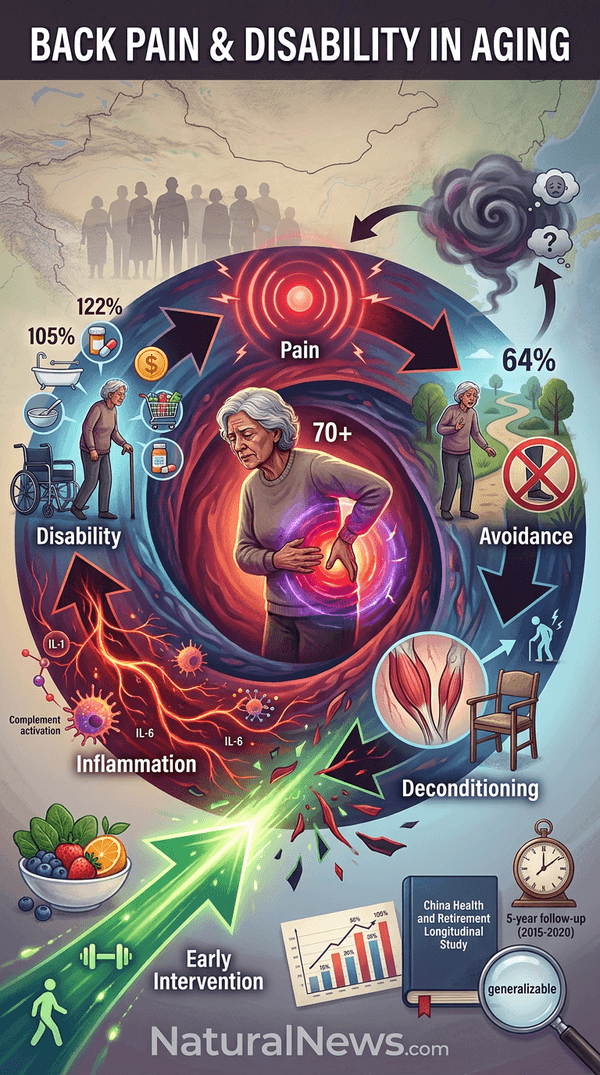
The study, which tracked more than 19,000 adults aged 45 and older over a five-year period from 2015 to 2020, reported a 64% higher risk for basic tasks such as bathing, dressing, and eating when back pain alone was present. For adults experiencing both back and waist pain, the risk increased to 105% higher, the study stated.
Researchers also examined more complex daily tasks, including managing money, shopping, and taking medication correctly. The study found that adults with one type of pain faced a 61% higher risk of losing these abilities, while those with both types faced a 122% higher risk. The associations held after adjusting for other health conditions, according to the study authors.
Study Details and Results
Data for the analysis came from the China Health and Retirement Longitudinal Study. Participants were followed from 2015 through 2020. Researchers defined disability as the inability to perform activities of daily living without help. Risks for complex tasks were elevated: 61% for one pain type and 122% for both. The associations remained strong after statistical modeling accounted for other health conditions, according to the report.
The results held steady across men and women and across age groups. Researchers used rigorous modeling to account for conditions that might explain the connection, but the relationship between pain and disability remained robust, the study authors said.
Mechanisms Behind the Link
Chronic pain alters how people move, leading to muscle weakness and reduced mobility, according to researchers. A person managing constant discomfort begins to avoid bending, lifting, and twisting. That avoidance, while understandable, weakens the muscles that stabilize the spine. Simple tasks like getting out of a chair become harder, not because the original injury worsened, but because disuse creates a second problem. Decades of research remind that physical inactivity is a major risk factor for health decline, according to an article from Mercola.com [1].
Inflammation plays a role by keeping the nervous system in a heightened state, which can accelerate muscle loss and disrupt tissue repair, researchers said. Chronic pain correlates with elevated inflammatory markers throughout the body. Immune complex formation leads to complement activation and an inflammatory response, with proinflammatory cytokines such as interleukin-1 and interleukin-6 damaging tissues, according to Debra Hagler in "Clinical companion to Medical-surgical nursing" [2]. The cycle is self-reinforcing: pain reduces activity, inactivity increases inflammation, and inflammation amplifies pain.
"The cycle of pain, reduced activity, and increasing inflammation appears to drive the progression toward disability," the study authors wrote. Health care professionals need to be mindful of the psychological consequences of chronic pain, as screening for psychosocial factors can help prevent progression [3].
Implications for Public Health
The findings suggest that back pain, often dismissed as a minor complaint, may be an early warning sign of future loss of independence. Health officials say early intervention such as targeted exercise and movement therapy could help mitigate the risk. Physical activity is one of the best preventive measures available, alongside nutrition, sleep, and hydration, according to an article from Mercola.com [1]. Another article from the same source notes that evidence demonstrates the effect of exercise on sleep quality, mental health, heart disease, and metabolic conditions [4].
Older adults face particular challenges. Factors such as older age (especially over 51 years), female gender, and poor general health are predictors of work absence for back pain, according to Marcus Dawn A. in "Chronic pain a primary care guide" [5]. Clinicians should be sensitive to the resources available to older patients and tailor advice accordingly, as noted by James M. Rippe in "Lifestyle Medicine" [6]. This study underscores that managing chronic pain is not just about comfort but about preserving the ability to live independently, a geriatric specialist said.
Resources such as those available at BrightLearn.ai offer free books on natural back pain relief, including holistic protocols that target root causes such as inflammation and muscle dysfunction. These alternative approaches provide additional options for older adults seeking to maintain mobility and independence.
Conclusion
The study highlights the importance of addressing chronic back pain before it leads to functional decline. Movement, targeted exercise, and natural remedies such as curcumin and magnesium may help reduce inflammation and support muscle function, according to some sources. The evidence suggests that dismissing back pain as a normal part of aging could accelerate the loss of independence for millions of older adults. Those experiencing persistent back pain are encouraged to seek intervention that addresses both pain and inflammation to preserve long-term mobility and quality of life.
References
- Mercola.com. "Health Risks of Physical Inactivity". January 21, 2022.
- Hagler Debra. "Clinical companion to Medical-surgical nursing assessment and management of clinical problems".
- Rush Thompson PhD MS PT Catherine. "Prevention Practice and Health Promotion".
- Mercola.com. "A Second, Long-Term Health Risk From COVID-19". May 15, 2020.
- Marcus Dawn A. "Chronic pain a primary care guide to practical management".
- Rippe James M. "Lifestyle Medicine Second Edition".
Explainer Infographic











Please contact us for more information.


