


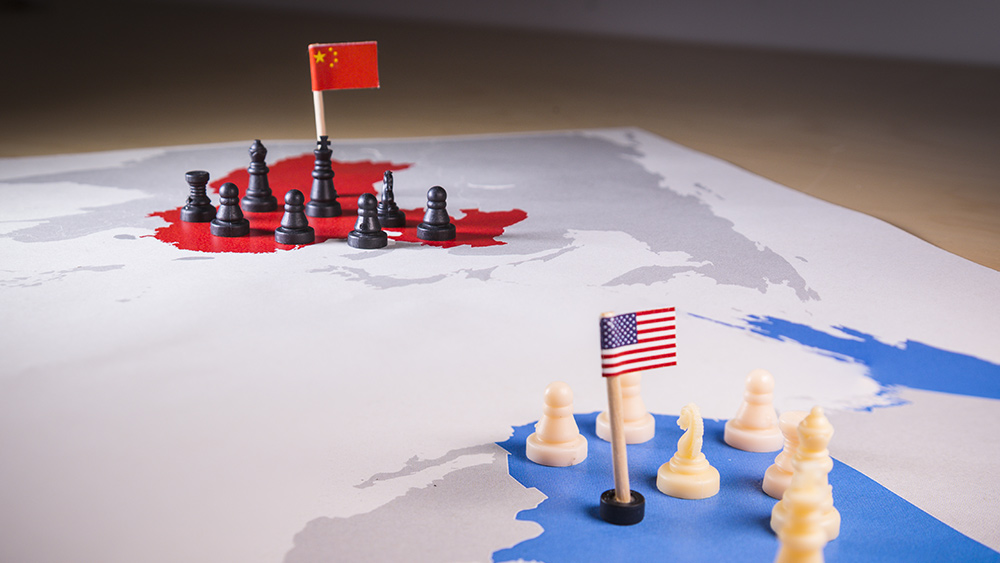
- A Democratic senator introduced a bill this week that would end the preferred trade status China has held for more than two decades, and she did it just days before President Donald Trump is expected to meet Chinese leader Xi Jinping for the third time this year.
- The U.S. government’s conflicting signals (trade truces and tariffs) expose a lack of transparency and a push for systemic economic chaos.
- The true cost of the trade war, including inflation and supply chain collapse, is masked by claims of “de-risking” and “national security.”
- The public remains uninformed about the administration’s classified review of China’s trade status, raising questions about ulterior motives.
- Why are Democrat's pushing to destabilize relations with China at a time when the President is making progress and negotiating better arrangements?
What the Baldwin bill would do
Sen. Tammy Baldwin (D-Wis.) introduced the measure Tuesday, The Epoch Times reported. It would strip China of permanent normal trade relations, known as PNTR, along with the lower tariffs attached to that status. The designation, in place since 2002, would end 12 months after enactment. The bill also directs the Office of the U.S. Trade Representative to produce a report on the trade and economic problems China presents, drawing on the Commerce Department, the U.S. International Trade Commission and other agencies. Baldwin says the country needs to reset its trade relationship with China, and President Trump could still veto the measure if it passes.
That is not a small technical adjustment. The Congressional Research Service explains that PNTR ended the annual congressional review of China's most-favored-nation status and qualified China, on a permanent basis, for the lowest U.S. tariff rates. Repeal puts that annual fight back on the table. The same CRS analysis notes that an earlier repeal effort, the Restoring Trade Fairness Act, would raise duties on Chinese imports to at least 35 percent, with some products facing 100 percent. It also notes that Washington could defend revocation under the national security exception in Article XXI of the GATT, the same exception WTO members invoked in 2022 to revoke PNTR for Russia. The Epoch Times report does not say whether Baldwin's bill sets specific rates, but the earlier figures show what repeal makes possible: permanently higher tariffs, written into statute rather than adjusted by executive order.
An administration saying two things at once
The signals from the executive branch do not match the direction of the bill. Treasury Secretary Scott Bessent told a New York gala on Nov. 10 that the administration's objective is to "de-risk, not to decouple," according to Anadolu Agency. He credited Trump with taking decisive steps on the trade imbalance, and he announced a new U.S.-China dialogue designed to guard against shared risks from artificial intelligence.
The two countries have also extended a trade truce through Jan. 10, 2027. First reached in Busan, South Korea, in October 2025, the truce included Beijing's pledges to buy U.S. soybeans and other farm goods and to temporarily hold off on planned rare earth export controls. Trump travels to Shenzhen this week for the APEC summit, where he is expected to resume talks with Xi on trade, tariffs and rare earth supplies.
Put those facts side-by-side and the picture is strange: a truce, a de-risking doctrine, a summit, and a bill to dismantle the legal basis of normal trade, all in the same week. Why would Democrats want to impose a trade war in this moment of cooperation?
What the government's own numbers say
At the start of his term in January 2025, Trump directed his administration to assess proposals to revoke China's trade status. The review was finished, according to The Epoch Times, but its PNTR recommendation has never been made public. Americans are being asked to weigh a major shift in trade law without seeing the analysis the president himself ordered.
The cost side is not speculation. In August, the International Trade Commission estimated that ending PNTR would make Chinese imports costlier and, over time, push U.S. consumer prices up 0.7 percent while shaving 0.2 percent off economic output. Those figures come from a federal agency, not a Beijing talking point. Tariffs are collected at the American border from American importers, and the expense travels through supply chains to store shelves and to factories that rely on imported components. A policy that raises prices and lowers growth by the government's own estimate deserves a clear statement of what it will buy in return.
The case from supporters
Baldwin's office says the trade deficit with China cost an estimated 3.7 million American jobs between 2001 and 2018, including nearly 89,000 in Wisconsin. She voted against granting China PNTR in 2000, and her office argues that her fears have come true through intellectual property theft, market manipulation and Chinese ambitions to dominate industries such as shipbuilding.
She is not alone. The U.S.-China Economic and Security Review Commission, an independent, bipartisan congressional agency, urged Congress to repeal the status in November 2024. The South China Morning Post reported that it was the first time the panel explicitly called for ending the policy, arguing that PNTR lets China enjoy the same trade terms as U.S. allies despite practices such as intellectual property theft and market manipulation. The Epoch Times adds that the commission described repeal as a shift toward a more assertive trade policy meant to protect U.S. industries and workers from economic coercion.
These are real grievances. Many American communities watched factories close after 2001, and few serious observers dispute that Beijing subsidizes and shields its industries.
The questions nobody is answering
If China's conduct is the problem, what specific conduct would have to change for the penalties to end? A bill with a 12-month fuse and a possible veto offers leverage, but leverage toward what?
From the executive branch's point of view, Bessent describes the goal as achieving a more balanced relationship, and a balanced relationship is negotiated. The truce has already produced soybean purchases and a pause on rare earth controls. Both are temporary measures, because both could be put at risk if Congress strips away the legal foundation of normal trade while the President's talks are underway.
If the goal is protecting American workers, who is accountable when tariffs raise prices before a single factory reopens? If the goal is national security, why has the administration's own review of China's trade status stayed out of public view? And if the goal is not to de-couple, why advance a bill whose logic runs toward separation?
The Baldwin bill may never reach the president's desk. But it shows where the political current is running, with a Democratic senator and a bipartisan congressional commission pushing in the same direction, and the burden now falls on the government to say what this trade war is for, what it will cost, and how Americans will know when it has worked. Until that case is made in public, the question stands: Why are we imposing a trade war with China?
Sources include:









Please contact us for more information.


