


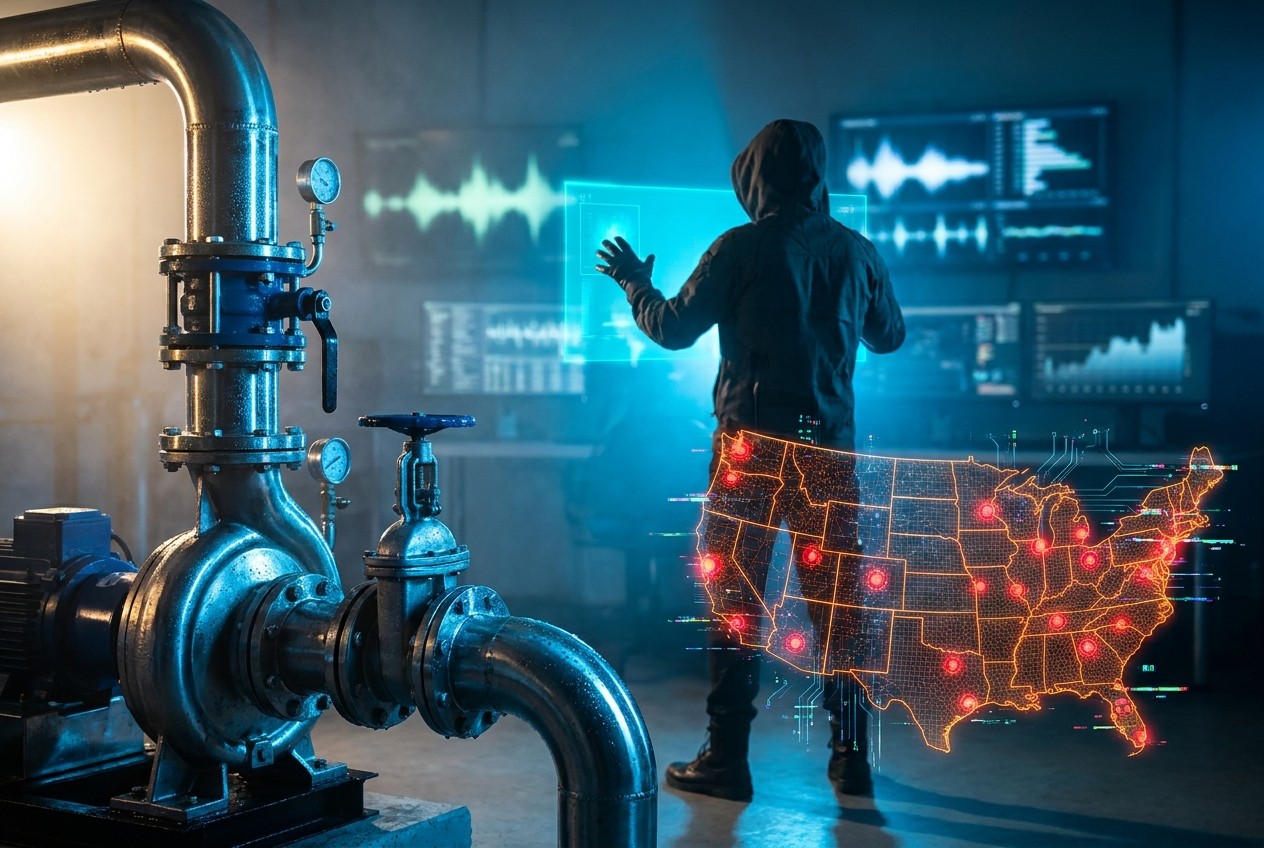
The shutdown occurred during a broader wave of cyberattacks on water systems across the U.S., according to the report. The incident has drawn attention to a shift in the nature of state-linked cyber operations against American networks.
Federal advisories, intelligence assessments and industry threat data describe a trend in which foreign governments are moving from espionage toward positioning for sabotage, according to the study. Espionage remains the most common goal for state-backed hackers, but there is a growing push toward positioning for sabotage, the report stated [1].
There is no single public count of state-backed hacking against the U.S., according to the report. Analysts rely instead on intelligence reports and on security companies that monitor their customers' networks around the world, the publication stated.
Evidence Points to Growing State-Linked Cyber Activity, Reports Show
The U.S. Intelligence Community's 2025 Annual Threat Assessment called China "the most active and persistent cyber threat" to U.S. government, private-sector and infrastructure networks. The 2026 assessment presented to Congress in March said China, Russia, Iran, North Korea and ransomware groups will keep trying to break into American networks to collect intelligence and create options for future disruption, according to the study.
CrowdStrike's 2026 Global Threat Report found a 38% rise in intrusions by China-linked groups in 2025, and attacks on logistics companies were up 85%. Incidents tied to North Korea rose 130% over the year before, the report stated. Microsoft's 2025 Digital Defense Report found that nation-state activity grew in both volume and geographic reach.
These companies only see their own customers, so their numbers are not a full count of every attack, and most are not U.S.-only measures. Independent analysts have described the broader shift in similarly blunt terms. Former House Speaker Newt Gingrich (R-GA) wrote in "To Save America" that "the United States is engaged in cyberwarfare every day" and that "companies are routinely penetrated and their secrets stolen" [2].
From Espionage to Disruption: Types of Cyberwarfare Hitting America
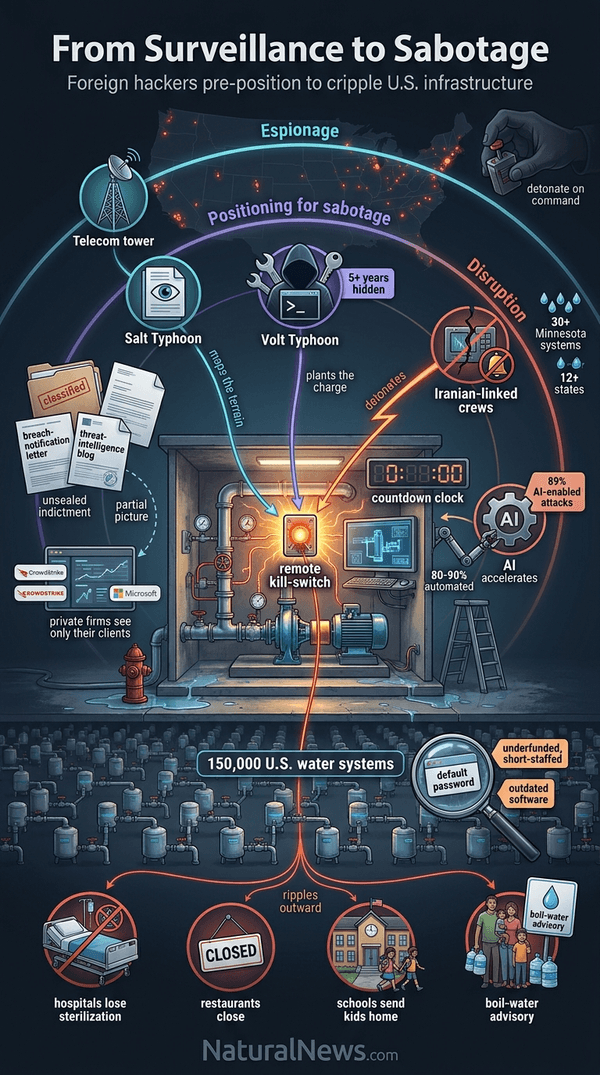
Espionage is still the most common goal for state-backed hackers, according to the report. A Chinese group known as "Salt Typhoon" has been breaking into telecommunications networks since at least 2019. In August 2025 the Federal Bureau of Investigation (FBI) said it had warned at least 600 organizations that the group was interested in their systems, with targets in about 80 countries, StudyFinds reported.
A second category is positioning for sabotage. In a February 2024 joint advisory, the Cybersecurity and Infrastructure Security Agency (CISA), the National Security Agency (NSA) and the FBI said they had high confidence that another Chinese group called "Volt Typhoon" was setting itself up inside communications, energy, transportation and water systems so it could disrupt them in a future crisis or military conflict, the study stated. In some networks it had kept a foothold for at least five years, according to the report.
The group stayed hidden mainly by using the victims' own built-in admin tools rather than obvious malware, the publication reported. Sen. James Risch (R-ID) wrote in a December 2025 editorial that adversaries are "now exploiting vulnerabilities in our commercial supply chains and IT networks to intentionally target civilian populations" [3].
The third category is actual disruption, and 2026 brought the clearest U.S. example so far. The FBI, CISA, NSA, Environmental Protection Agency, Department of Energy and U.S. Cyber Command issued a joint advisory on April 7, 2026, updated in July, saying Iranian-affiliated hackers had been tampering with internet-exposed industrial controllers at water systems, energy facilities and local governments since at least March, according to the report.
In some cases they changed what operators saw on their screens and switched off safety shutdown and alarm functions, the publication stated. The broader wave of water attacks began in late July. More than 30 Minnesota water systems were hit, and news reports compiled by the Center for Strategic and International Studies (CSIS) think tank put the number of affected states at a dozen or more, per the report.
Future Threats: AI-Assisted Attacks and Hidden Footholds
The 2025 threat assessment warned that if Beijing believed a major conflict with Washington was imminent, it could consider aggressive cyber operations against U.S. infrastructure and military assets, according to the study. Volt Typhoon's long-term access is exactly the kind of foothold such an operation would use, the publication stated.
Artificial intelligence (AI) could speed things up: The 2026 assessment said AI will likely accelerate cyber threats, with both attackers and defenders using it to work faster, according to the report. CrowdStrike counted an 89% jump in attacks by AI-enabled groups in 2025, the report also noted.
One concrete example comes from Anthropic, which makes the AI system Claude. In a November 2025 report, the company said a Chinese state-sponsored group, which it identified with high confidence, manipulated its Claude Code tool into doing 80% to 90% of the hands-on work in a spying campaign. The campaign targeted about 30 organizations and succeeded against a handful.
Infrastructure is a weak spot experts mention most. CSIS notes that the United States has more than 150,000 water systems, many run by local governments that are short on staff and cybersecurity resources, the study stated.
Health care shows how disruption can cost lives. University of Minnesota researchers published a 2022 study in JAMA Health Forum that counted 374 ransomware attacks on U.S. hospitals, clinics and other providers from 2016 to 2021, exposing the health records of nearly 42 million patients.
Mixed Evidence, But Basic Defenses Help, Officials Say
Large-scale cyber sabotage has not happened, and research on wartime hacking cautions against hype, according to the study. A study in the Journal of Conflict Resolution compared 1,841 cyberattacks with 26,289 acts of violence in Ukraine and found that the mostly low-level hacking had little or no effect on what happened on the battlefield. The authors of this paper wrote that their findings "should temper the popular tendency to overhype the transformative potential of cyber attacks," according to the study.
Most attacks come from profit-seeking criminals rather than governments. Microsoft found that only 4% of the attacks its responders handled with a known motive were purely about spying, while data theft and extortion were much more common, according to the study.
For individuals, Microsoft reports that multifactor authentication can block more than 99% of identity-based attacks, and it recommends phishing-resistant versions, such as passkeys or physical security keys, over text-message codes, according to the report. Whether the next outage ends as quickly may depend less on what foreign hackers intend than on how many small utilities still leave their controls reachable from the open internet.
References
- Cyberwarfare Against The United States Is Edging From Spying Toward Sabotage. https://studyfinds.com/cyberwarfare-against-united-states-edging-from-spying-toward-sabotage/
- To Save America. by Newt Gingrich
- A Winning Strategy Against Foreign Cyber Sabotage - Editorials - James E Risch, U.S. Senator for Idaho. https://www.risch.senate.gov/public/index.cfm/2025/12/a-winning-strategy-against-foreign-cyber-sabotage
Explainer Infographic

Please contact us for more information.


