


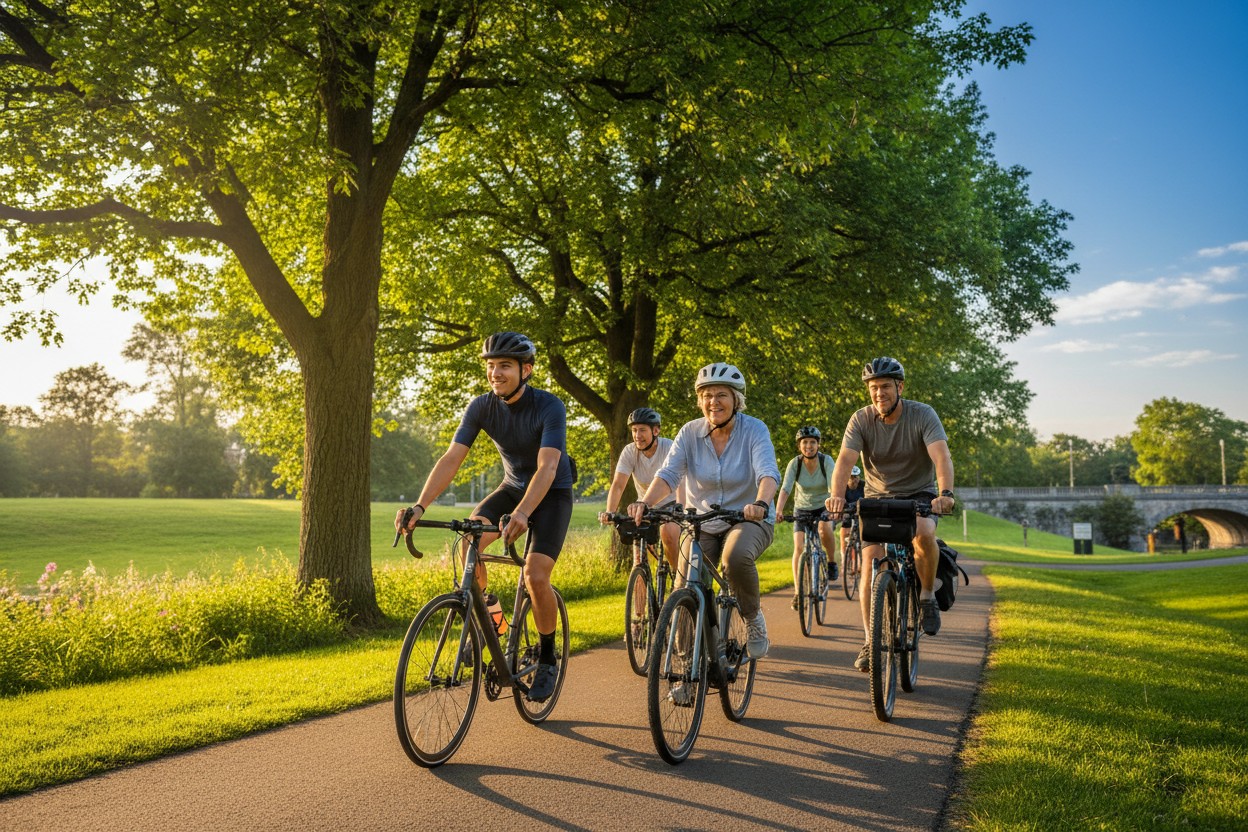
- A review of 87 studies finds cycling boosts mood, sharpens thinking, and strengthens social connections without medication
- Outdoor rides outperform indoor cycling for consistent mental and emotional benefits
- Moderate-intensity cycling optimizes brain function while exhausting efforts temporarily impair it
- Multi-session cycling programs improve well-being more consistently than single rides
- Cycling offers a cheap, accessible solution for rising mental health struggles
If you're looking for a cheap, drug-free way to sharpen your thinking and lift your mood, a bicycle might be the most effective tool you haven't fully considered. A sweeping recent analysis published in Frontiers in Sports and Active Living reveals that cycling does far more than strengthen your heart and legs; it can improve how your brain works and how you feel.
Researchers from Outride (a nonprofit funded by bike maker Specialized), the University of Oklahoma, and Loma Linda University pieced together findings from 87 intervention studies spanning 19 countries. Their scoping review, released in May 2026, examined how structured bicycling activities, from road riding to stationary bikes, affect psychological, social, emotional, and cognitive health. The authors say their funders did not play any role in the research.
The verdict is clear: riding a bike delivers mental and emotional benefits, without any medication. One earlier study the authors cited even discovered that bike commuters were less likely to have a prescription for mental health issues than people who used other methods of commuting to work.
Better moods, sharper thinking, and stronger social ties
The review tracked 134 separate well-being outcomes across the included studies, covering everything from depression scores to processing speed. On the psychological front, 67% of studies measuring general well-being reported positive results, with improvements growing even stronger in programs that lasted multiple sessions rather than a single ride.
Social connections saw the most dramatic boost; 100% of the studies examining social well-being found positive effects. Riders in multi-session programs developed bigger social circles and felt less lonely. "Going for a bike ride can support everything from boosts in mood, to increases in social networks, to improvements in cognition," said lead author Lauren Schuck, a senior research manager at Outride.
Cognitive benefits were also notable. More than half of the cognitive measures came back positive, and many studies showed faster reaction times and sharper attention after a ride. However, the intensity of the ride mattered.
Why outdoor rides beat the gym
Perhaps the most practical finding for weekend warriors was that outdoor cycling over multiple sessions produced the most consistent results across well-being categories. Indoor stationary biking showed benefits too, but the researchers believe outdoor riding's extras—such as spending time in nature, having chances to socialize, and following a meaningful routine—help explain the difference.
The research also revealed an "inverted-U" pattern for cognitive benefits. Moderate-intensity cycling optimized brain function, while pushing too hard, with exhaustion-level efforts, temporarily impaired thinking and mood. That explains why some indoor studies designed to exhaust participants actually reported negative emotional effects, while every outdoor program that tracked mood noted positive effects, compared to just 35% of indoor ones.
E-bikes accounted for only a small portion of the research, but the early results are encouraging for older riders. In one study, older adults who rode e-bikes for eight weeks experienced a modest bump in their mental health scores, while participants in a 12-week e-bike loan program said they felt happier and more energetic.
How to get the most from your next ride
For readers who are ready to put these findings into action, the research offers clear guidance. Ride outside whenever possible, as outdoor programs led to the most consistent gains. Then stick with it. Throughout the review, programs that involved repeated sessions consistently outperformed single rides.
Bring a friend along or join a group ride, too. The social component boosted feelings of belonging, with qualitative interviews revealing themes of new friendships, stronger social skills, and a sense of "fitting in." And don't let intensity concerns stop you; an easy and moderate ride could well do more for your brain than a grueling climb.
The takeaway is as simple as it is powerful: one activity gives you aerobic exercise, time outdoors, and social connection all at once. With mental health struggles on the rise and too many people stuck on their couch, cycling offers a cheap, accessible solution that works with your body instead of against it. That's a prescription worth filling this weekend.
Sources for this article include:











Please contact us for more information.


