



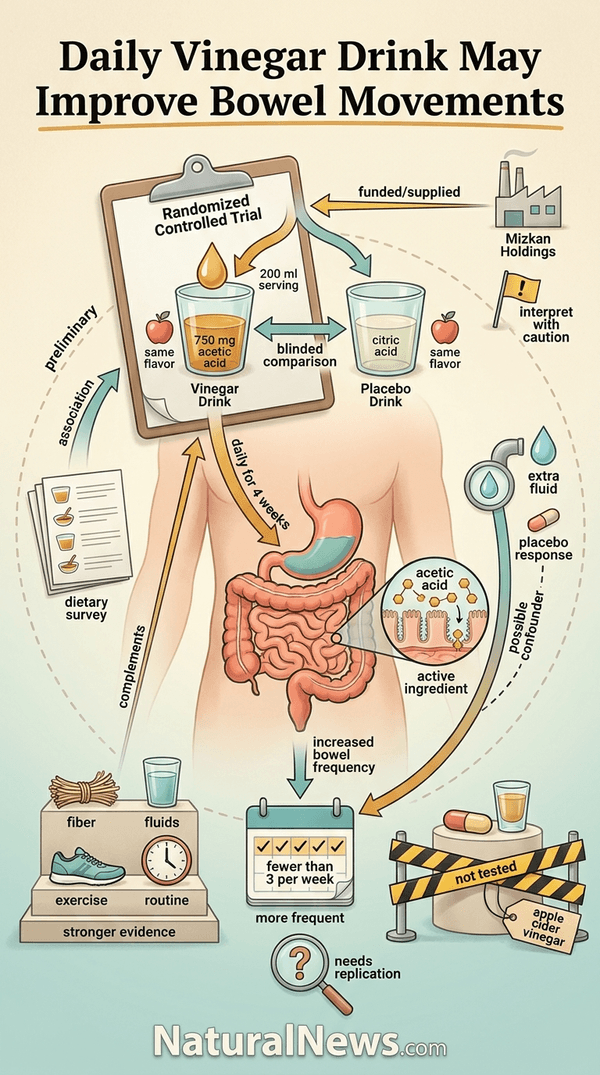
Participants were randomly assigned to consume either a beverage made with vinegar or a placebo drink at breakfast for four weeks.
The vinegar drink was made by mixing brewed vinegar with water, providing 750 milligrams of acetic acid in each 200-milliliter serving, according to the study. The placebo used a small amount of citric acid instead of vinegar to give it a similar tart taste, so participants could not tell which drink they had. Both drinks were sweetened with sucralose and flavored with apple.
Study Details and Background
Constipation is defined by the National Institutes of Health as a condition in which a person generally has fewer than three bowel movements a week, according to the agency. Stools may also be hard, dry or lumpy and difficult or painful to pass.
The researchers wrote that eating vinegar-based dishes more often was positively associated with better defecation status, though it remained unclear how much vinegar and its potentially active ingredient, acetic acid, were necessary to be effective.
Both groups experienced gradual improvement over the course of the study, and the researchers suggested that some participants may have been habitually underhydrated, so the added daily drink may have played a part in relieving their constipation.
Expert Perspectives
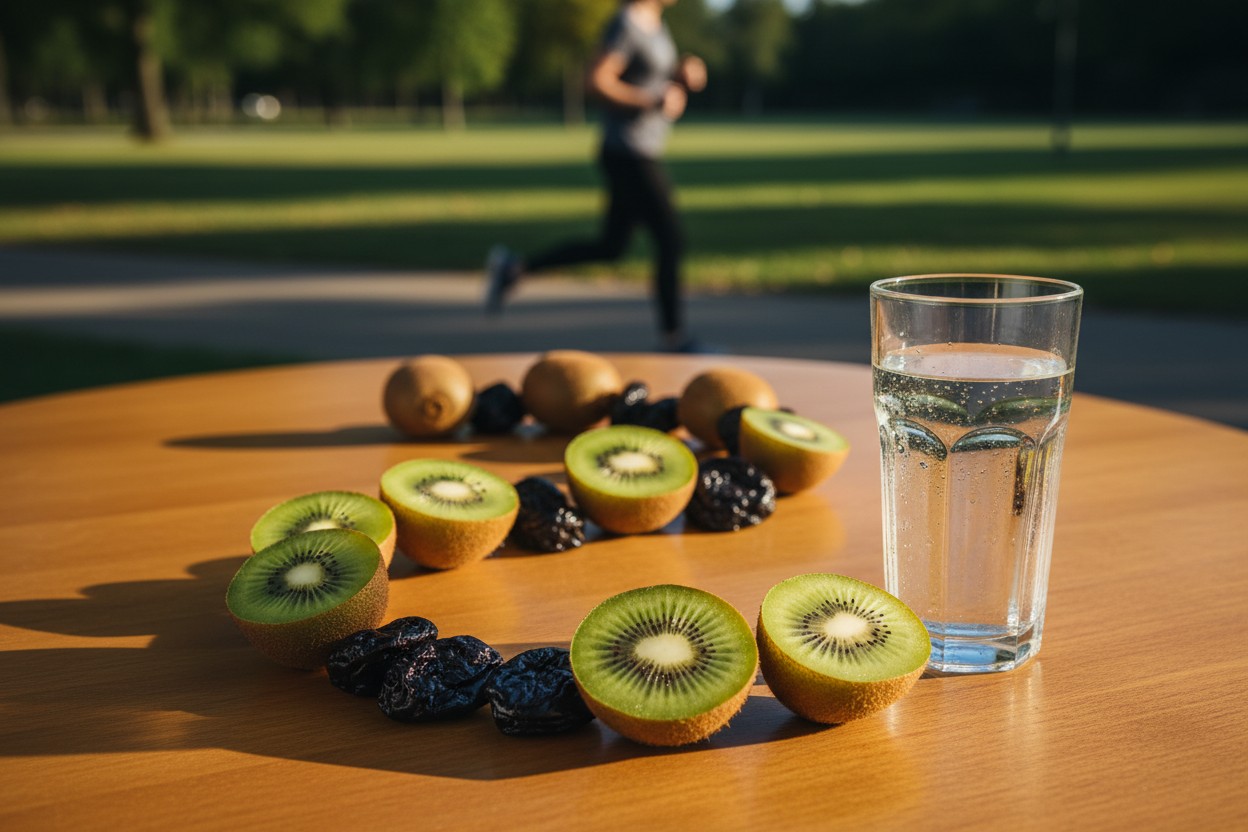
Both experts emphasized standard constipation strategies. McIntyre said she would stick with the strategies that have a stronger evidence base: adequate fiber and fluids, regular physical activity and a consistent bathroom routine.
Limitations and Funding
The scientists further noted that their findings "should be regarded as preliminary and require more confirmation in further studies."
McIntyre noted that the study did not examine typical apple cider vinegar supplements or concentrated vinegar shots, limiting how far the results can be generalized.
The researchers wrote that their findings suggest daily consumption of vinegar beverages may improve defecation status in healthy adults with mild constipation, supporting a potential dietary approach for maintaining bowel health.
Conclusion
The agency's guidance places dietary fiber and fluid intake ahead of any single food or beverage remedy.
McIntyre said she would stick with constipation strategies that have a stronger evidence base: adequate fiber and fluids, regular physical activity and a consistent bathroom routine.
The trial's modest result, about 1.2 additional bowel movements a week by week four, came with the researchers' own caution that the findings are preliminary and require more confirmation. For adults with mild constipation, the study offers a signal worth watching rather than a settled recommendation, according to the researchers and the independent experts who reviewed it.
Reference
- Common kitchen staple may help relieve mild constipation, new research suggests. https://www.foxnews.com/food-drink/common-kitchen-staple-help-relieve-mild-constipation-new-research-suggests
Explainer Infographic











Please contact us for more information.


