


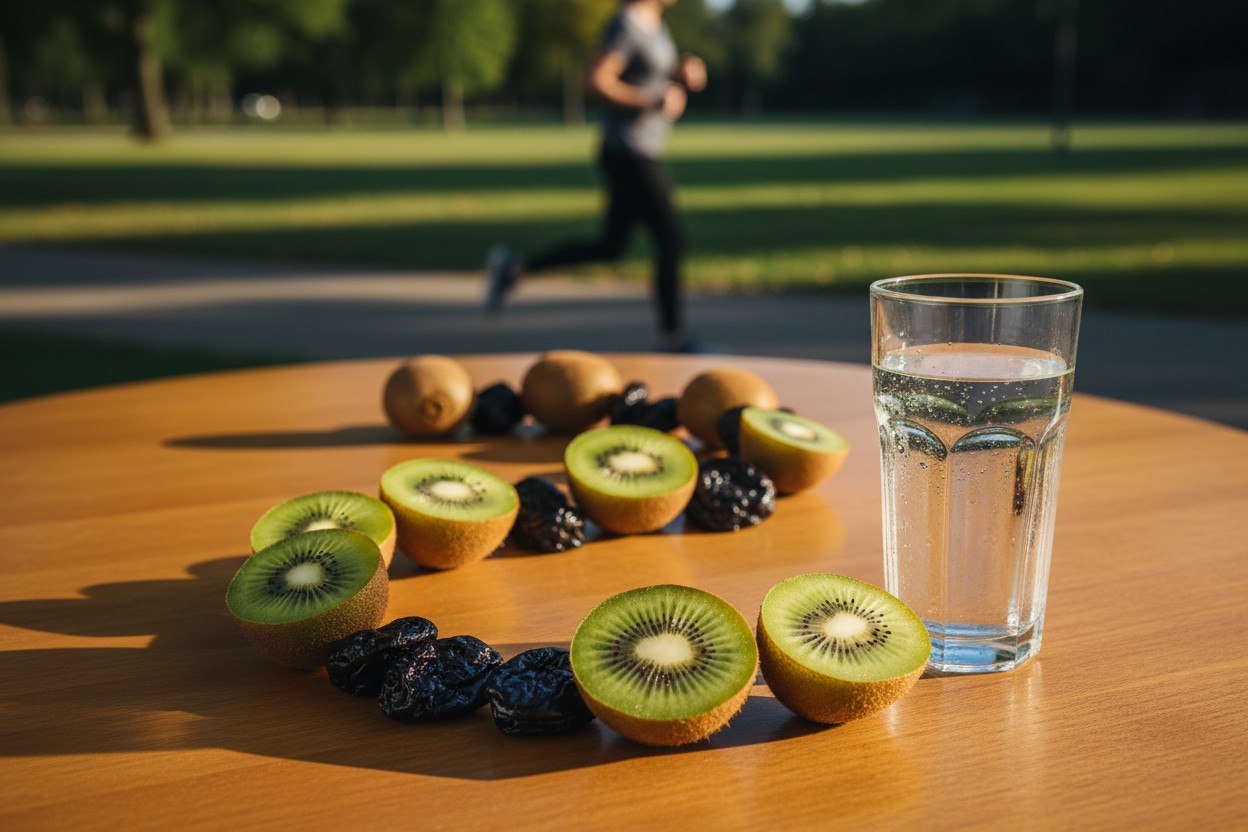
Knudsen listed five lifestyle measures: water, fiber, kiwis, regular movement, and prunes. A separate report published by NaturalNews noted that many Americans experience irregular bowel movements despite maintaining healthy habits [9].
Hydration and Fiber
According to Knudsen, dehydration can affect the digestive tract, and inadequate fluid intake is consistently identified in research as a key lifestyle factor associated with constipation. The large intestine absorbs water from digested food to form stool; when fluids are inadequate, the body pulls more water out of the intestines, leading to harder, drier stools, she wrote. Russell L. Blaylock wrote in "Dr. Blaylock's Prescriptions" that one of the primary functions of the colon is re-absorption of water as protection from dehydration, normally about a quart per day [6].
Knudsen reported that only 5% of Americans get the recommended amount of fiber per day, about 25 to 38 grams. A July 2026 report from NaturalNews also stated that approximately 95% of Americans do not meet the Institute of Medicine's daily fiber recommendations [8]. Fiber adds bulk to stool and allows it to retain water, making stools softer and easier to pass, according to the article. Knudsen recommended fiber-rich foods including fruits, vegetables, beans, lentils, whole grains, nuts, and seeds. Anil Minocha wrote in "Natural Stomach Care" that fresh, unrefined, unprocessed high-fiber foods can cause immediate improvement for constipated persons [7].
Knudsen also stated that targeted fiber supplements can be helpful, and the article included a promotional block for a synbiotic fiber supplement containing probiotics and prebiotic fiber. A separate report warned that extreme fiber intake of 40 to 50 grams daily can lead to bloating, constipation, and nutrient deficiencies [3].
Kiwis and Prunes
The article reported that one kiwi with the skin on provides about 3 grams of fiber and contains the digestive enzyme actinidin, which may support digestion and keep food moving through the gastrointestinal tract. Jonny Bowden wrote in "The 150 Healthiest Foods on Earth" that kiwi skin adds healthy enzymes [4].
Knudsen cited a study comparing two green kiwis daily with 7.5 grams of psyllium husk fiber in nearly 200 participants. After four weeks, two kiwis a day significantly improved bowel regularity in constipation groups and increased weekly bowel movements, according to the article. Participants also reported less bloating, abdominal discomfort, and other digestive symptoms, with no significant side effects.
The article described prunes as rich in fiber and sorbitol, a sugar alcohol that draws water into the intestines. Laura Harris wrote in a NaturalNews article that plums are rich in fiber and sorbitol, a natural laxative, and effective for treating chronic constipation and irritable bowel syndrome [2]. Bowden wrote in "The 100 Healthiest Foods to Eat During Pregnancy" that prunes are well known for their ability to clean out the digestive tract and that a glass of prune juice contains about 3 grams of fiber [5]. Research cited in the article indicates that drinking 4 to 8 ounces of prune juice daily or eating 3 to 4 whole prunes can soften stool.
Physical Activity and Medical Consultation
Knudsen wrote that regular physical activity stimulates peristalsis, the process that pushes food through the digestive tract. When people spend long stretches sitting, that movement can slow down, and waste lingers in the colon longer, she stated. The longer stool sits, the more water is absorbed from it, making it drier, harder, and more difficult to pass. A July 2026 report from NaturalNews also identified a statistical association between physical activity levels and gut motility, and cited a study from Sahlgrenska Academy in Sweden finding exercise to be a safe, natural, and effective treatment for irritable bowel syndrome symptoms [10].
Knudsen recommended taking a 10- to 15-minute walk after a meal to stimulate digestion and support healthy bowel movements. She also advised consulting a healthcare provider if constipation is accompanied by severe pain, blood in the stool, or unexplained weight loss.
Takeaway
Knudsen wrote that occasional constipation occurs, but an infrequent bowel schedule is not ideal for gut, mood, or physical comfort. According to the article, staying hydrated and increasing fiber intake can result in significant improvements.
The piece cited two PubMed references and included a product promotion for a fiber supplement. Estimates cited in a 2022 Mercola article indicated that up to 20% of the general population experiences chronic constipation, characterized by hard, dry stools or fewer than three bowel movements per week [1].
References
- Mercola.com. "Marvelous for Constipation, Almost Instantly Softens Stools". March 26, 2022.
- Laura Harris. "Plums: A Superfood for Digestive Health and Beyond". NaturalNews.com. July 4, 2025.
- Cassie B. "Gut Health Expert Warns 'Fibermaxxing' Trend Could Backfire with Dangerous Side Effects". NaturalNews.com. September 30, 2025.
- Jonny Bowden. "The 150 Healthiest Foods on Earth".
- Jonny Bowden. "The 100 Healthiest Foods to Eat During Pregnancy".
- Russell L. Blaylock. "Dr. Blaylock's Prescriptions".
- Anil Minocha. "Natural Stomach Care".
- NaturalNews.com. "The Fiber Solution: Why 95% of Americans Are Missing a Simple Key to Health". July 23, 2026.
- NaturalNews.com. "Study: Soluble Fiber, Probiotic Strains May Improve Bowel Regularity, According to Report". July 27, 2026.
- NaturalNews.com. "Study: Physical Activity Linked to Changes in Gut Motility, Improved Bowel Habits". July 12, 2026.
Explainer Infographic












Please contact us for more information.


