



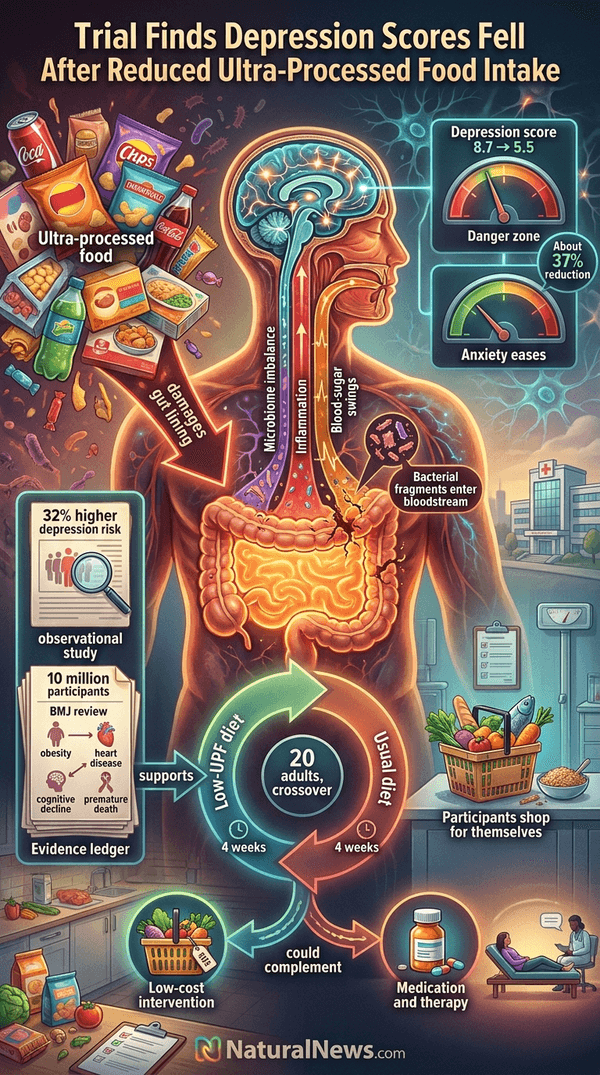
The study enrolled 20 adults diagnosed with depression, with an average age of about 44 and 70% women, researchers said. The trial used a crossover design in which participants served as their own comparison, according to the study. The findings, reported Sept. 23, indicated that cutting ultra-processed food could provide a boost to mental health [1].
The trial adds to a growing body of research examining the relationship between diet and mental health. A recent review published in Nutrition Reviews found that higher consumption of ultra-processed foods was associated with a 32% higher risk of depression, according to the report [2].
Study Design and Participants
Researchers recruited 20 adults who ate large amounts of ultra-processed food and who each had at least one metabolic problem, such as high blood pressure, diabetes, or high cholesterol, the study stated. According to an account of the trial, the pilot study points to a link between ultra-processed foods and depression [3].
Half the group ate a diet low in ultra-processed food for four weeks while the other half ate as usual; the groups then switched, according to the study. Participants shopped for their own food with guidance from researchers, the study said.
The crossover design meant that each participant served as their own comparison, reducing the influence of individual differences. The pilot was designed to test whether a large diet change was realistic, and larger trials will build on the results, researchers said.
Separate research has linked high ultra-processed food intake to increased health risks. A 2024 systematic review of nearly 10 million participants found that higher consumption of ultra-processed foods was directly associated with increased risk for obesity, heart disease, cancer, cognitive decline and premature death, according to a study published in The BMJ [4].
Key Results: Depression and Anxiety Scores
Participants reduced their intake of ultra-processed food by more than 85%, according to the study. On one widely used questionnaire, the average depression score fell to about 5.5 during the low ultra-processed period compared with about 8.7 on their usual diet, the study reported.
Two other depression measures moved in the same direction, and anxiety also eased, according to the study. The results indicated that junk food may harm the gut in ways that ripple up to the brain [1].
The findings are consistent with earlier observational research. A systematic review found that greater ultra-processed food consumption was associated with higher odds of depressive and anxiety symptoms [5].
Possible Mechanism and Related Research
The study's lead researcher said ultra-processed foods can damage the protective lining of the gut, which may fuel low-grade inflammation throughout the body and potentially trigger depression or increase vulnerability to it, according to the study. Researchers say the consumption of ultra-processed food may indirectly promote depression through several mechanisms, including nutrient deficiencies, inflammation, and an imbalance of the gut microbiota, along with blood-sugar fluctuations [6].
Larger studies have already tied heavy ultra-processed food intake to a higher risk of depression, and a separate report described MRI scans showing brain changes in healthy adults who ate the most ultra-processed food, the report stated. A study published in Molecular Psychiatry suggested that eating patterns are associated with mental well-being in later life regardless of genetic predisposition, according to the report [7].
The pilot was designed to test whether a large diet change was realistic, and larger trials will build on the results, researchers said. Separate research on animals has suggested that kombucha, a fermented tea, may reduce depression-like behaviors through gut microbiome changes, according to findings published in Food Bioscience [8].
Conclusion: Limitations and Reported Takeaways
The study had only 20 participants and was a pilot, so the findings are preliminary and require confirmation in larger trials, according to the researchers. Some researchers have noted that while there is a link between depression and ultra-processed foods, a causal link cannot be stated [9].
The report stated that cutting ultra-processed food carries no unwanted side effects, costs nothing extra, and may support heart, blood sugar, and brain health, but it added that no one should stop prescribed medication without consulting a practitioner. The report listed label reading, choosing whole foods, avoiding sugary drinks, cooking at home, and keeping real-food snacks available as possible steps.
References
- Depressed? Try Cutting Back On Ultra-Processed Foods, Study Suggests. https://www.drugs.com/news/depressed-try-cutting-back-ultra-processed-foods-study-suggests-131450.html
- Study Links Ultra Processed Foods to Cognitive Decline, Depression Risk - NaturalNews.com, July 07, 2026.
- Ultra-processed foods and depression | NaturalHealth365. https://www.naturalhealth365.com/depression-scores-dropped-after-one-change-at-the-grocery-store.html
- Studies of 10 Million People Find Ultra-processed Foods Linked to Serious Health Issues. https://childrenshealthdefense.org/defender/ultra-processed-foods-linked-serious-health-issues-cola/
- Ultra-Processed Food Consumption and Mental Health: A Systematic Review .... https://pmc.ncbi.nlm.nih.gov/articles/PMC9268228/
- Ultra-processed foods: increased risk of depression and anxiety. https://usrtk.org/ultra-processed-foods/depression-anxiety/
- Study Links High Ultra-Processed Food Intake to 12% Higher Depression Risk in Older Adults. https://www.naturalnews.com/2026-11-02-study-links-high-upf-to-higher-depression-risk.html
- Fermented tea kombucha shows promise in reducing depression-like behaviors, animal study reveals. https://www.naturalnews.com/2026-10-19-fermented-tea-kombucha-reducing-depression-like-behaviors.html
- How Ultra-Processed Foods Impact Depression. https://newsroom.clevelandclinic.org/2024/01/03/how-ultra-processed-foods-impact-depression
Explainer Infographic








Please contact us for more information.


