


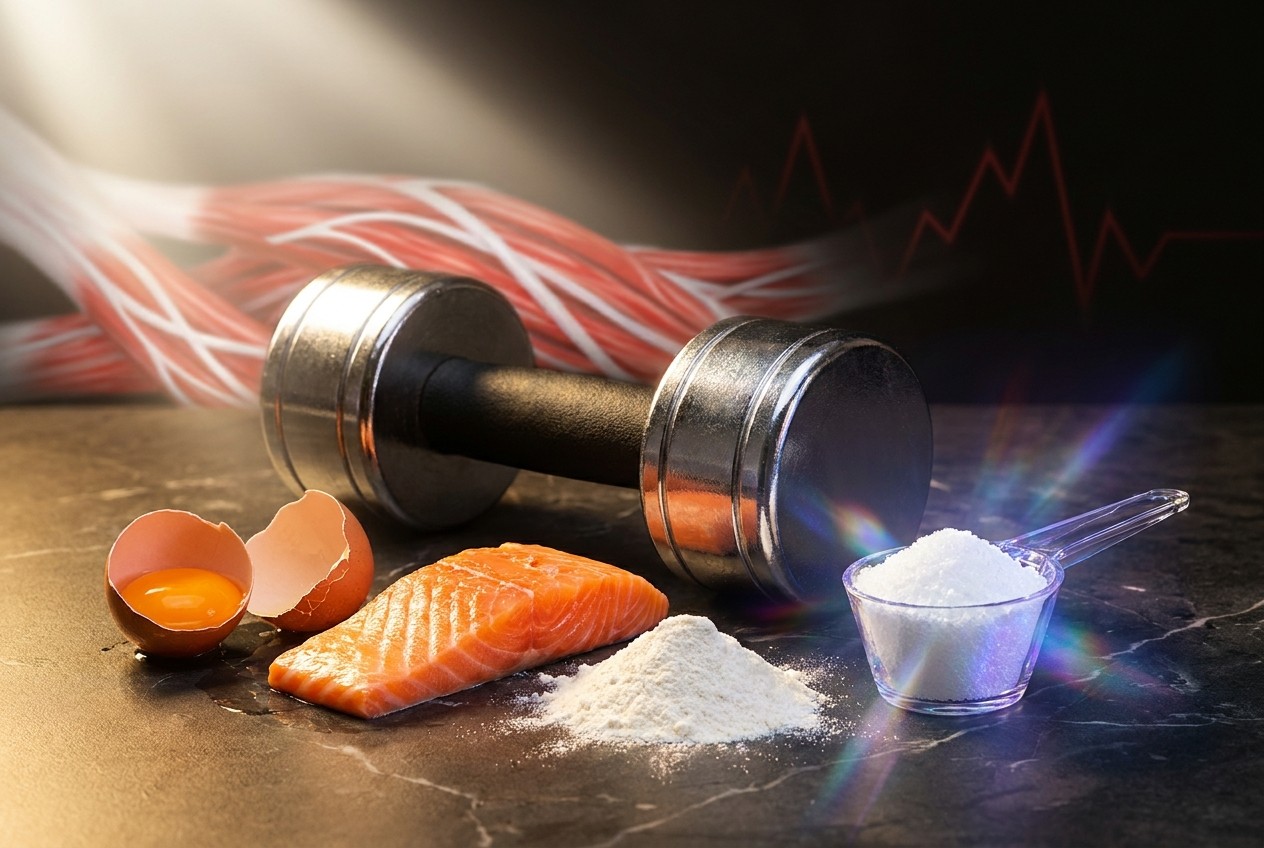
The report identifies consistent resistance training, adequate recovery, overall nutrition and creatine supplementation as additional factors that influence muscle growth. It states that eating enough protein is an important foundation but is not the only thing to focus on [1]. Separate coverage of creatine describes the compound as a naturally occurring substance composed of three amino acids that is widely used as a dietary supplement, and cites a textbook description of creatine monohydrate as popular among athletes for increasing muscle mass and strength in resistance training [2].
Protein's Role in Muscle Protein Synthesis
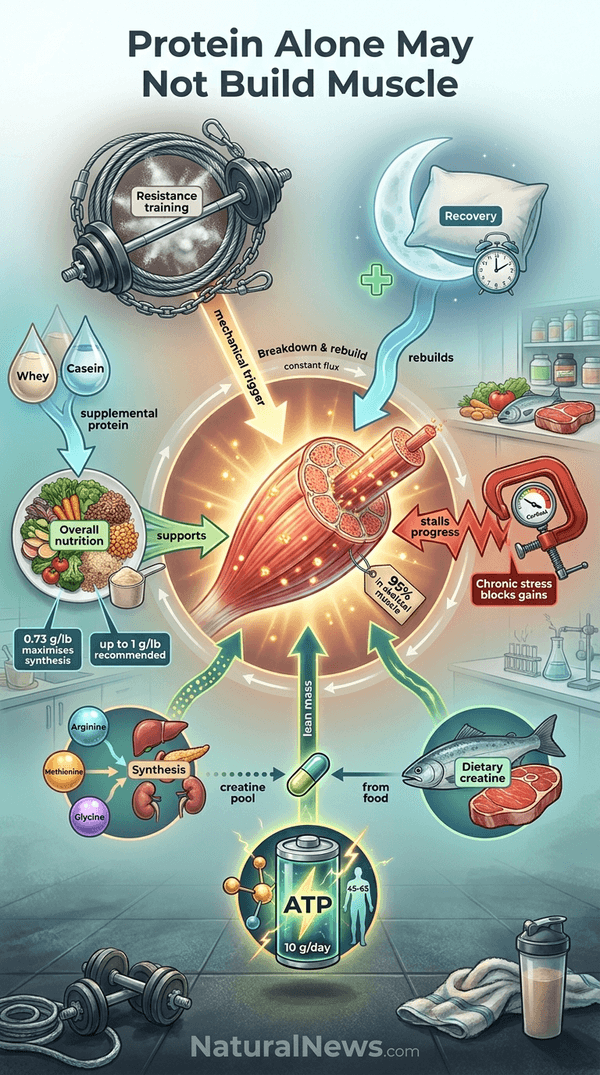
The report states that research indicates around 0.73 grams of protein per pound of body weight daily is enough to maximize muscle protein synthesis, although many experts recommend getting up to 1 gram per pound of body weight daily.
An account published by Canada's McGill University Office for Science and Society states that the amino acids needed for muscle building are easily supplied by proteins in the diet, and that muscles are in a constant state of flux, breaking down and rebuilding [3].
The International Society of Sports Nutrition position stand on protein and exercise, published in the Journal of the International Society of Sports Nutrition, discusses quality supplemental protein sources such as whey and casein protein [4].
Training, Recovery and Overall Nutrition
A report published July 28, 2026, on mindbodygreen examines the relationship between cortisol levels and strength training outcomes; according to Ava Durgin, assistant health editor and author of that report, individuals who train consistently and eat adequate protein may still see stalled progress if chronic stress keeps cortisol levels elevated [5].
Creatine Supplementation and Study Findings
Separate NaturalNews.com coverage reports that a 12-week trial found creatine supplementation at 10 grams per day improved lean mass and strength in sedentary middle-aged adults aged 45 to 65 without exercise, and states that creatine enhances ATP production [6]. A textbook on nutrition in exercise states that creatine is synthesized in small amounts in the liver, pancreas and kidneys from the amino acids arginine, methionine and glycine [7].
It can also be obtained from foods high in protein such as fish and beef, and that approximately 95% of all creatine stores in the body are found in skeletal muscle [7].
Takeaway and Precautions
The report states that eating enough protein is an important foundation for building muscle but is not the only thing to focus on, and that consistent resistance training, adequate recovery and creatine supplementation can help people get more out of their efforts in the gym [1].
A textbook on natural medicine states that most of the gains in size and strength occur within the first month of creatine use, after which muscles are generally described as no longer responding at the same rate [8].
References
- Eating Protein But Struggling to Build Muscle? Try Creatine. https://www.mindbodygreen.com/articles/eating-enough-protein-but-struggling-to-build-muscle-try-creatine
- Creatine Supplementation Linked to Muscle, Cognitive Benefits, Studies Show - NaturalNews.com, June 13, 2026.
- Muscle Building is Not Routine, It's Triggered by Protein.https://www.mcgill.ca/oss/article/health-and-nutrition/muscle-building-not-routine-its-triggered-protein
- International Society of Sports Nutrition position stand: protein and exercise. FrameMaker 7.0. Journal of the International Society of Sports Nutrition 2018
- Report Examines Link Between Cortisol Levels and Strength Training Outcomes. https://www.naturalnews.com/2026-08-03-link-between-cortisol-levels-strength-training-outcomes.html
- Creatine: A natural boost for aging muscles? - NaturalNews.com, September 05, 2026.
- Nutritional Concerns In Recreation, Exercise, And Sport.
- Textbook of Natural Medicine 2. Joseph E Pizzorno Michael T Murray
Explainer Infographic









Please contact us for more information.


