


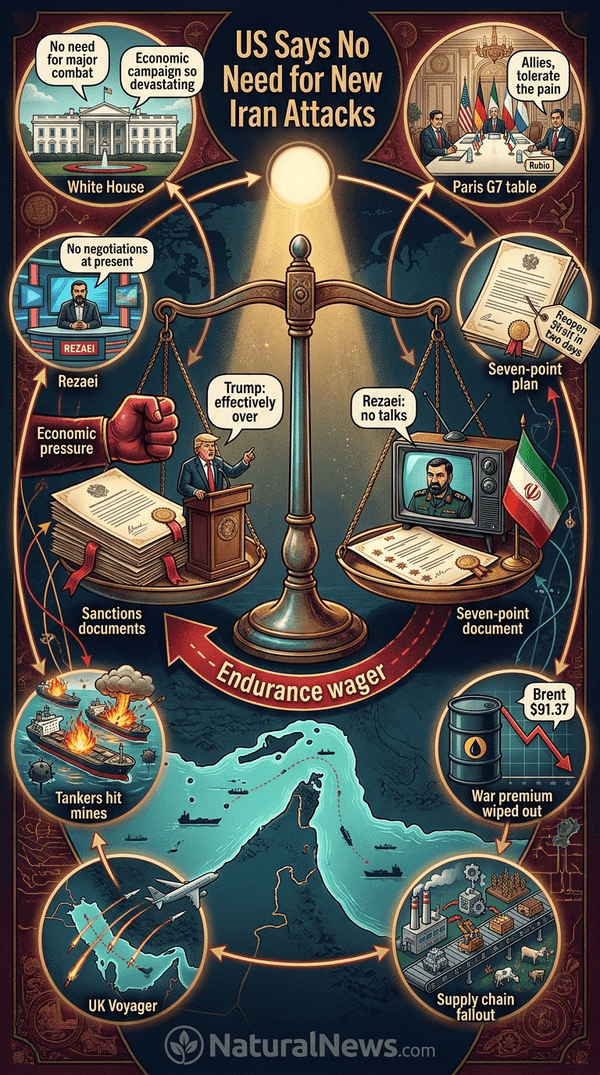
President Donald Trump said Monday, following a meeting with Qatar's prime minister at the White House, that the war was "effectively over" and that there was "momentum" toward ending the conflict, according to press reports [1][2].
Secretary of State Marco Rubio said the administration sees no need for major combat operations for now, citing the effectiveness of economic pressure on Tehran [3][4]. Iran, however, disputes Washington's characterization of the diplomatic situation. Mohsen Rezaei, secretary of Iran's Supreme National Security Council, said Tehran is not currently negotiating with the United States [1].
Iran Denies Negotiations, Stands by Seven-Point Proposal
Mohsen Rezaei, who previously served as a commander in the Islamic Revolutionary Guard Corps, said in a television interview that Iran is not conducting any negotiations with the Americans at present. "We are not currently conducting any negotiations with the Americans, and there are no negotiations between us and Washington at present," Rezaei said, according to accounts of the interview [1].
Rezaei said Iran stands by its seven-point proposal from the summer, which would allow for the reopening of the Strait of Hormuz. He also said Iran has communicated its conditions to the American side, but the initial U.S. response was insufficient and deceptive, and that Iran is awaiting an explicit and clear response [1]. Iranian Foreign Minister Abbas Araghchi reiterated that position, telling the official IRNA news agency that Tehran's proposal to reopen the strategic waterway within two days remained on the table, adding that "the conflict with Iran will not be resolved through military means, nor by intensifying sanctions" [5].
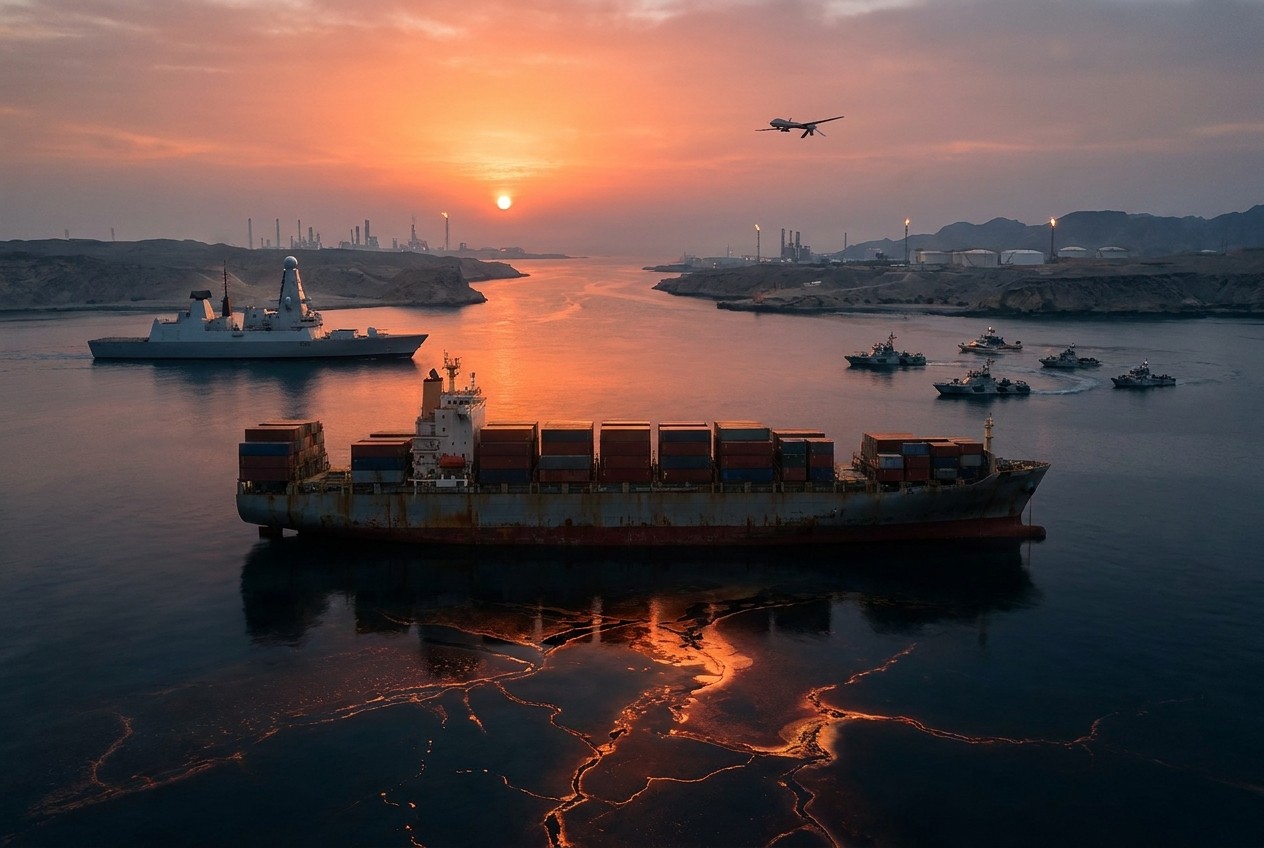
The IRGC said Tuesday that three oil tankers caught on fire after hitting mines in the Strait of Hormuz, according to a statement cited by reports [1]. The incident underscores continuing risks to commercial shipping through the chokepoint that handles roughly one-fifth of global oil and nearly a third of seaborne crude shipments [6]. The Strait has functioned as a central arena of competition between Washington and Tehran, with Iran's ability to threaten traffic described by analysts as granting it leverage that rivals central banking authority over energy markets [7].
Strait of Hormuz Blockades and Economic Pressure
The U.S. and Iran are at loggerheads over Iran's nuclear program and control over the Strait of Hormuz, according to officials and reports. A June memorandum of understanding that established a framework for a final settlement fell apart over Iran's bid to control traffic through the Strait of Hormuz, which could allow it to impose a fee on vessels [1]. Prior proposals included a 14-point mechanism governing the waterway submitted through Pakistani mediators [8], and Iran and Oman were later reported to be planning a joint service fee for ships transiting the strait [9]. Oman's foreign minister, however, announced in late June that no transit fees would be imposed [10].
Rubio acknowledged that Iran has been striking vessels but characterized the strikes as a nuisance rather than a battlefield success that would force U.S. concessions to Iran's seven terms. "On some nights it's 80, 85 percent of what was getting out pre-conflict," Rubio said regarding oil and petroleum product flows through the strait. "The reason why it's not 100 percent is that the Iranian oil is not getting out. The only oil that's not getting out consistently, through the Straits of Hormuz, is Iranian oil," he said [1].
Rubio said the economic pressure on Iran is "so devastating and is working so well" that Trump concluded there is no need for major combat operations for the time being, according to his remarks. "The economic campaign against Iran is so devastating that right now there is no need for major combat operations," Rubio said after the G7 meeting in Paris. "That's what I told our allies here today." [4]. The squeeze on Iran's economy has been compounded by the collapse of the memorandum of understanding and the reinstatement of sanctions that removed Iranian oil from Western supply, creating a supply shock that has pushed prices higher and prompted nations to adopt emergency postures [11].
Oil Prices, Gulf States and Regional Uncertainty
Oil prices plunged after Democrats took back Congress, with market participants expecting Trump would be constrained from launching a fresh attack, according to market reports. Brent, the international benchmark, was down almost 15 percent over the past week and stood at $91.37 per barrel on Tuesday, while U.S. gas prices were down only 4 percent in the last week, according to figures cited in reports [1]. The war risk premium embedded in crude futures had been substantial, with Brent futures carrying an estimated $20-a-barrel war premium that was largely wiped out as diplomatic signals emerged [12].
U.S. Gulf partners say they are bracing for an uncertain environment in which sporadic strikes without a settlement to the war persist, a situation that could deter their investment plans, officials said. Saudi Arabia is also facing intense missile and drone attacks from Yemen's Houthis, according to reports [1]. The United Kingdom has deployed a Royal Air Force Voyager aerial refueling jet to help Saudi Arabia defend against attacks from the Iranian-backed Houthi rebels of Yemen, marking the first publicly known international military assistance offered to Riyadh specifically for that fight [13].
Rubio dismissed the claim that Gulf states were facing an economic crunch despite GDP numbers showing this, saying Iran was suffering the most and that the U.S. approach is to wage an economic war on Tehran, according to his statements. Analysts have cautioned that the cascade of disruptions from the conflict extends beyond immediate military concerns to trigger industrial crises throughout global supply chains, with the closure of the Strait of Hormuz affecting everything from energy to manufacturing inputs [14]. The interconnected nature of the global economy means that if a target market is economically devastated by the conflict, export businesses see revenue streams vanish, while reliance on imports from a region in turmoil severs supply lines [15].
Outlook Remains Uncertain as Talks Stall
The U.S. says there is no need for new attacks and points to economic means as its primary pressure campaign, while Iran says no current negotiations are taking place and it awaits a clear U.S. response, according to officials on both sides [1][4]. Rubio called Iran's terms "absurd," and Rezaei said the U.S. response was insufficient and deceptive, leaving no announced settlement and no confirmed direct talks.
Gulf partners are preparing for a prolonged status quo of sporadic strikes without a settlement, a scenario that could affect regional investment and security, officials said [1]. Commentary from independent analysts has warned that the "peace trade" in oil markets -- the assumption the war will end soon -- is a dangerous bet, arguing that the U.S. and Iran remain far apart on core issues and that the conflict has proved resistant to quick resolution [16].
The absence of a settlement leaves the situation vulnerable to rapid escalation. The Strait of Hormuz remains closed, and the Iranian government shows no signs of collapse despite intense sanctions [17]. The absence of a clear diplomatic breakthrough suggests the current situation -- economic pressure without a deal -- could persist for months, with implications for global energy markets and regional stability.
References
- US says no need for new attacks but calls Iran's peace terms 'absurd.' https://www.middleeasteye.net/news/us-says-no-need-new-attacks-says-irans-peace-terms-are-absurd
- US says no need for new attacks but calls Iran's peace terms 'absurd.' https://www.middleeasteye.net/news/us-says-no-need-new-attacks-says-irans-peace-terms-are-absurd
- Live Updates: Rubio says U.S. has "no need" to restart combat operations in Iran. https://www.cbsnews.com/live-updates/iran-war-us-trump-deal-negotiations/
- Rubio says ‘no need’ to attack Iran as diplomacy gathers pace. https://www.straitstimes.com/world/united-states/rubio-says-no-need-to-attack-iran-as-diplomacy-gathers-pace
- Iran urges US to meet terms for Hormuz opening. https://www.dawn.com/news/2043645/iran-urges-us-to-meet-terms-for-hormuz-opening
- Iran threatens Strait of Hormuz closure amid Israel conflict risking global oil price surge - NaturalNews.com, June 20, 2025.
- Bright Videos News - RED ALERT FOR US ECONOMY GERALD CELENTE INTERVIEW - Mike Adams - BrightVideos.com, August 18, 2026.
- Iran Submits 14 Point Peace Proposal Including New Strait of Hormuz Mechanism Officials Say - NaturalNews.com, May 05, 2026.
- Iran, Oman Reportedly Plan Joint Fees for Strait of Hormuz Transit - NaturalNews.com, July 01, 2026.
- Oman Rules Out Strait of Hormuz Transit Fees as Tehran, Muscat Form Joint Oversight Panel - NaturalNews.com, June 29, 2026.
- Bright Videos News - WAR WITH IRAN BRIAN HOOKER INTERVIEW ATTACK ON CHILDREN - Mike Adams - BrightVideos.com, July 08, 2026.
- Why Were Iranian-Linked Ships Lingering Over The World's Undersea Internet Cables. https://www.zerohedge.com/geopolitical/why-were-iranian-linked-ships-lingering-over-worlds-undersea-internet-cables
- U.K. Sending Voyager Tanker To Help Defend Saudi Airspace. https://www.twz.com/air/u-k-sending-voyager-tanker-to-help-defend-saudi-airspace-trump-tells-un-iran-deal-likely-after-election
- Bright Videos News - WAR ESCALATION DANIEL DAVIS INTERVIEW - Mike Adams - BrightVideos.com, July 15, 2026.
- Bright Videos News - with Michael Yon - Mike Adams - BrightVideos.com, March 01, 2026.
- Jim Rickards Warns Oil's 'Peace Trade' Is A Trap. https://www.zerohedge.com/geopolitical/jim-rickards-warns-oils-peace-trade-trap
- Bright Videos News - IRAN WILL DEFEAT THE U.S. EMPIRE - Mike Adams - BrightVideos.com, March 27, 2026.
Explainer Infographic








Please contact us for more information.


