


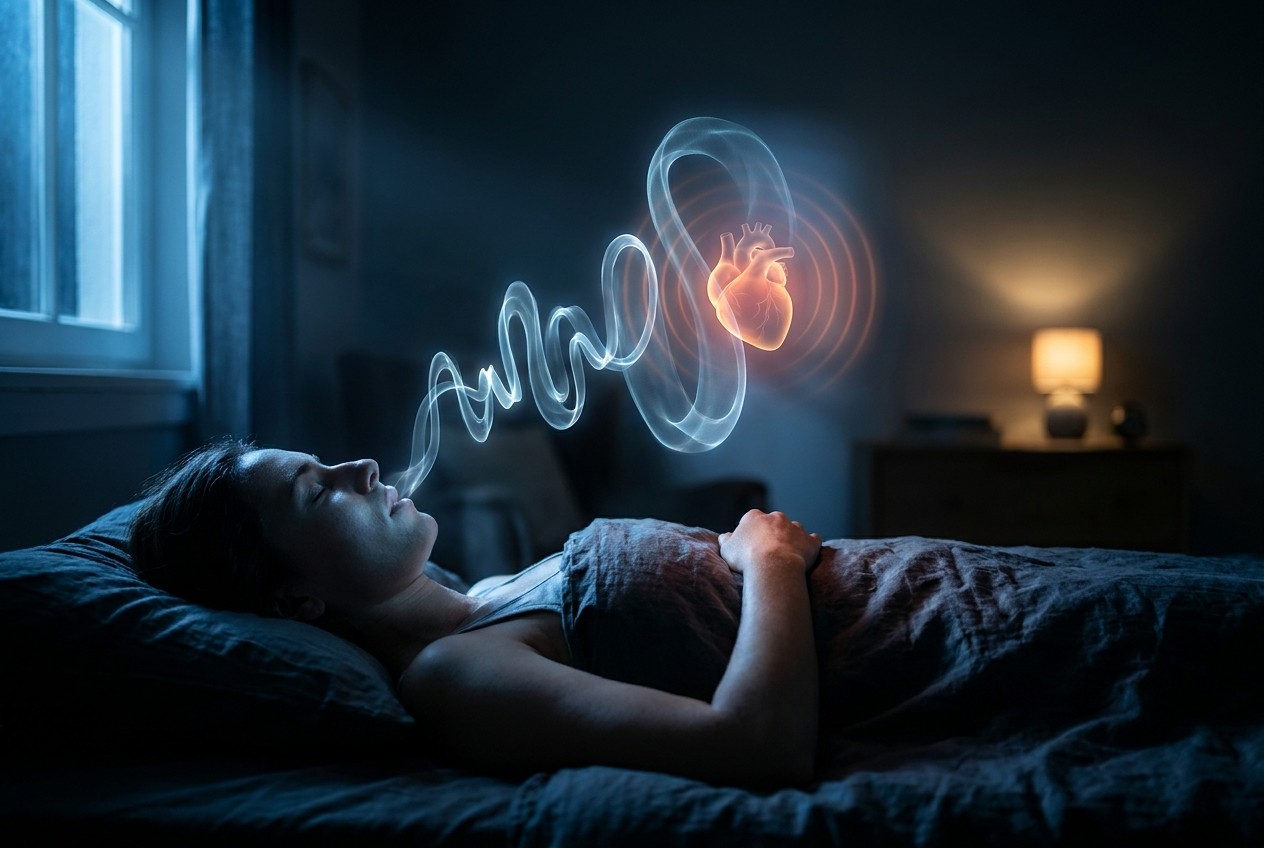
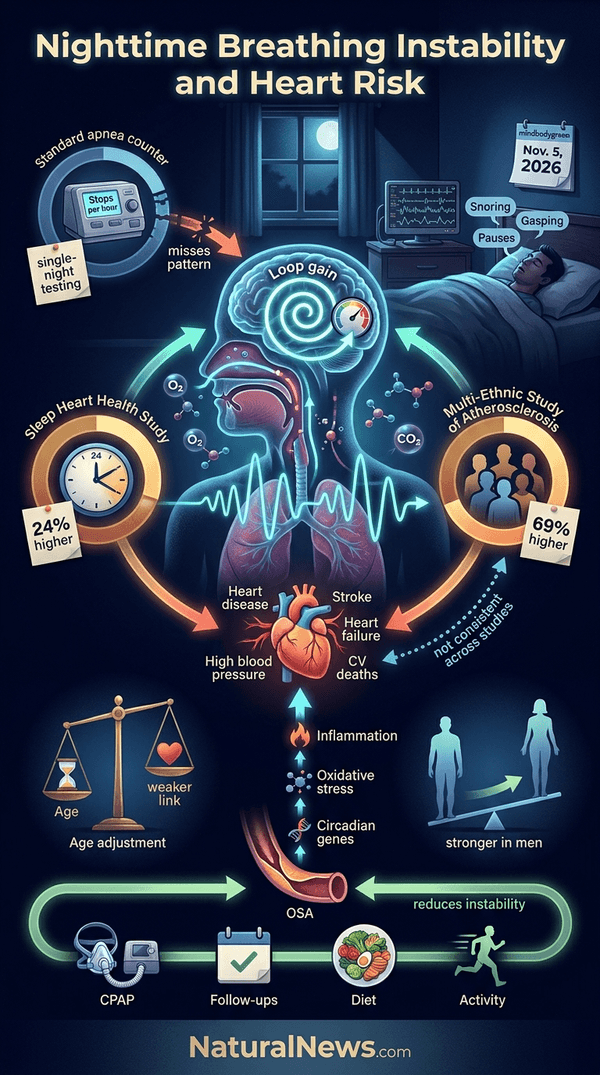
The article reported that the analysis focused on loop gain -- a measure of how strongly the brain responds to shifts in oxygen and carbon dioxide levels -- and on repetitive breathing instability, rather than only on the number of breathing interruptions per hour. According to the article, people whose breathing followed the most repetitive cycles of instability were more likely to develop cardiovascular disease.
The article stated that sleep apnea is typically measured by counting how many times a person's breathing stops or slows each hour. That approach does not account for how steadily or erratically the body controls breathing throughout the night, according to the researchers cited in the article.
How Sleep Apnea Is Typically Measured
Standard sleep apnea assessments count how many times breathing stops or slows down each hour, the article stated. That measure, according to researchers, does not capture how steadily or erratically the body controls breathing during sleep -- what the article described as the repetitive, unstable patterns the new analysis sought to isolate.
Loop gain describes how strongly the brain reacts when oxygen and carbon dioxide levels change. If that system is too sensitive, it can overcorrect, causing breathing to repeatedly speed up, slow down, and become disrupted, the article stated. The researchers used two measurements to identify people whose breathing repeatedly sped up and slowed down in a more regular, predictable cycle.
Separately, a June 2026 report by NaturalNews.com described obstructive sleep apnea as a condition in which the airway repeatedly collapses during sleep. The report stated that OSA has been linked to heart disease through biological pathways that include inflammation, oxidative stress, and altered expression of circadian clock genes [1]. A Mayo Clinic overview of the connection stated that repeated breathing interruptions can raise the risk of a wide range of serious health conditions, including heart issues, and that waking repeatedly creates a cascading effect on the body's stress systems [2]. A medication-focused summary of published research stated that sleep apnea is already known to increase risk of heart disease, high blood pressure and stroke due to the strain it places on the body during sleep [3].
A report in The Epoch Times, cited in the September 2026 NaturalNews.com article by Edison Reed, described snoring as a potential indicator of impaired breathing and sleep quality rather than a mere annoyance [4]. The NaturalNews.com report also noted that the condition spans from childhood into old age and affects men and women differently [5].
Study Findings: Higher Cardiovascular Disease Likelihood
In the Multi-Ethnic Study of Atherosclerosis, the group whose breathing followed the most repetitive cycles of instability had a 69% higher likelihood of developing cardiovascular disease, according to the article. In the Sleep Heart Health Study, the likelihood was 24% higher, the article reported. The association appeared stronger in men than in women.
Researchers also examined deaths related to cardiovascular disease. According to the article, people with greater breathing instability were more likely to die from cardiovascular causes in both studies, with a stronger relationship again seen in men. However, when the researchers compared people with the highest levels of breathing instability against everyone else in the study populations, the link to cardiovascular deaths was not consistent across the two studies.
The article stated that two people could have similar scores on a standard sleep apnea test but different patterns of breathing instability, potentially carrying different cardiovascular risks. That distinction -- between the frequency of interruptions and the repetitiveness of instability -- was the specific factor the analysis sought to isolate. The article stated that the findings suggest the frequency of breathing interruptions is not the only factor worth investigating when assessing sleep apnea. The stronger associations observed in men were described in the article as worth exploring further.
Limitations and Age-Related Adjustments
When researchers adjusted their calculations to account for age more precisely, the connections between breathing instability and heart health became considerably weaker, the article stated. The article reported that this suggests age may explain some of the increased risk they initially observed.
The article stated that the findings do not mean everyone with this particular breathing pattern will develop heart disease, and that standard sleep apnea assessments remain useful rather than inadequate. According to the article, the results highlight an additional factor researchers may want to investigate when studying how sleep apnea affects the heart.
A U.S. News & World Report article reporting on the journal Sleep carried the same quoted assessment about single-night testing [6]. A review by CVRTI at the University of Utah estimated that sleep apnea increases heart failure risk by 140%, stroke by 60%, and coronary heart disease risk by 30% [7].
A March 2026 report from Activist Post stated that nearly 1 in 4 middle-aged and older adults screened at high risk for sleep apnea, and that more than 1 in 3 met criteria for poor mental health, showing how commonly these conditions overlap [8].
What Patients Can Do If They Suspect Sleep Apnea
The article advised watching for nighttime symptoms including regular snoring, gasping, choking sounds, or pauses in breathing during sleep. It also noted daytime fatigue and excessive sleepiness, even after spending a full night in bed, as reasons to speak with a health professional.
For those already diagnosed, the article recommended staying consistent with the prescribed treatment approach, whether that is a CPAP machine or an alternative, and keeping up with follow-up appointments so the care team can monitor progress. The article stated that a sleep evaluation can help determine whether a person has sleep apnea and what treatment may be appropriate.
A 2024 study summary published by the CDC stated that sleep apnea happens when the airway gets blocked repeatedly during sleep, causing a person to stop breathing for short amounts of time [9].
Other reports have pointed to lifestyle factors beyond sleep testing. A sleep-clinics blog article stated that if a person has risk factors for sleep apnea, especially alongside heart disease or hypertension, getting evaluated could be one of the most important steps they take for their cardiovascular health [10]. A July 2026 NaturalNews.com report stated that heart disease prevention is most effective through proactive, sustainable lifestyle changes, and that small, consistent improvements in diet, physical activity, and emotional well-being yield significant long-term benefits [11].
Conclusion
A 2026 report by NaturalNews.com stated that obstructive sleep apnea affects more than half of all men and over one-quarter of women, according to a 2015 report by Mercola.com [12]. A separate 2026 NaturalNews.com report stated that for the roughly 22 million Americans with sleep apnea, the night is anything but restful, and described the disorder as a stealthy threat to cardiovascular and metabolic health [5].
A 2026 Activist Post report stated that adults ages 45 to 85 who are at high risk for obstructive sleep apnea have about 40% higher odds of depression, anxiety, and psychological distress compared to those at low risk [8]. A January 2026 NaturalNews.com report by Lance D Johnson stated that individuals with untreated obstructive sleep apnea were nearly twice as likely to be diagnosed with Parkinson's in a study of over 11 million U.S. military veterans [13].
References
- Study Links Sleep Breathing Patterns to Heart Health, Researchers Say - NaturalNews.com, June 07, 2026.
- Sleep apnea and heart issues: What’s the connection?. https://mcpress.mayoclinic.org/living-well/sleep-apnea-and-heart-issues-whats-the-connection/
- Heart Risk Worse With Sleep Apnea That Varies Night-By-Night. https://www.drugs.com/news/heart-risk-worse-sleep-apnea-varies-night-night-129606.html
- Snoring Linked to Cardiovascular and Cognitive Risks, Clinicians Say; Natural Approaches Draw Attention - NaturalNews.com, September 14, 2026.
- Beyond loud snoring: The hidden health risks of sleep apnea and how to fight back. https://www.naturalnews.com/2026-02-21-hidden-health-risks-of-sleep-apnea-fight-back.html
- Heart Risk Worse With Sleep Apnea That Varies Night-By-Night. https://www.usnews.com/news/health-news/articles/2026-04-13/heart-risk-worse-with-sleep-apnea-that-varies-night-by-night
- Understanding the Impact of Sleep Apnea on Heart Health - CVRTI. https://cvrti.utah.edu/understanding-the-impact-of-sleep-apnea-on-heart-health/
- Large Study Connects Sleep Apnea Risk with Declining Mental Health. https://www.activistpost.com/large-study-connects-sleep-apnea-risk-with-declining-mental-health/
- About Sleep and Your Heart Health | Heart Disease. https://www.cdc.gov/heart-disease/about/sleep-and-heart-health.html
- The Link Between Sleep Apnea and Heart Disease: What the Research Shows. https://www.ussleepclinics.com/blog/sleep-apnea-heart-disease-connection
- After-Dinner Habits for Cholesterol Management: A Look at Five Proposals. https://www.naturalnews.com/2026-07-08-after-dinner-habits-for-cholesterol-management.html
- Study Links Sleep Breathing Patterns to Heart Health, Researchers Say. https://www.naturalnews.com/2026-06-07-sleep-breathing-patterns-linked-heart-health-study.html
- Treating sleep apnea could guard against Parkinson’s disease. https://www.naturalnews.com/2026-01-19-treating-sleep-apnea-guard-against-parkinsons-disease.html
Explainer Infographic









Please contact us for more information.


