


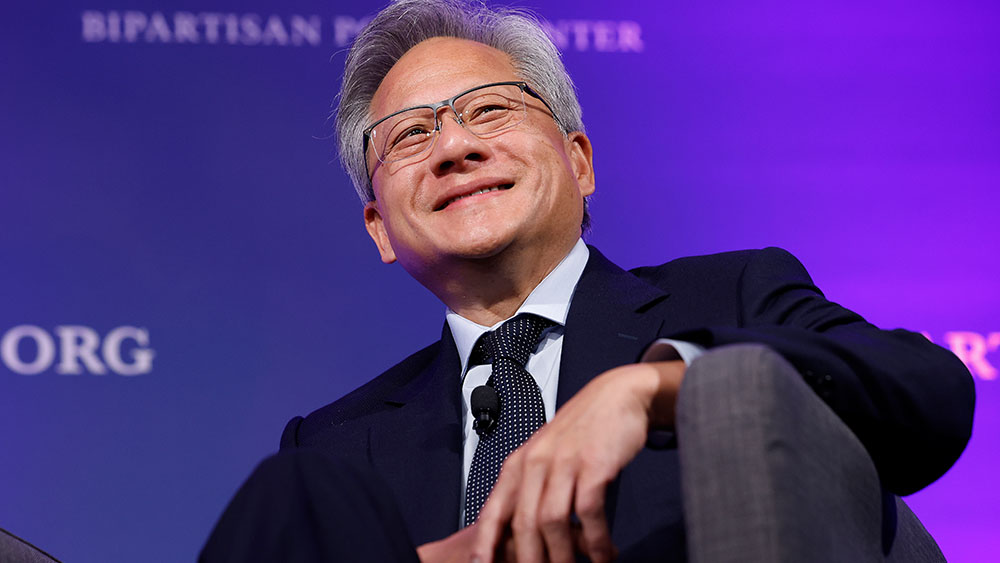
- Trump was briefed a year ago that Nvidia CEO Jensen Huang was targeted by Chinese intelligence but took no action.
- Huang admitted to an extramarital affair with a woman U.S. officials reportedly believe was a Chinese spy.
- Nvidia’s board launched an independent probe into potential foreign intelligence targeting of Huang.
- The scandal erupted amid U.S.-China chip war tensions and Nvidia’s approved sales of H200 chips to China.
- Trump defended Huang and expressed no regret for not acting on the intelligence warning.
Nearly a year ago, President Donald Trump was reportedly briefed that the most powerful man in the American chip industry had been targeted by a Chinese intelligence operation. He took no action. Now, with Nvidia launching a formal investigation and CEO Jensen Huang publicly admitting to an extramarital affair with a woman U.S. officials believe was a foreign agent, the nation is confronting a scandal that reads more like a John le Carré novel than a corporate governance crisis.
The story broke in late October, and reports from the New York Times and Financial Times have since detailed a romantic relationship between Huang and Alice Huang, a Chinese businesswoman who U.S. intelligence officials reportedly believe was recruited by Beijing's Ministry of State Security. The stakes are enormous: Nvidia's chips power the artificial intelligence revolution, and Washington has spent years trying to keep the most advanced versions out of Chinese hands.
Huang admits infidelity as Nvidia board launches independent probe
Facing a firestorm of media scrutiny, the 63-year-old billionaire sent a memo to employees on Sunday that was equal parts confession and damage control. "I was unfaithful to my wife. My actions hurt her and our children. There is no excuse for what I did," Huang wrote, according to a company-shared statement. He did not name the woman or directly mention Chinese intelligence, but he pledged full cooperation with the investigation.
Nvidia's board of directors announced the same day that a committee of independent directors, backed by outside legal counsel, would examine whether foreign intelligence efforts targeted their CEO. The board stressed it has "no reason to believe that either national security or Nvidia secrets were compromised," but the very existence of the probe rattled investors in the nearly $4.5 trillion company, whose shares fell around 5% in pre-market trading Monday.
Trump stands by his man despite intelligence warnings
The political irony is thick. The New York Times reported that Trump learned of the intelligence concerns roughly a year ago, yet Huang remained a fixture in the president's inner circle. Huang himself, meanwhile, was not warned by U.S. agencies. The Nvidia chief joined Trump on Air Force One for a May state visit to China, and in September, he brought his wife, Lori, to a White House state dinner for Chinese President Xi Jinping.
When asked by reporters on Sunday whether he wished he had acted on the intelligence, Trump said no. "I think he's an honorable guy," the president said, adding that Huang should stay at the helm of Nvidia. Trump even floated the idea of bringing him on another trip to Asia later this month.
Beijing fires back as global tech war heats up
China's Foreign Ministry has rejected the spying accusations as "groundless speculation" and a smear campaign. Spokesman Guo Jiakun called the reports unsubstantiated, a sentiment echoed by Chinese state media, which suggested the story was timed to destabilize improving U.S.-China relations.
The scandal arrives at a moment when the two superpowers are locked in a struggle for dominance in artificial intelligence, with chip export restrictions at the center of the fight. Huang has lobbied the Trump administration to ease some of those limits, winning approval this year to sell the advanced H200 chips to China. Now, those business decisions and the personal entanglements that accompanied them are under a microscope. Why did the White House sit on that warning for a year while the man at the center of it was flying on Air Force One?
Sources for this article include:




Please contact us for more information.


