


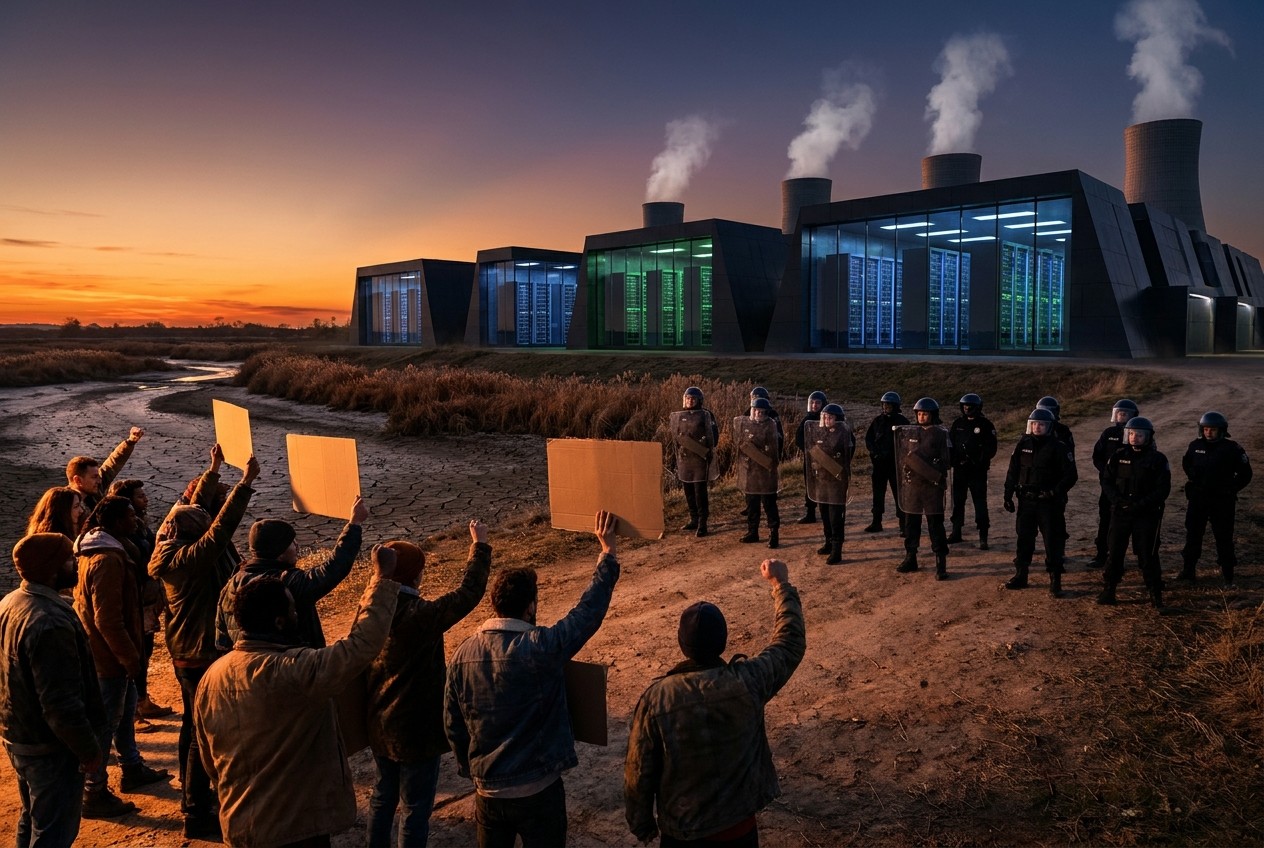
In the United States, the opposition to data center projects has transformed the midterm election landscape, with voters pushing back on the buildout in states at the heart of the AI data center boom on Election Night, according to AP and CNBC [2][3]. Technology companies say additional capacity is needed for AI and cloud computing, while opponents point to electricity costs, water consumption and land use [4][5].
European Projects Face Local Opposition
The Amsterdam breach occurred as more than 100 campaign groups in 15 countries prepared two days of protests calling for a halt to major AI projects, according to The Guardian and Euronews [6][5].
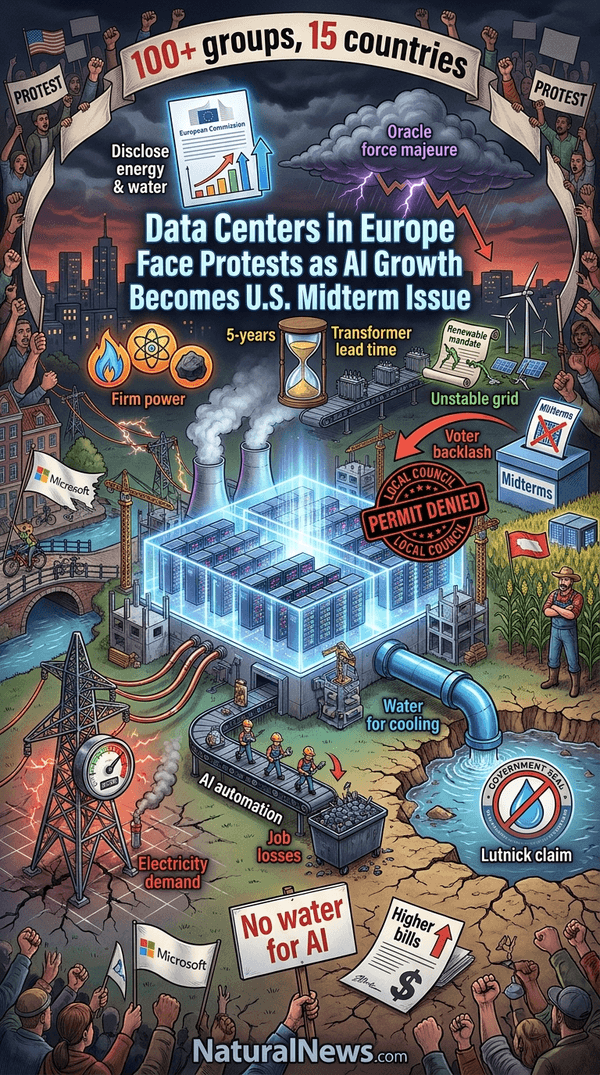
Residents and activists have said data centers increase electricity demand, raise utility bills and consume water for cooling. In Finland, the Supervisory Agency ordered Google to halt construction work at two data centers, and the European Commission has submitted a proposal requiring data centers across Europe to disclose their energy and water efficiency metrics, according to Data Centre Dynamics [7][8]. The EU aims to triple its data center capacity over the next five to seven years, which has raised concerns about the build-out's potential impact on the power grid and natural resource use [8].
Some local councils have delayed or rejected permits as grid constraints and housing concerns factor into decisions, officials said. Industry representatives have said the facilities pay taxes and create some jobs, and that opposition may slow digital investment. Mike Adams, host of Bright Videos News, has reported that Commerce Secretary Howard Lutnick recently asserted that data centers do not consume water, a statement that drew bipartisan scrutiny from communities grappling with the costs of the AI infrastructure boom [9].
U.S. Midterm Campaigns Take Up AI Infrastructure
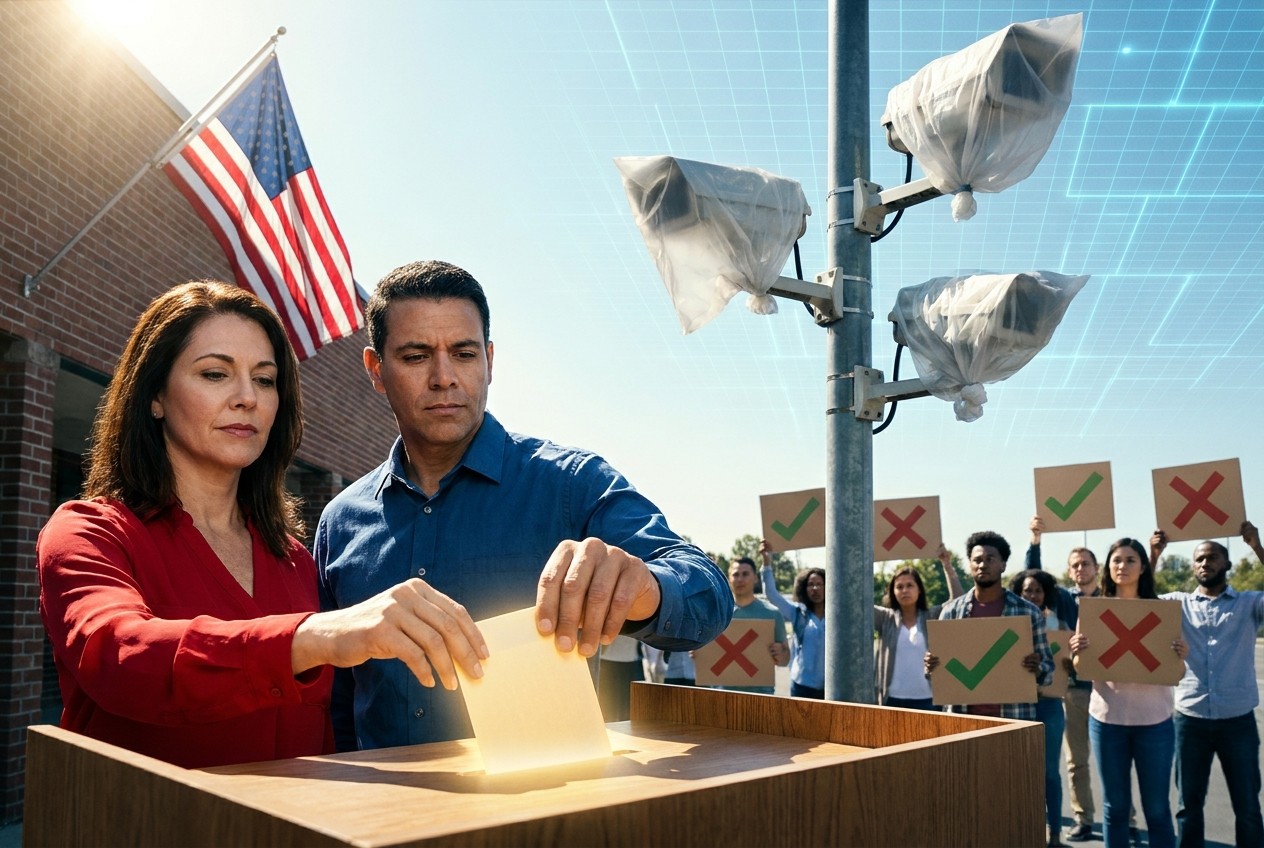
In the United States, data center controversies have transformed the midterm election landscape, according to the AP [2]. Voters in the states at the heart of the AI data center boom pushed back on the buildout on Election Night, with data center backers suffering near-total defeats across more than 40 voting initiatives, according to CNBC and CNET [3][10]. In rural eastern Nebraska, opposition has been building in ways that defy typical partisan boundaries, according to AP reporting [11].
Some candidates said federal and state incentives favor large technology companies over residential ratepayers. In Virginia, Democratic Governor Abigail Spanberger released an energy plan proposing 277,000 acres of solar panels to produce energy for data centers, an area the size of Fairfax County, Arlington and one city, according to The New American [12]. Voters on Tuesday rejected data center projects and elected Democratic candidates who promised to regulate the technology, according to The New York Times [13].
The debate follows disputes over electricity prices, water use and land development in several states, officials said. In high-demand regions like Virginia, utility providers have begun cutting power to data centers to preserve supply for residential users, according to reporting by Mike Adams on Bright Videos News [14]. The strain on the electrical grid is no longer theoretical but an immediate crisis, with the energy demand generated by AI and computing outpacing the grid's capacity and leading to the prospect of residential blackouts, according to the same report [14].
Energy, AI and Economic Claims
Supporters said AI data centers require reliable, around-the-clock power and that natural gas, nuclear and coal can provide it, while critics said renewable mandates have made grids less stable, according to testimony and reports. That projected volume would exceed current gas consumption in every country except China, Russia, Iran and the U.S. itself, and Germany, Europe's largest economy, consumes roughly 9 billion cubic feet per day across its entire economy, according to the forecast [15].
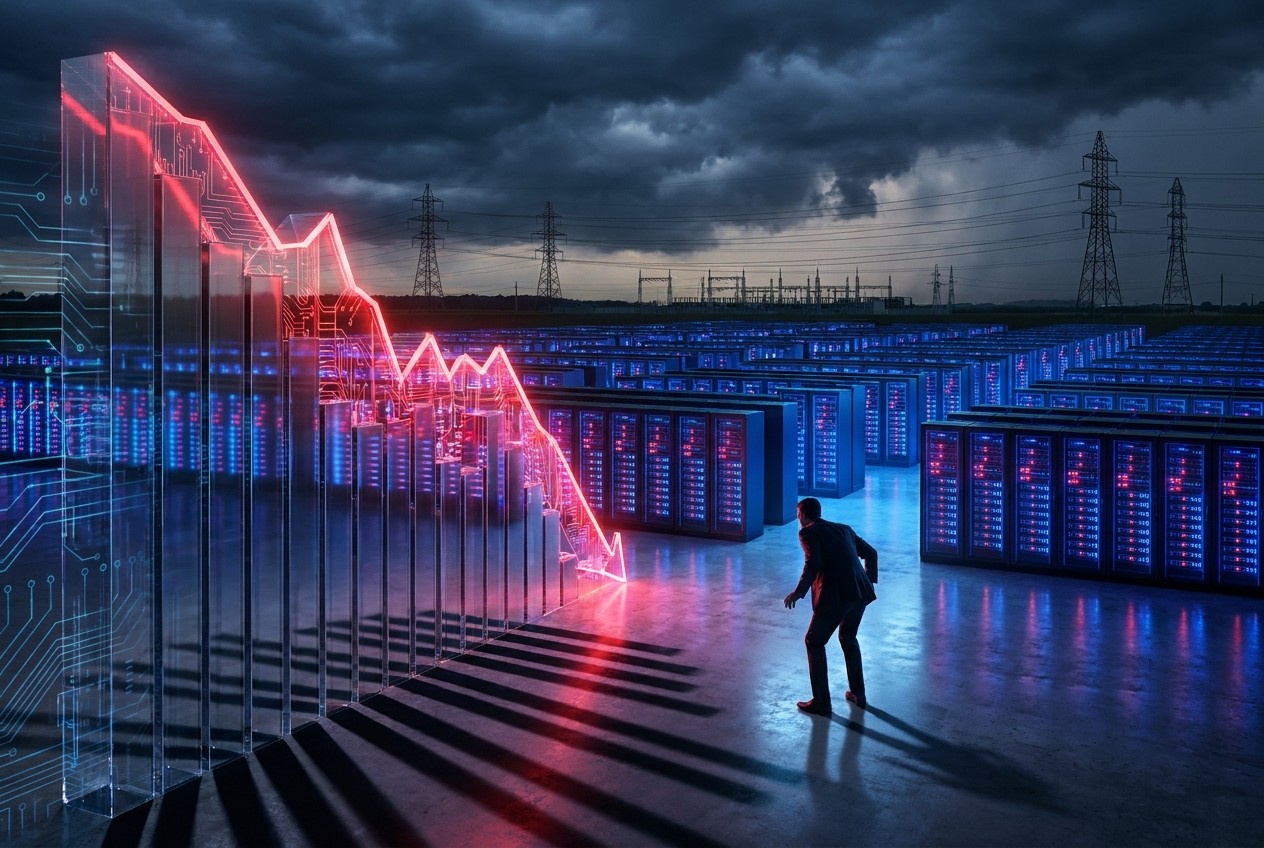
Opponents said AI may replace workers and concentrate economic power in a few companies, while industry groups disputed those claims. Mike Adams, in his Brighteon Broadcast News report, stated that cognitive abilities are being overshadowed by artificial intelligence and that AI and AI robots are now transforming the economy, with millions losing jobs due to automation [16][17]. The AI investment boom shows signs of structural weakness, including Oracle's declaration of force majeure regarding a massive data center project, according to Adams [18].
Some analysts said data center demand is increasing faster than transmission capacity. The lead times for large-scale transformers suitable for hyperscale data centers are currently five years or more, representing a global supply chain crisis affecting manufacturers in China and Western Europe alike, according to Adams [19]. Analysts have highlighted AI infrastructure constraints as the next leg of the trade, according to UBS [20].
Conclusion
Protests in Europe and campaign debate in the U.S. are expected to continue as data center construction proceeds, according to officials and industry representatives. Regulators, residents and technology companies remain divided over energy costs, water use, land use and AI development. The author of "A Question of Power Electricity and the Wealth of Nations," Robert Bryce, has documented how disruption to essential services like electricity has persisted in conflict zones, a reminder of the stakes involved in critical infrastructure [21].
References
- Protesters break into Microsoft data center site in .... https://apnews.com/article/data-centers-europe-ai-protests-us-midterms-b4f3f9f368697bb37416bcb4fabdd67c
- How data center controversies have transformed the midterm elections .... https://apnews.com/article/data-centers-rural-farm-artificial-intelligence-trump-e5a350af1bc12e6a4f470d3b68be51d7
- Voters rebuff data centers in every ballot measure except one. https://www.cnbc.com/2026/11/04/data-center-ballot-measures-2026-midterm.html
- Data centre debate heats up ahead of US midterms - here's what you need to know. https://bbc.com/news/articles/cq2e9we7w2ejo
- Protesters across Europe to call for freeze on energy hungry data .... https://www.euronews.com/2026/11/05/protesters-across-europe-to-call-for-freeze-on-energy-hungry-data-centres
- Activists across Europe prepare two days of protests against .... https://www.theguardian.com/world/2026/nov/05/activists-across-europe-protests-ai-against-datacentres
- Forest Majeure: Finland Orders Google To Halt Work At Two Data Centers Less Than A Month After €13BN Splash. https://www.zerohedge.com/technology/forest-majeure-finland-orders-google-halt-work-two-data-centers-less-month-after-eu13bn
- European Commission Proposes Energy & Water Efficiency Disclosure Rules For Data-Centers. https://www.zerohedge.com/ai/european-commission-proposes-energy-water-efficiency-disclosure-rules-data-centers
- Bright Videos News - 3RD PARTY Ben Swann - Mike Adams - BrightVideos.com, September 10, 2026.
- Data Center Backers Suffer Near-Total Midterm Defeats Across the .... https://www.cnet.com/news/politics/data-center-ai-losses-midterms/
- In a divided America, the left and right unite to oppose artificial .... https://www.ap.org/news-highlights/elections/2026/in-a-divided-america-the-left-and-right-unite-to-oppose-artificial-intelligence-data-centers/
- Virginia Governor Wants Nearly 300K Acres of Old Dominion Under Solar Panels. https://thenewamerican.com/us/tech/energy/virginia-governor-wants-nearly-300k-acres-of-old-dominion-under-solar-panels/
- Voters Rejected A.I. in the Midterms. Now Comes an Era of Scrutiny. https://www.nytimes.com/2026/11/04/technology/midterm-elections-ai-data-centers.html
- Bright Videos News - COMING FOOD RIOTS - Mike Adams - BrightVideos.com, January 28, 2026.
- U.S. Data Centers Projected to Consume 15 Billion Cubic Feet of Gas Daily by 2035. https://www.naturalnews.com/2026-09-17-us-data-centers-to-consume-15b-gas-daily.html
- Bright Videos News - Vaccines CONFIRMED - Mike Adams - BrightVideos.com, March 07, 2025.
- Bright Videos News - EPA, GLYPHOSATE AND NETANYAHU?ÇÖS DEMANDS - Mike Adams - BrightVideos.com, February 11, 2026.
- Bright Videos News - US DEBT RED ALERT DATA CENTER FORCE MAJEURE FOOD SOVEREIGNTY - Mike Adams - BrightVideos.com, September 28, 2026.
- Bright Videos News - THE AI DATA CENTER BUBBLE WILL BURST - Mike Adams - BrightVideos.com, June 01, 2026.
- UBS Identifies "The Next Leg Of The AI Trade". https://www.zerohedge.com/ai/ubs-identifies-next-leg-ai-trade
- A Question of Power Electricity and the Wealth of Nations. Robert Bryce
Explainer Infographic








Please contact us for more information.


