



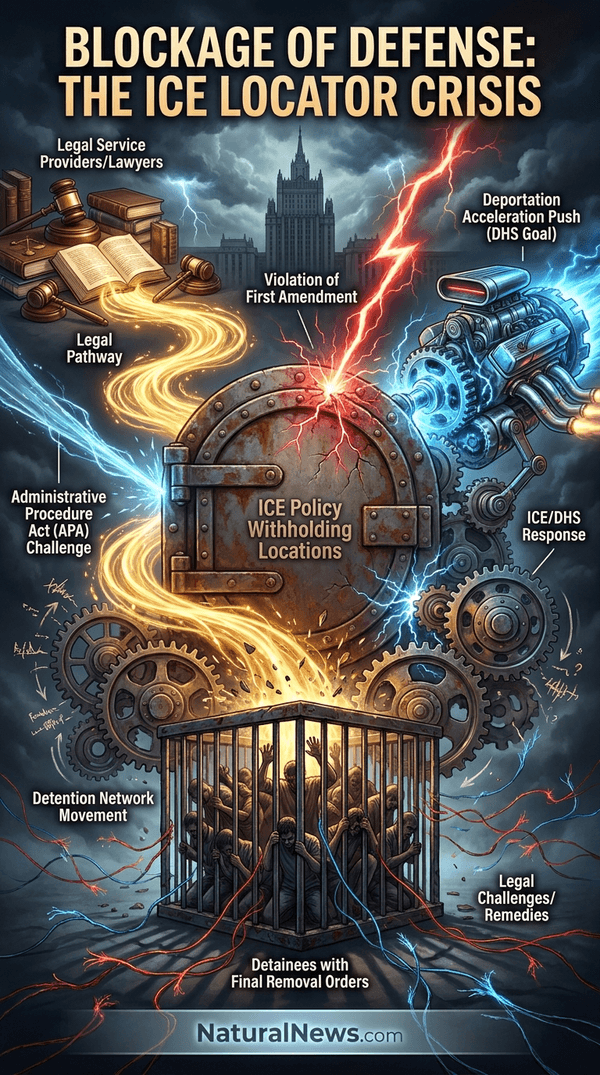
The complaint challenges a Trump administration policy that withholds the locations of tens of thousands of detainees who have final removal orders, according to the complaint. It seeks a court order blocking the policy, which was adopted last month, that resulted in the detainees with final removal orders being expunged from Immigration and Customs Enforcement's (ICE) Online Detainee Locator System (ODLS).
The plaintiffs argue the change leaves lawyers unable to find their clients and denies detainees a meaningful opportunity to defend their rights. Jacquelynne Bowman, executive director of Greater Boston Legal Services and one of the plaintiffs, said no one should be denied a meaningful opportunity to defend their rights because the government has made it impossible for their lawyer to find them, according to the complaint.
Policy Removed Detainee Locations From Online System
ICE removed the locations of people facing final removal orders from the ODLS and instructed staff not to reveal their whereabouts, a change first reported by AP and later detailed in independent media reporting. Lawyers and family members have used the online system since 2010 to track detainees as they are moved through ICE's detention network. Approximately 1.4 million people in the United States are subject to final removal orders, according to the lawsuit.
ICE and its parent agency, the Department of Homeland Security (DHS) have not publicly confirmed the change. Officials have instead reiterated that they are prioritizing people with final removal orders for deportation.
Lawsuit Alleges Procedural and First Amendment Violations
The complaint says the policy was adopted without explanation, violating the Administrative Procedure Act. It also argues the change violates the First Amendment, which protects lawyers' ability to advise people of their legal rights and seek prospective clients.
Since the change took effect, lawyers have been unable to find clients and potential clients and have spent significantly more time tracking down others, according to the lawsuit. Calls to ICE lines lead to long waits, sudden hang-ups a lack of information or no answer.
Some lawyers have tried an ICE program that schedules legal calls as a workaround, but only a small percentage of detention centers use it, according to the lawsuit, which says the result has been delayed or missed legal filings and fewer cases taken. The complaint describes the policy as "unlawful and inhumane."
DHS Says Detainees Have Communication Options
DHS said in a statement responding to the lawsuit that "illegal aliens in detention have several ways to communicate with their family members and lawyers." The department added: "The appropriate process due to an illegal alien with final deportation orders is removal, plain and simple"
The agencies have said they face a "historic number of injunctions" from courts and have denied that they are disappearing detainees, according to DHS. The policy change is part of a broader push by the administration to accelerate removals.
Detainees Retain Some Legal Options, Court Records Show
People with final removal orders still can ask to reopen proceedings, seek relief from removal to third countries and challenge violations of their rights, according to the lawsuit and court records. Federal judges have ruled thousands of times that detainees should be released or granted bond hearings, the lawsuit stated.
The policy change affects detainees' access to counsel during those challenges, according to the plaintiffs. Without the locator system, lawyers say they cannot reliably reach clients to prepare filings or advise them of upcoming hearings. The lawsuit contends that the government's withholding of locations undermines the ability of detainees to pursue these remedies, which depend on timely legal assistance.
Case Pending in Boston Federal Court
The lawsuit asks a judge to issue an order blocking the change, but no hearing date or ruling in the case was reported. The outcome of the lawsuit is pending, officials said.
Reference
- Lawsuit seeks to block ICE from hiding locations of detainees with final removal orders. https://apnews.com/article/ice-detainee-location-lawsuit-disappearing-removal-order-789eea3202be224d82d84a82ade6c15b
Explainer Infographic









Please contact us for more information.


