


A 2026 study published in Nature Communications found that coffee consumption altered the composition and activity of the gut microbiome in both caffeinated and decaffeinated forms, according to the report. The findings do not establish causation, and several studies cited in the report described mixed results and uncertain mechanisms, the authors stated.
The report, medically reviewed by DeMario Butts, M.D., M.S., compiled data from peer-reviewed studies, meta-analyses and systematic reviews published between 2016 and 2026. According to a separate review of decades of research described by NaturalNews.com, moderate coffee consumption is associated with longer life and a lower risk of mortality from chronic diseases [1].
Coffee Compounds and Gut Microbiome
Coffee contains antioxidants, particularly phenolic compounds called chlorogenic acids, at roughly 70 to 350 milligrams per cup, according to the Epoch Times report. A single cup also provides about 11% of the recommended daily allowance of riboflavin, 6% of pantothenic acid, 3% of potassium and 3% of manganese, the report stated.
A 2026 Nature Communications study reported distinct microbial and metabolic profiles in coffee drinkers compared with non-drinkers, according to the Epoch Times report. Changes occurred after both caffeinated and decaffeinated coffee were introduced, suggesting that polyphenols and other compounds besides caffeine play a role, the study authors stated. "Coffee also affects the gastrointestinal tract. It increases stomach acidity and stimulates the release of hormones that aid digestion," the authors noted.
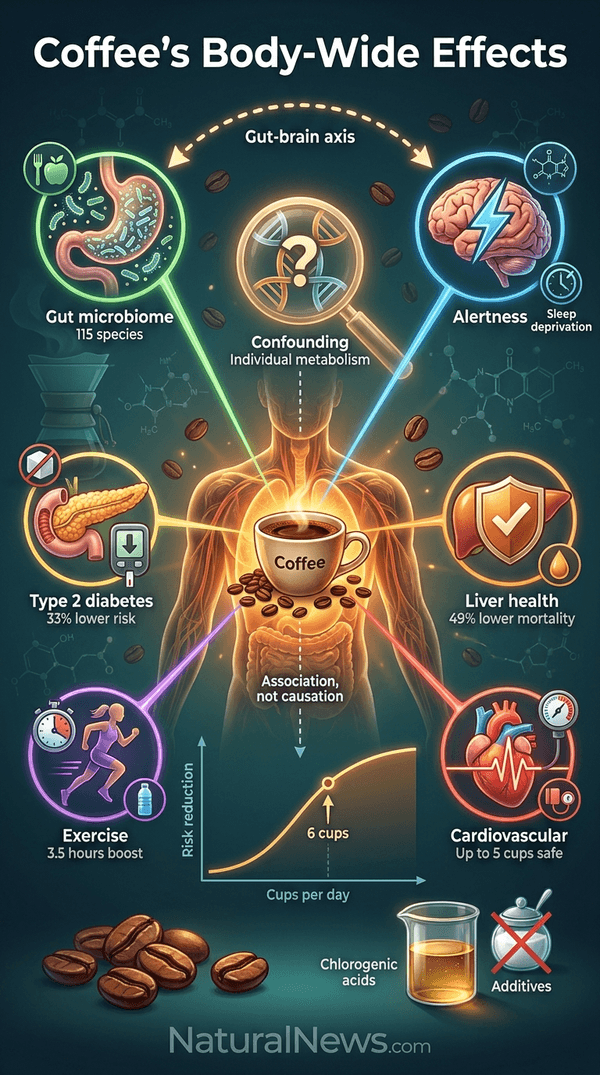
A 2024 study involving more than 22,000 participants found 115 bacterial species positively associated with coffee intake, according to the report. One species was 4.5 to 8 times more abundant in coffee drinkers, and experiments showed that coffee stimulated its growth, the researchers said. The health significance of these microbiome changes remains uncertain, and the 2026 study reported mixed cognitive and behavioral findings, the researchers stated.
Metabolic, Liver and Cognitive Outcomes
A 2021 review found habitual coffee drinking consistently associated with a lower risk of Type 2 diabetes for both caffeinated and decaffeinated coffee, according to the Epoch Times report. A meta-analysis published in Diabetes Care of 28 prospective studies involving more than 1.1 million people found that six cups per day was associated with a 33% lower risk of Type 2 diabetes compared with little or no coffee, and the association was dose-dependent, the researchers reported.
A 2021 study published in BMC Public Health found that coffee drinkers had a 21% lower risk of chronic liver disease and a 49% lower risk of dying from chronic liver disease compared with non-coffee drinkers, according to the report. Associations were similar for ground, instant and decaffeinated coffee, suggesting the potential liver benefits are not limited to caffeine, the study found. A 2017 systematic review and meta-analysis found that each additional two cups of coffee per day was associated with a 35% lower risk of liver cancer, and a 2016 review found each additional two cups associated with a 44% lower risk of cirrhosis and 45% lower risk of cirrhosis death, the authors stated.
Research has shown that caffeine can help maintain alertness, attention and reasoning speed, particularly during sleep deprivation, according to the report. A comprehensive review published in Biochemical Pharmacology analyzed decades of epidemiological, experimental and clinical data and concluded that regular coffee consumption is associated with a reduced risk of liver disease, including fibrosis, cirrhosis and hepatocellular carcinoma, according to NaturalNews.com [2].
Cardiovascular, Parkinson's and Exercise Findings
A 2018 review concluded that moderate coffee drinking, about two to five cups per day, is associated with lower risks of cardiovascular and all-cause mortality, according to the Epoch Times report. Up to five cups of coffee per day is safe for most adults, according to the review. A new scientific statement published by the American Heart Association found that drinking up to 5 cups of caffeinated coffee a day, or about 400 milligrams of caffeine, is not only safe but may also provide cardiovascular benefits, according to Everyday Health [3].
A 2024 study published in Neurology found that people with the highest coffee intake had a 37% lower risk of developing Parkinson's disease compared with non-coffee drinkers, according to the report. Higher blood levels of caffeine and its metabolites measured years before diagnosis were also associated with lower Parkinson's risk, the researchers reported. "The pattern is real, but I wouldn't assume causation," Ranya Belmaachi, a neuroscience-trained neurotechnology professional, told The Epoch Times in an email. She said caffeine blocks a receptor in the brain's movement circuitry that works against dopamine, a system Parkinson's damages.
A 2022 systematic review and meta-analysis found that caffeine improved endurance running performance, increasing time to exhaustion and producing a small improvement in running time-trial performance, according to the report. A 2018 systematic review and meta-analysis found that caffeine produced small but significant improvements in upper-body strength and muscle power, though more research is needed in women and on optimal dosing, the authors stated. A study published in 2026 found that a single caffeine dose may boost exercise performance for 3.5 hours [4].
Precautions, Optimization and Conclusion
Observational studies often associated approximately three to four cups per day with the lowest relative risks for several health outcomes, but this does not establish an optimal intake for every person, according to the Epoch Times report. Precautions include sleep disruption. One study found that a 400-milligram dose of caffeine taken six hours before bedtime significantly disrupted sleep, according to the report. Pregnant women are generally advised to keep total caffeine intake below 200 milligrams per day, and coffee can interact with certain medications, according to the report.
Mario Idrovo, a certified Q grader with a master's degree in coffee science and economics and founder of Cafering, told The Epoch Times that lighter roasts generally retain more chlorogenic acids and recommended buying whole beans, grinding fresh, weighing coffee and water, using filtered water, and storing beans in an airtight, opaque container at room temperature away from heat, light and moisture. "The best coffee is the coffee you like," he said.
References
- Research Review Links Moderate Coffee Consumption to Longevity Benefits - NaturalNews.com, April 22, 2026
- Review: Coffee Consumption Associated With Reduced Risk of Liver Disease, Improved Liver Health. https://www.naturalnews.com/2026-06-22-coffee-consumption-associated-reduced-liver-disease-risk.html
- This Is the Best Amount of Coffee to Drink for Heart Health. https://www.everydayhealth.com/heart-health/best-amount-of-coffee-to-drink-for-heart-health/
- Single Caffeine Dose May Boost Exercise Performance for 3.5 Hours, Study Finds. https://www.naturalnews.com/2026-10-01-caffeine-dose-boost-exercise-3-5-hours-study.html
Explainer Infographic












Please contact us for more information.


