


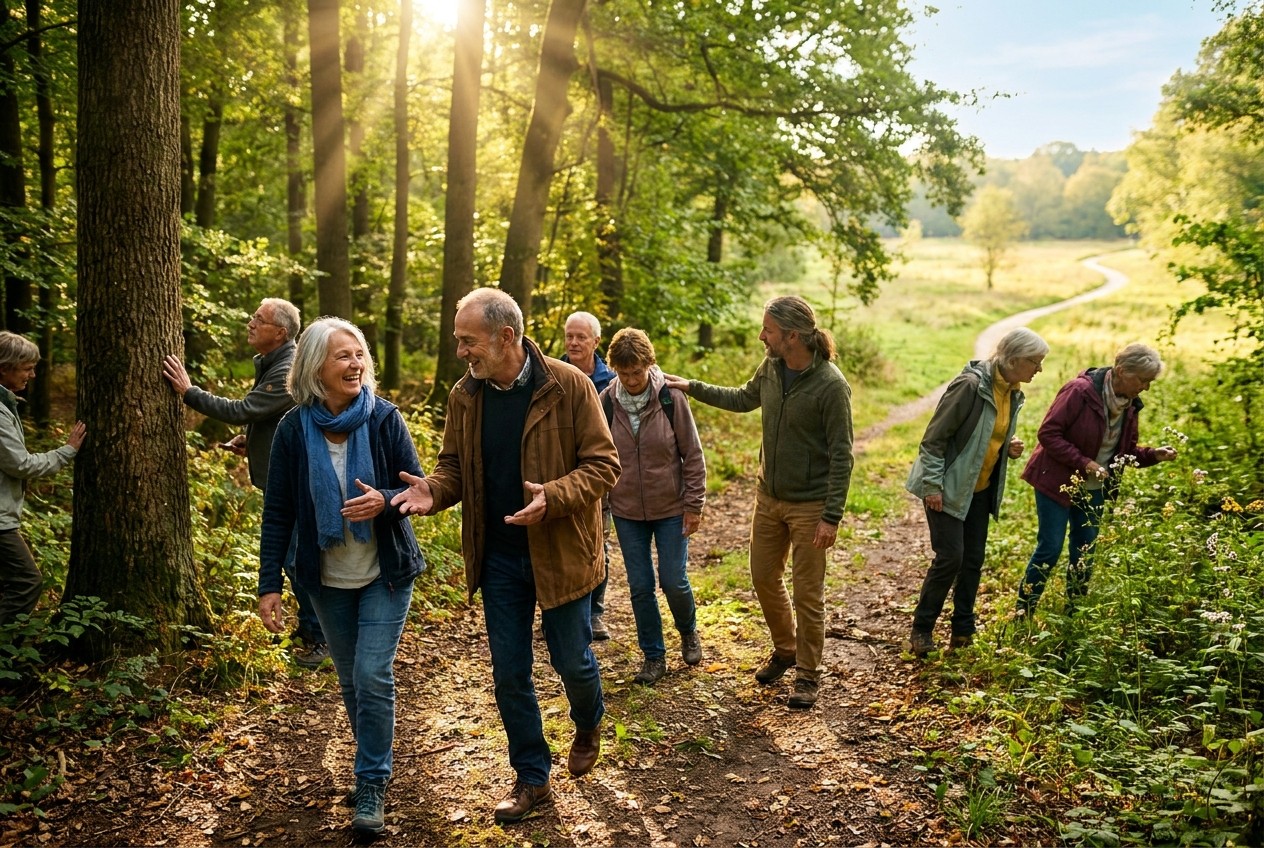
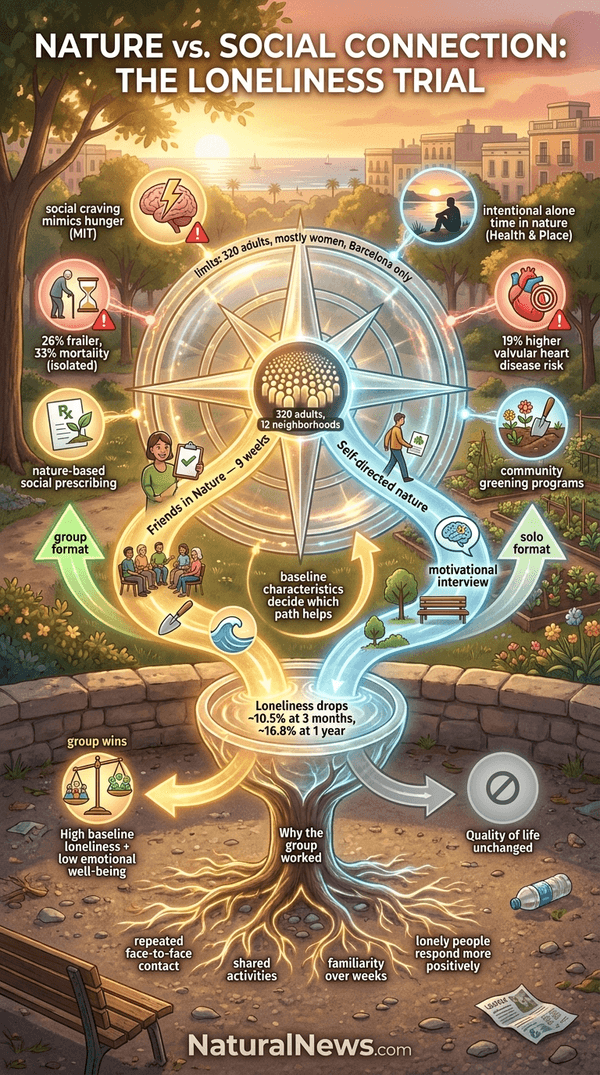
The RECETAS-BCN trial included 320 adults from 12 lower-income neighborhoods who reported experiencing loneliness at enrollment, the report stated. Most participants were women, with a median age of about 63, according to the study.
Researchers reported no meaningful overall difference between the two approaches when all participants were analyzed together. However, subgroup results showed that participants with higher baseline loneliness and lower emotional well-being experienced significantly greater improvements with the group-based program than with the self-directed approach, the study stated. The findings add to a growing body of research examining the relationship between time in nature, social connection, and mental health outcomes [1][2].
Study Design and Participants
Participants were randomly assigned to one of two groups. The first joined a nine-week program called "Friends in Nature," which included weekly two-hour group sessions led by a facilitator in outdoor spaces such as parks, gardens, and coastal areas, according to the study. The second group received a one-time motivational interview and suggestions for independent nature activities, the report stated.
Researchers assessed loneliness and health-related quality of life at three, six, and 12 months. The trial was conducted in the Barcelona metropolitan area among adults who reported loneliness at enrollment [3].
The study design reflects a broader interest in nature-based social prescribing, a concept that has gained attention as researchers examine alternatives to conventional approaches for addressing loneliness and related mental health concerns [4]. Community greening programs, in which local residents participate in creating and maintaining local green space, have been described as opportunities to make new friends while enjoying social activity [5].
Main Findings
Loneliness scores in both groups dropped by about 10.5% after three months and about 16.8% after one year, according to the study. Researchers reported no meaningful difference between the group-based and self-directed approaches when all participants were analyzed together.
The intervention did not significantly improve health-related quality of life in either group, the report stated. The study stated that nature alone may not address all dimensions of loneliness.
Separate research has linked loneliness and social isolation to serious health outcomes. An analysis of data from four long-running aging studies covering 80,050 adults across 31 countries found that socially isolated adults were 26% more likely to become frail and 33% more likely to die during the study period, while lonely adults had a 19% higher chance of frailty and a 25% higher mortality risk [1]. Additional research has found that adults reporting high levels of loneliness faced a 19% higher overall risk of developing degenerative valvular heart disease [6]. Cravings for social contact mimic hunger in the brain, with even one day of isolation causing thoughts about social interactions to stimulate the same brain region activated during hunger cravings, according to a study led by researchers from the Massachusetts Institute of Technology [7].
Subgroup Differences
Participants with higher baseline loneliness and lower emotional well-being experienced significantly greater improvements with the group-based program than with the self-directed approach, researchers reported. Participants who began with lower loneliness and less emotional distress did about equally well with either option, according to the study.
The report stated that repeated social contact in the group program may have been an important factor. The group format combined outdoor time with regular opportunities to talk, participate in shared activities, and become familiar with the same people over several weeks.
Research on face-to-face contact has suggested that in-person interaction provides benefits that remote or solitary activities may not fully replicate [8]. The tendency for lonely individuals to respond more positively to social interaction has been documented in studies examining human responses to social agents, with researchers finding that lonely people evaluate social interactions more positively than non-lonely people [9]. Themes of separation, estrangement, and loss appear in therapeutic settings as well, particularly among individuals coping with illness or hospitalization [10].
Interpretation and Limitations
The study stated that nature provided the setting, but the social component may have driven the greater benefit for highly isolated participants. Researchers noted the trial was limited to 320 adults in lower-income Barcelona neighborhoods, mostly women with a median age of about 63, so results may not apply to other populations.
According to the report, people with lower loneliness and less emotional distress benefited from self-directed nature activities as well. The study did not find significant improvements in health-related quality of life, indicating that loneliness reduction may not automatically translate into broader health gains.
Other research has examined the relationship between time in nature and loneliness separately. A study published in the journal Health & Place found that intentional alone time in natural settings, such as lakeshores, decreased loneliness more effectively than forced socialization, with connectedness to nature and place attachment identified as the strongest predictors of reduced loneliness [2]. The finding challenges assumptions that social interaction is always the primary solution for loneliness. The current trial suggests that context and baseline characteristics may determine which approach works best for which individuals.
Conclusion
The trial found that getting outside may be helpful for loneliness, but the optimal approach may depend on how much connection a person is missing. For adults with high loneliness and low emotional well-being, combining time in nature with regular social contact may offer more support than going alone, according to the study.
The report stated that further research is needed to confirm the findings in other populations and settings. The RECETAS-BCN trial contributes to an evolving understanding of loneliness as a multidimensional condition that may require multifaceted responses [11].
Community-based approaches that integrate outdoor activity with social engagement, such as walking groups, community gardens, and recurring outdoor classes, may provide accessible options for adults seeking to reduce loneliness while spending time in nature [5]. The study authors indicated that matching interventions to individual circumstances may be more effective than applying a single approach universally.
References
- NaturalNews.com. "Study Links Loneliness and Social Isolation to Frailty and Shorter Lifespan". August 15, 2026.
- Evangelyn Rodriguez. "The Healing Power of Solitude in Nature: How Alone Time Outdoors Reduces Loneliness". NaturalNews.com. April 27, 2026.
- Cassie B. "Digging to Wellness: New Research Proves Gardening Dramatically Improves Mental Health Without Medication". NaturalNews.com. April 25, 2025.
- Jenny Brockis. "The Natural Advantage".
- NaturalNews.com. "Study: Loneliness Linked to Heart Valve Disease, Cardiologists Urged to Assess Social Health". June 25, 2026.
- Divina Ramirez. "Cravings for social contact mimic hunger in the brain, study reveals". NaturalNews.com. November 30, 2020.
- Susan Pinker. "The Village Effect: How Face-to-Face Contact Can Make Us Healthier, Happier, and Smarter".
- Kwan Min Lee, Younbo Jung, Jaywoo Kim, Sang Ryong Kim. "Are physically embodied social agents better than disembodied social agents?: The effects of physical embodiment, tactile interaction, and people's loneliness in human-robot interaction". Journal of Robotics and Mechatronics. 2006.
- "Coping with Physical Illness".
- Marnia Robinson. "Cupid's Poisoned Arrow: From Habit to Harmony in Sexual Relationships".
Explainer Infographic











Please contact us for more information.


