


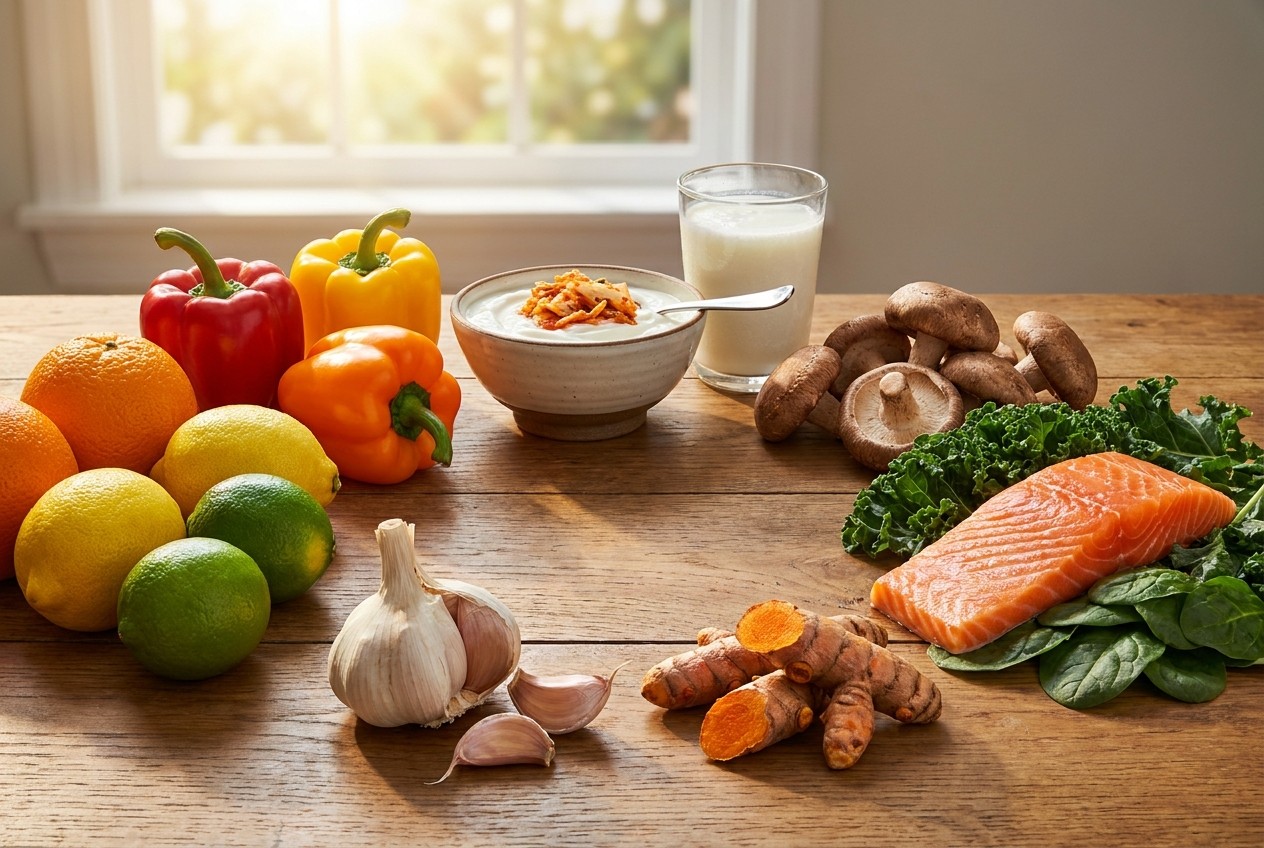
The report stated that ginger is widely known for its immune-supporting properties but can be strong-tasting and difficult to incorporate into the diet. The eight alternatives, according to the report, provide immune-supporting nutrients and compounds and may be easier to add to daily meals.
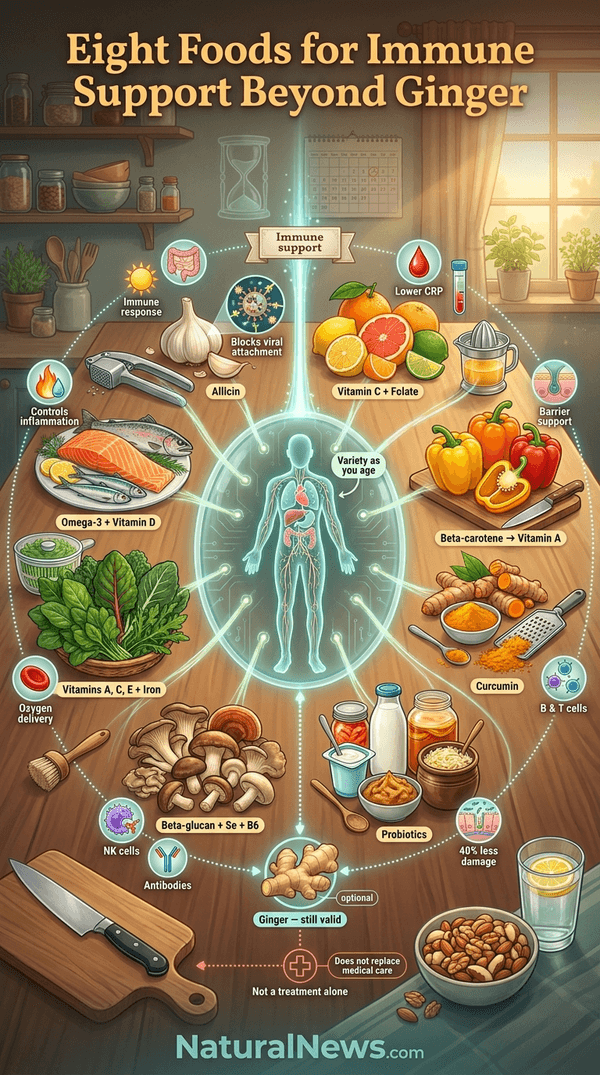
Adding a variety of these nutrient-rich foods to the diet may help keep the immune system working well as people age. The report cautioned that the foods are not treatments on their own and do not replace medical care, and that ginger remains a valid option.
Garlic, Citrus Fruits and Bell Peppers
Garlic contains sulfur compounds such as allicin that researchers have studied for effects on influenza A and B, rhinovirus and viral pneumonia, according to the report. These compounds may interfere with viral attachment and multiplication and may reduce inflammation. Garlic is not a treatment on its own, the report stated. It may also reduce the severity and duration of colds when consumed raw, cooked or as a supplement. [1][2]
The report also noted that citrus fruits provide vitamin C and folate. Vitamin C may reduce the severity and duration of cold symptoms. The report also cited studies in which hesperidin and other compounds in daily orange juice were linked to lower inflammatory markers such as C-reactive protein. Examples listed in the report include oranges, grapefruits, lemons, limes, tangerines, clementines and mandarins. [1]
Yellow, orange and red bell peppers contain more vitamin C per serving than an orange. The report stated that bell peppers provide beta-carotene, which the body converts to vitamin A. Vitamin A supports the skin and the lining of the nose and throat as a barrier against germs, the report stated. Red bell peppers contain nearly three times the vitamin C of oranges and are rich in beta-carotene. [1][3]
Turmeric, Fermented Foods and Mushrooms
Turmeric contains curcumin, which is responsible for most of its health effects, according to the report. Curcumin may reduce inflammation and help the body respond to certain viral infections, the report stated. One study found that people taking curcumin supplements with COVID-19 vaccines produced more antibodies. Curcumin may also interfere with viral multiplication and support B cells and T cells, according to the report. A 2025 Brighteon.com report by Mike Adams stated that turmeric or curcumin in turmeric boosts memory by up to 30 percent, especially among elderly subjects. [1][4]
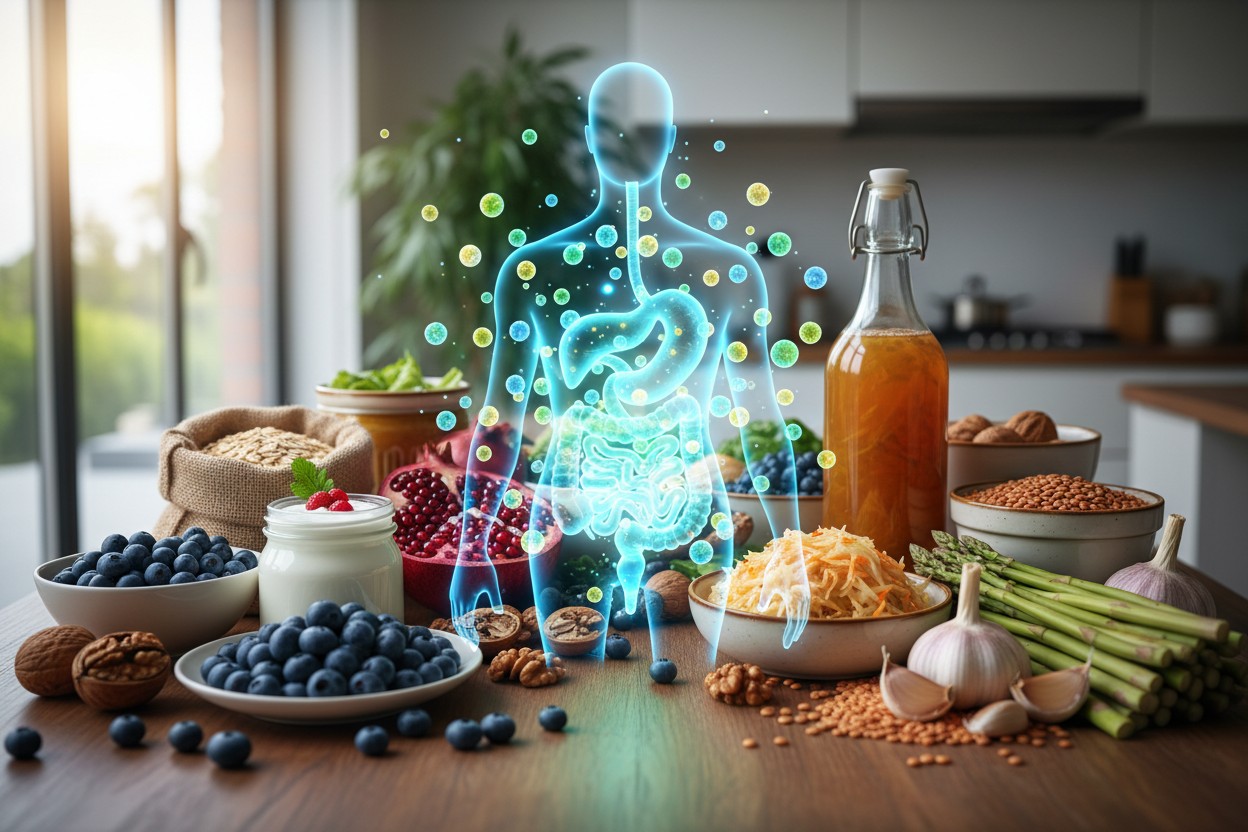
Fermented foods contain probiotics that support the gut lining and immune cells. Examples listed in the report include yogurt, kefir, kimchi, miso, sauerkraut and kombucha. It cited research on probiotics from kimchi and yogurt against influenza and rotavirus. Kefir may increase antibodies and limit inflammation during illness, the report stated. A 2026 study found fermented cabbage reduced intestinal barrier damage by 40 percent, outperforming raw cabbage and probiotic supplements. A September 2026 report said that fermentation transforms proteins, carbohydrates and fibers into compounds including bioactive peptides. Also, a review of cohort studies found fermented foods were associated with lower mortality and immune changes. [1][5][6][7]
Shiitake and other mushroom varieties may help fight flu viruses by blocking viral attachment and multiplication, the report stated. Beta-glucan in mushrooms activates natural killer cells and T cells. Selenium and vitamin B6 in mushrooms support antibody production and immune cell function, according to the report. A February 2026 article listed shiitake mushrooms among foods with antiviral properties that work by inhibiting viral replication. A study led by Associate Professor Frederick Sheedy of Trinity's School of Biochemistry and Immunology and Professor Helen Roche of UCD's School of Public Health examined whether yeast beta-glucan could strengthen antitumor immunity. [1][8][9]
Leafy Greens and Fatty Fish
Leafy greens provide vitamins A, C and E, folate and iron. The report stated that these nutrients support immune cell health, cell growth and repair, and oxygen delivery to tissues involved in the immune response. Lightly cooking greens can make some nutrients easier to absorb. Examples include spinach, kale, Swiss chard, collard greens and arugula. [1]
Fatty fish contain omega-3 fatty acids and vitamin D. Omega-3s help control inflammation during infection, while vitamin D helps immune cells respond to infections. Together, they may keep the immune system functioning well during cold and flu season, the report stated. Examples include salmon, sardines, mackerel, trout and herring. A 2008 study by Tiago Silva Alexandre and colleagues published in the journal Diabetes, Obesity and Metabolism drew on data from the English Longitudinal Study of Ageing and found that low vitamin D alone carried a 91 percent higher risk of mortality [1][10].
References
- Patrick Lewis. "Boost your immunity naturally: 8 Powerful foods beyond ginger". NaturalNews.com. April 4, 2026.
- Willow Tohi. "Is Garlic the Missing Piece in Your Cold and Flu Defense Strategy? Science Says YES!". NaturalNews.com. September 29, 2025.
- Evangelyn Rodriguez. "12 Immune-boosting Superfoods That Can Boost Your Resilience". NaturalNews.com. February 11, 2026.
- Mike Adams. "Health Ranger Report - Brain function canola oil vs turmeric". Brighteon.com.
- NaturalNews.com. "Study: Daily Sauerkraut Intake May Support Gut Health and Lower Cholesterol". June 7, 2026.
- NaturalNews.com. "Fermented foods' health effects linked to postbiotics, review finds". September 7, 2026.
- NaturalNews.com. "Fermented Foods Associated with Lower Mortality and Immune Changes". August 28, 2026.
- Willow Tohi. "Nature's Pharmacy: How Everyday Foods Arm the Immune System Against Viral Threats". NaturalNews.com. February 10, 2026.
- NaturalNews.com. "Yeast beta-glucan supplement strengthens antitumor immunity in obese mice, study finds". September 1, 2026.
- NaturalNews.com. "Study Links Vitamin D Levels and Waist Size to Mortality Risk in Older Adults". August 30, 2026.
Explainer Infographic






Please contact us for more information.


