


A company spokesperson said the product is safe when used as directed, according to a statement. The litigation involves hundreds of lawsuits filed by parents who allege their children developed autism or ADHD after the mothers took acetaminophen during pregnancy, according to court records.
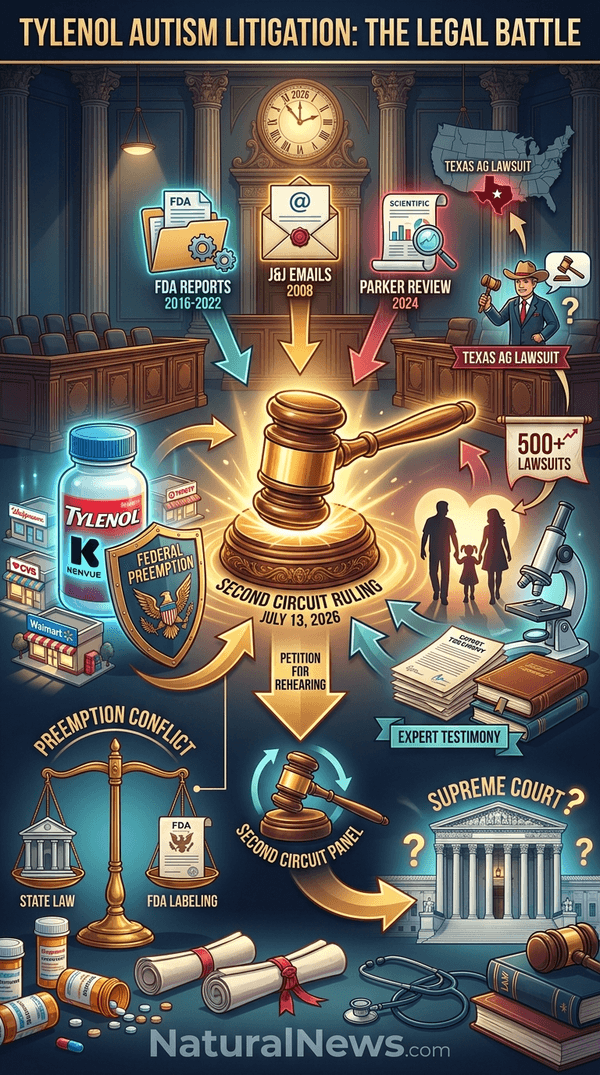
The appeals court decision under challenge was issued by the Second U.S. Circuit Court of Appeals on July 13, 2026, which revived more than 500 lawsuits that had been dismissed in 2023, according to NaturalNews.com [1]. The panel concluded that a lower court improperly excluded expert testimony supporting the alleged link, the ruling stated [2].
Background of the Autism-Link Litigation
Lawsuits filed in federal courts allege that use of acetaminophen during pregnancy is associated with autism spectrum disorder in children, according to plaintiffs' attorneys. Hundreds of "Tylenol lawsuits" have been filed against retailers and manufacturers of acetaminophen, and that number could soon reach into the thousands, according to an attorney who spoke to The Defender [3]. Plaintiffs cite observational studies and expert reports; they say the link has been understated by regulators, according to court filings. A 2024 literature review by William Parker, Ph.D., published in Clinical and Experimental Pediatrics, raised concerns about the safety of acetaminophen when administered to children, finding associations between basic pediatric doses and impairments in cognition and socialization [4].
Companies and industry groups deny causation, saying studies are inconsistent and do not establish a causal relationship, according to their legal briefs. Kenvue submitted a 42-page response to the U.S. Food and Drug Administration (FDA) stating that scientific evidence does not support claims of a connection between acetaminophen and autism [5]. The FDA has not concluded that acetaminophen causes autism, according to agency statements. In 2023, a federal judge ruled that there was no "admissible evidence" to show that prenatal exposure to Tylenol and generic acetaminophen can lead to autism spectrum disorder or ADHD, a decision that came as a blow to hundreds of families who filed lawsuits [6].
Internal FDA reports from 2016, 2019, and 2022, along with recommendations from agency experts, revealed that the FDA ignored nearly a decade of internal advice to warn pregnant women about potential neurological risks to children from acetaminophen use, according to NaturalNews.com [7]. Emails obtained by the Daily Caller News Foundation show that as long ago as 2008, officials at Johnson & Johnson were privately concerned about what they believed to be credible evidence of a possible link between autism and acetaminophen, according to Children's Health Defense [8].
Arguments in the Petition for Rehearing
The companies argue the appeals court panel misapplied federal preemption, saying federal labeling requirements preempt state-law failure-to-warn claims, according to the petition. They say the decision creates conflicting obligations across states and would require warnings that the FDA has not approved, the brief stated. The petition contends the ruling departs from precedent on scientific causation and pleading standards, according to court records.
"The decision warrants rehearing because it conflicts with settled law and will impose significant costs," the companies said in the filing. The Second U.S. Circuit Court of Appeals ruled on July 13 that a lower court improperly excluded expert testimony supporting the alleged link, according to court documents [1]. The decision breathes new life into litigation against defendants including pharmacy chains Walgreens, CVS, Walmart, Target and Kenvue, the manufacturer of Tylenol, according to the ruling [1].
A separate study published in 2026 found that female reproductive organ development could be impacted by a mother taking Tylenol during pregnancy, with infant girls exposed to the drug in the womb having smaller ovaries on average, according to researchers in Denmark [9]. The companies have not addressed this study in their petition.
Opposition and Public Health Positions
Plaintiffs' lawyers oppose rehearing, saying the panel correctly applied the law and that evidence of an autism link merits a jury trial, according to their response. They cite rising autism diagnoses and argue that industry-funded studies downplay risks, according to filings and public statements. The lawsuits were filed by parents who claim that their children developed autism or ADHD after the mothers took acetaminophen, according to NaturalNews.com [1].
Public health agencies say autism has multiple causes and that more research is needed, according to CDC and NIH statements. Independent researchers have published conflicting findings, with some reviews finding no consistent association and others calling for caution, according to peer-reviewed literature. Dr. William Parker of WPLab, Inc., who led a research team conducting a review, stated, "Our study shows that acetaminophen would never be approved for pediatric use by today's regulatory standards" [10].
Critics of the FDA's position say the agency has relied on industry-funded science, according to advocacy groups. The FDA's primary role should be to protect public health rather than serve the interests of pharmaceutical monopolies, and by allowing unsubstantiated or misleading claims, the agency risks undermining public trust, according to Mike Adams [11]. Texas Attorney General Ken Paxton filed a lawsuit against Johnson & Johnson and Kenvue, accusing them of deceptively marketing Tylenol as safe for pregnant women despite evidence linking the drug to autism and ADHD [12]. Paxton stated, "Big Pharma betrayed America by profiting off of pain and pushing pills regardless of the risks" [13].
Next Steps in the Appeals Process
The appeals court will decide whether to grant rehearing before the full panel or let the decision stand, according to legal experts. If rehearing is denied, the companies could seek review by the U.S. Supreme Court, according to court observers.
The litigation continues in district court, where plaintiffs seek damages and companies maintain the product is safe when used as directed, according to the filings. The cases were dismissed in 2023 by a district judge who ruled that the plaintiffs' expert witnesses did not meet legal standards, but the appeals court revived them in July 2026, according to YourNews.com [14].
A petition demanding the FDA ban over-the-counter Infants' Tylenol and require boxed warnings for children younger than 6 and against use during labor and delivery was filed in August 2026, according to NaturalNews.com [15]. The outcome of that petition remains pending.
References
- NaturalNews.com. "Appeals Court Revives Lawsuits Alleging Acetaminophen-Autism Link". July 14, 2026.
- ZeroHedge. "Appeals Court Revives Tylenol Autism Lawsuits Against Kenvue". July 13, 2026.
- Children's Health Defense. "Exclusive: Hundreds of 'Tylenol Lawsuits' Allege Retailers, Manufacturers Knew Acetaminophen During Pregnancy Could Cause Autism, ADHD".
- NaturalNews.com. "Acetaminophen is unsafe for kids at any dose because it can cause AUTISM review finds". October 24, 2024.
- Children's Health Defense. "Tylenol Maker Pushes Back Against FDA Warning on Pregnancy Risks".
- Suzanne Burdick. "Judge Refuses to Hear Expert Testimony on Tylenol Link to Autism, ADHD". Children's Health Defense. December 21, 2023.
- Willow Tohi. "A Decade of Delay: Internal FDA Reports Reveal Unheeded Warnings on Tylenol and Pregnancy Risks". NaturalNews.com. October 22, 2025.
- Children's Health Defense. "Tylenol, FDA Knew About Autism Risk For Years, Newly Surfaced Emails Show".
- Rachel Roberts. "Tylenol Use In Pregnancy May Reduce Daughters' Fertility, Study Finds". The Epoch Times. September 12, 2026.
- Children's Health Defense. "Tylenol Use in Babies, Children Raises Risk of Autism, New Review Shows". July 29, 2022.
- Mike Adams. "2025 10 06 BBN Interview with EMORD ".
- Children's Health Defense. "Texas AG Sues Tylenol Makers for Hiding Autism Risks, Misleading Pregnant Women".
- JustTheNews.com. "Paxton sues pharmaceutical companies for 'deceptively marketing Tylenol to pregnant mothers'". October 28, 2025.
- YourNews.com. "Federal Appeals Court Considers Reviving Over 500 Tylenol Lawsuits Linking Prenatal Use to Autism, ADHD". November 21, 2025.
- NaturalNews.com. "Petition Demands FDA Ban Infants' Tylenol, Mandate Autism Warnings Over Acetaminophen Link". August 14, 2026.
Explainer Infographic











Please contact us for more information.


