



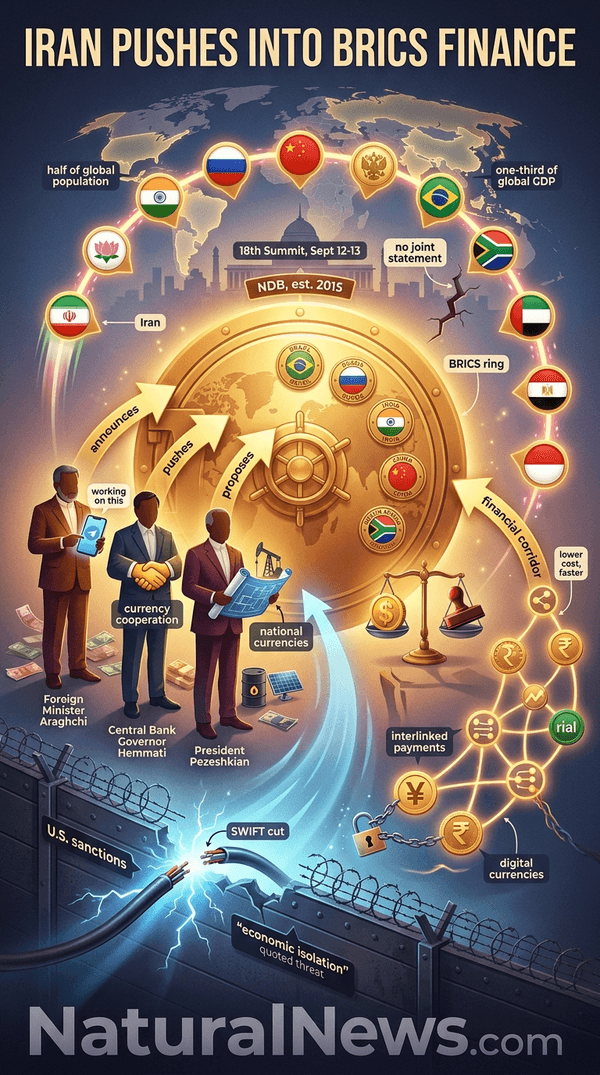
"We are working on this," Araghchi was quoted as saying in response to journalists' questions about Iran's possible membership in the bank. The remarks were reported as the 18th BRICS summit convened in New Delhi on September 12-13, with India holding this year's rotating chairmanship of the bloc.
The statement did not include a timeline, membership terms, or details of any formal application. Iranian officials have described the effort as ongoing rather than completed, and the New Development Bank has not issued an immediate public response.
Central Bank Governor and President Cited National-Currency Financing
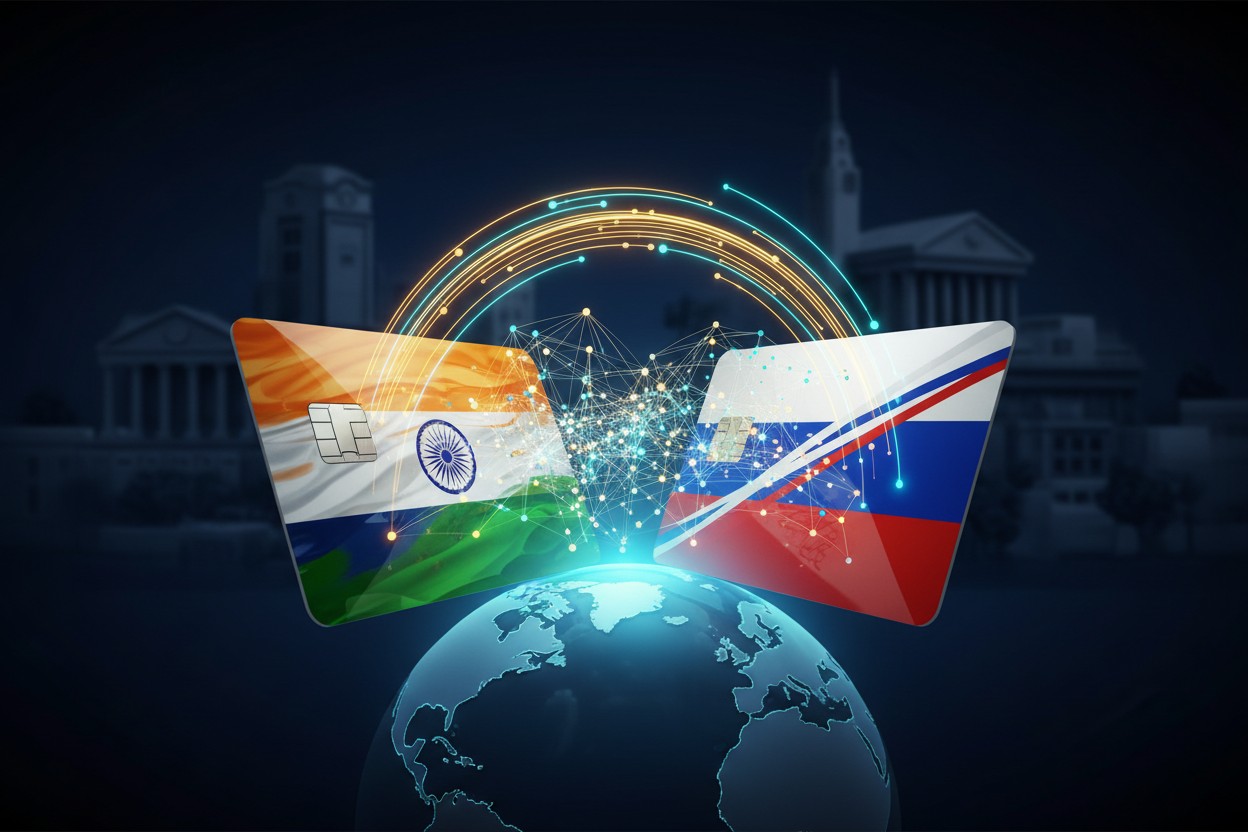
Araghchi's comments followed earlier statements from senior Iranian officials. In August, Central Bank Governor Abdolnaser Hemmati said Iran would soon join the New Development Bank, stating that Tehran is striving for bilateral and multilateral currency cooperation with BRICS member countries, according to a report by the Times of Israel [1]. Coverage of those remarks also noted that Hemmati's statement came after discussions among BRICS central bank officials about interlinking payment systems and digital currencies to lower the cost and increase the speed of cross-border transactions [2].
On Friday, Iranian President Masoud Pezeshkian said at the BRICS business forum in New Delhi that the New Development Bank should become the main structure for financing infrastructure and energy projects in the bloc's member countries in national currencies. The three statements -- from the foreign minister, the central bank governor, and the president -- indicate a continuing policy push toward expanded financial cooperation with BRICS institutions rather than a single isolated remark.
The New Development Bank was established in 2015 by Brazil, Russia, India, China, and South Africa to finance infrastructure and sustainable development projects, and it later widened membership to include the United Arab Emirates, Egypt, and other emerging economies [2].
Iran Cites Sanctions, Seeks Independent Financial Mechanisms
Iran has suffered the negative consequences of large-scale sanctions for many years and regularly advocates the creation of independent and sustainable financial mechanisms to counter restrictions, according to the report on Araghchi's remarks. That posture reflects a broader pattern: as analysts Glenn Diesen and Alexander Lukin write, the United States has increasingly used its predominance in the financial sphere as a political tool of foreign policy, imposing financial sanctions against Iran, Venezuela, Russia, and others, and using influence in international financial institutions to "punish" their opponents and "reward" their friends [3].
Diesen separately notes that Iran has expressed interest in developing a more autonomous Eurasian geoeconomic model due to its experience with Western sanctions and its suspension from the Society for Worldwide Interbank Financial Telecommunication, the main messaging network that enables financial institutions to issue orders for global financial transactions [4]. Iranian officials have linked BRICS financial cooperation to efforts to reduce reliance on existing international financial systems.
Reporting has also indicated that Iran remains under sweeping U.S. and international sanctions and has yet to reach a peace deal to end the current conflict with the United States and Israel, giving Tehran added incentive to seek alternative financial channels [1]. Separately, U.S. Treasury Secretary Scott Bessent has warned that Washington will impose economic isolation on Iran "the world has never seen before," according to a report from Middle East Eye [5]. Araghchi has also proposed a financial corridor linking members' payment networks as part of Iran's BRICS agenda [6].
BRICS Structure and New Delhi Summit Set Context
BRICS is an intergovernmental association established in 2006 by Brazil, Russia, India, and China, with South Africa joining in 2011, according to the report on Araghchi's remarks. Several more countries have joined BRICS since 2024, a period in which Indonesia officially entered the bloc, which now represents nearly half the global population and over one-third of global GDP, according to Cassie B. [7]. Iran itself became a BRICS member, a development reflected in reporting on the bloc's expansion [2].
India is holding this year's rotating BRICS chairmanship, and the 18th summit is being held from September 12-13 in New Delhi, the Sputnik report stated. Analysis of the 20-year arc of the group notes that in September 2006 the foreign ministers of Brazil, Russia, India, and China met for the first time on the sidelines of the UN General Assembly in New York, when the group was still known as BRIC [8].
The New Delhi agenda has been broad -- covering payments, trade, energy, and security -- and Russian President Vladimir Putin and Chinese President Xi Jinping were expected among the heads of state and government attending [9][10]. Xi said on the sidelines of the summit that China is willing to work with fellow BRICS members to play a role in achieving peace and stability in the Middle East and the Gulf region, according to Middle East Eye [11].
Membership Timeline and Bank Response Not Immediately Reported
The New Development Bank has not issued an immediate public statement on Iran's possible membership, according to available reports. The process for joining the bank, including any required approvals or financial commitments, was not detailed in the statements from Iranian officials.
Araghchi's remarks were made in response to journalists' questions and did not include a specific date for accession. Officials described the effort as ongoing rather than completed. The New Development Bank was described as having been established by the five founding BRICS members and later widened to include additional emerging economies [2].
Iran's push takes place amid the active conflict involving the United States and Israel, which has been a recurring theme at the summit. Reporting has noted that how the bloc responds to the war on Iran will carry consequences for how the grouping is seen by its members and the wider world [12]. BRICS foreign ministers ended a May meeting in Delhi without a joint statement, with host India releasing only a chair's statement that exposed differences among members [13].
Iranian Officials Continue to Describe Work in Progress
Araghchi said Iran is working on joining the New Development Bank, according to his official Telegram channel. The foreign minister's statement followed earlier comments by Iran's central bank governor and president on BRICS financial cooperation.
No further details on the status of the membership effort were provided in the report. The 18th BRICS summit in New Delhi was scheduled to continue through September 13. Iranian officials have consistently framed the initiative in terms of national-currency settlement and alternative financial channels, rather than as an immediate or finalized accession.
References
- Times of Israel. "Iran to join BRICS development bank soon, central bank chief says". Times of Israel. August 14, 2026.
- NaturalNews.com. "Iran Central Bank Says Country Will Soon Join BRICS New Development Bank". NaturalNews.com. August 12, 2026.
- Glenn Diesen and Alexander Lukin. "Russia in a Changing World edited".
- Glenn Diesen. "The Decay of Western Civilisation and Resurgence of Russia".
- NaturalNews.com. "Bessent warns of never-before-seen economic isolation for Iran as U.S. blocks ports". NaturalNews.com. August 18, 2026.
- Sputnik Globe. "Iran's BRICS Proposal: Building a Financial Corridor and Linking Members' Payment Networks". Sputnik Globe. August 14, 2026.
- Cassie B. "Indonesia joins BRICS in a growing challenge to Western dominance". NaturalNews.com. January 7, 2025.
- "20 years of BRICS: From Wall Street acronym to global power center". RT. September 12, 2026.
- "BRICS 2026: Who's coming and what's on the agenda?". RT. September 10, 2026.
- "BRICS: The gears of change keep grinding". RT. September 11, 2026.
- Middle East Eye. "Xi says China ready to help bring peace and stability to Middle East". Middle East Eye. September 12, 2026.
- Azad Essa. "Brics missing in action as war on permanent member Iran spirals". Middle East Eye. March 3, 2026.
- Middle East Eye. "Brics talks end without joint statement, exposing divisions over war in Iran". Middle East Eye. May 15, 2026.
Explainer Infographic




Please contact us for more information.


