


The report states that foods containing oils or fats, such as brown rice, whole wheat flour, nuts, and cooking oils, have significantly shorter shelf lives and are not suitable for long-term storage. [2] Oxygen, moisture, heat, and light are identified as the four primary enemies that degrade stored food, with temperature playing a critical role in shelf life reduction. [3] Peggy Layton, author of the Emergency Food Storage Survival Handbook, writes that “if you store your food in a garage, shed, or attic where the temperature fluctuates from very hot to very cold, you could be cutting down the shelf life of your food to half.” [3]
Environmental Factors Affecting Food Storage
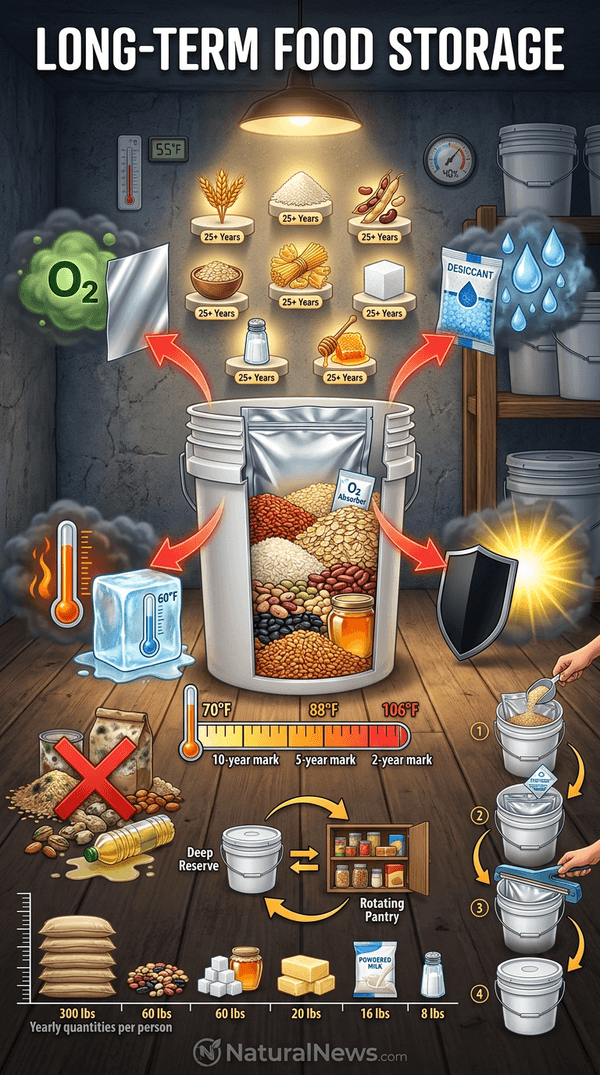
The article explains that oxygen causes fats to go rancid and degrades vitamins; removing oxygen with Mylar bags and oxygen absorbers is emphasized. [2] Evangelyn Rodriguez, author of a guide on long-term food storage for NaturalNews.com, states that “top storage methods include vacuum sealing, Mylar bags with oxygen absorbers, food-grade buckets.” [2] Moisture above 10 percent leads to mold, and heat accelerates spoilage. Tess Pennington, author of The Preppers Blueprint, warns that “moisture can contaminate food through humidity, rain, and standing water.” [4]
Heat accelerates spoilage: every 18 F increase in storage temperature roughly halves shelf life, according to the report from Rodriguez. [2] Light degrades fats and vitamins, so opaque containers or dark storage rooms are recommended by the author. [5] The Practical Prepper Pantry guide by HRS Editors advises to “protect your stockpile from heat, light, oxygen, and moisture by keeping it in a cool, dark, dry place like a basement or dedicated pantry.” [5]
Foods Suitable for Decades-Long Storage
The report by Lance D. Johnson lists hard wheat, white rice, dried beans, rolled oats, pasta, sugar, salt, honey, powdered milk, and dehydrated potato flakes as foods that can last 25-plus years when sealed in Mylar with oxygen absorbers and kept cool and dry. [1] Additionally, James Ingham, author of THE COMPLETE PREPPERS SURVIVAL BIBLE, recommends focusing on foods that naturally have a long shelf life, including rice, pasta, and honey. [6] The article notes that white rice (brown rice's bran oils go rancid), regular pasta (not egg noodles), and nonfat powdered milk are preferred for extended storage. [1]
Wheat is the king of storage foods, according to the Offgrid Survival analysis, while oats might be the single best beginner storage food, the report states. However, other sources confirm that wheat berries are a powerful survival food that can last for years if stored properly. [7] A NaturalNews.com article on wheat berries notes they are “great source of complex carbohydrates, fiber, healthy fats, protein, phytochemicals, minerals, and vitamins.” [7]
Foods That Do Not Store Well Long-Term
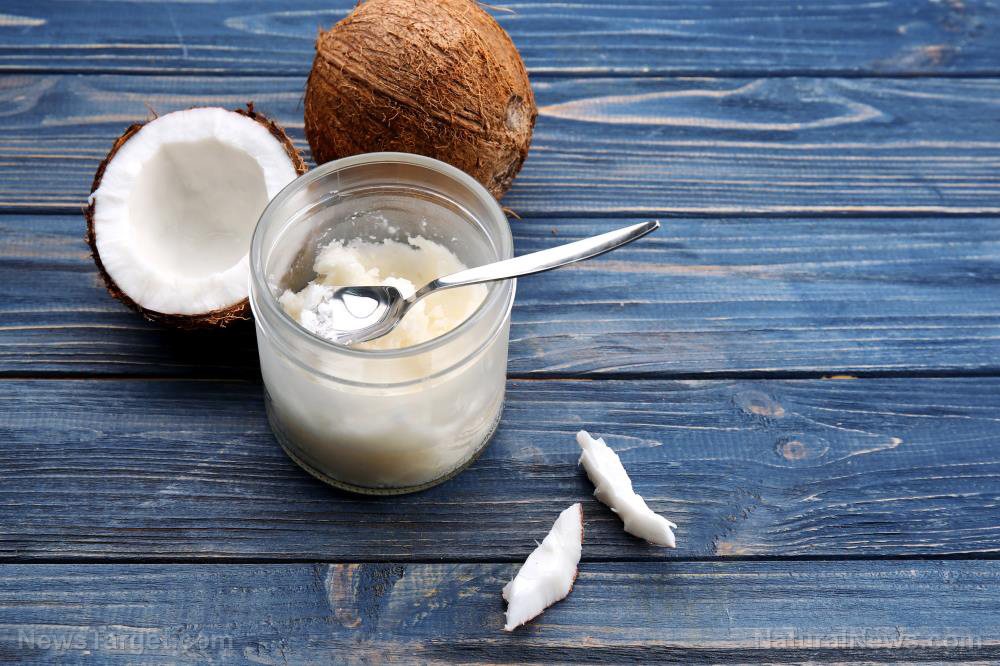
According to the report by Evangelyn Rodriguez, any food with oil or fat, including brown rice, whole wheat flour, nuts, granola, and cooking oils, fails within a few years due to rancidity. [2] Lauren Wilson and Kristian Bauthus, authors of The Art of Eating Through the Zombie Apocalypse, note that “most milled flours have a far shorter shelf life (only up to a year) than do whole grains like wheat, rye, or spelt.” [8]
Commercial canned goods have limited lifespans. The report states that acidic foods last 18 months to 2 years, low-acid foods 2 to 5 years; bulging or leaking cans should be discarded. [2] The article warns that “25-year meal buckets” advertised on TV are poor value, often providing only 150-200 calories per serving, and suggests building storage from bulk staples instead. Mike Adams, in an interview with John Moore, mentioned that Ranger Buckets contain a mix of nutritious items like organic popcorn, red beans, quinoa, and pinto beans, but emphasized that the variety ensures an adequate supply. [9]
Recommended Storage Methods and Quantities
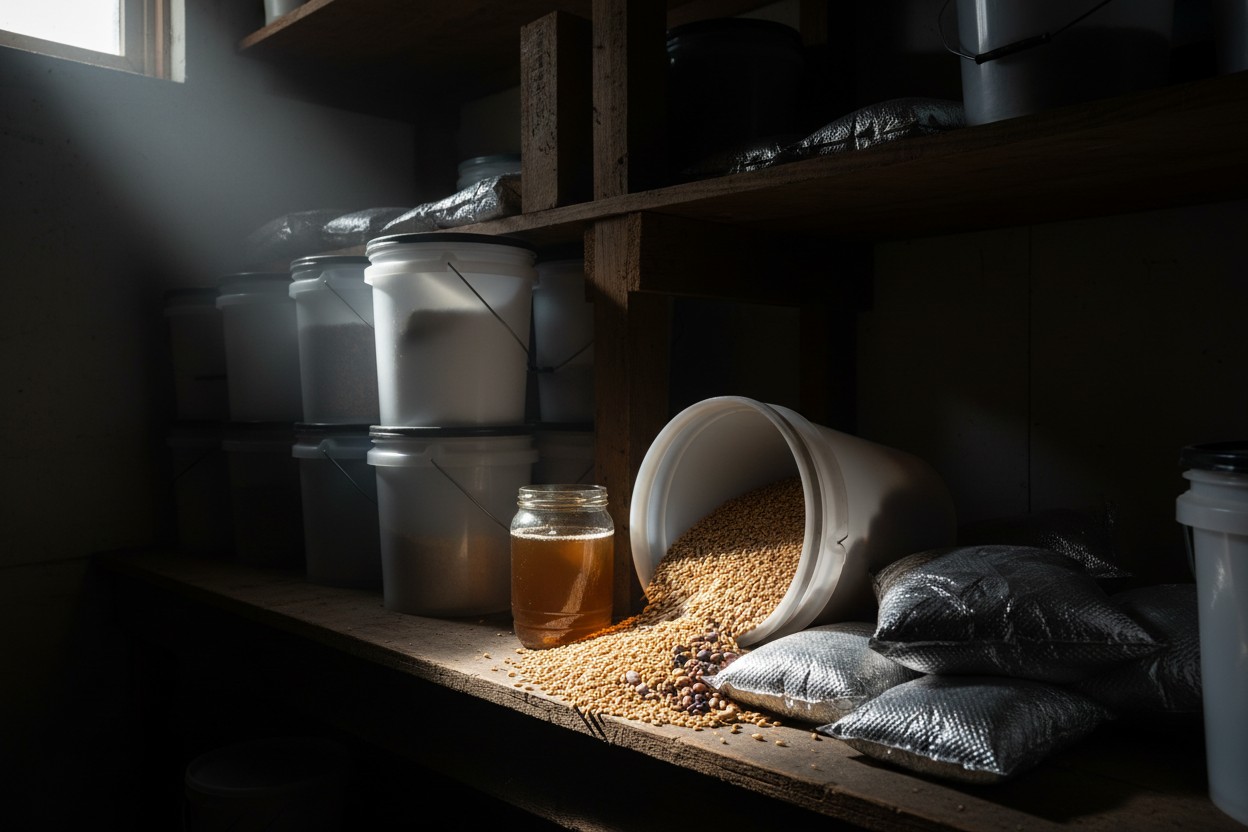
The report describes a method using food-grade buckets, Mylar bags, and oxygen absorbers: fill bucket, add absorber, seal with an iron, label, store in a cool dark place. [2] The article further states that a properly sealed 5-gallon bucket can hold roughly 33-37 pounds of wheat, 33 pounds of rice, or about 35 pounds of beans. [2] HRS Editors, in their guide on bucket food, note that “bucket food, consisting of dry, shelf-stable foods stored in airtight five-gallon buckets, is a cost-effective and sustainable way to ensure long-term food security.” [10]
For one adult for one year, the report suggests 300 pounds of grains, 60 pounds of beans, 60 pounds of sugar/honey, 20 pounds of fats, 16 pounds of powdered milk, and 8 pounds of salt, plus extras for variety. [2] The author emphasizes rotation: “Store what you eat, eat what you store,” and warns against garages and attics due to heat. [6] A two-layer system of deep reserve and rotating pantry is recommended. [6]
Conclusion
Building a long-term food storage system requires selecting the right foods, controlling environmental factors, and using proper packaging methods. According to the report, individuals can start small by buying an extra bag of rice and a few cans each grocery trip, gradually building a reserve. [1] The key to success is treating storage as a working pantry that rotates, keeping the deep reserve sealed for decades while maintaining a shorter-term pantry for everyday use. [6] As Peggy Layton writes, “a cool dark place is a must for food storage,” and consistent temperature between 40 and 60 degrees Fahrenheit is ideal. [3] With careful planning, households can ensure a reliable food supply that lasts for years, independent of fragile supply chains. [1]
References
- Lance D Johnson. "Check Out These 14 Pantry Staples That Can Last Decades in a Long-Term Storage Situation." NaturalNews.com. July 9, 2025.
- Evangelyn Rodriguez. "A Prepper's Guide to Long-Term Food Storage: How to Safeguard Your Pantry for Emergencies." NaturalNews.com. January 16, 2026.
- Peggy Layton. "Emergency Food Storage Survival Handbook Everything You Need to Know to Keep Your Family Safe in a Crisis."
- Tess Pennington. "The Preppers Blueprint - The Step-By-Step Guide To Help You Through Any Disaster."
- HRS Editors. "The Practical Prepper Pantry: Simple, Efficient Food Storage for Peace of Mind." NaturalNews.com. March 20, 2026.
- James Ingham. "THE COMPLETE PREPPERS SURVIVAL BIBLE (20 IN 1)."
- NaturalNews.com. "Food Storage Containers for Storing Wheat Berries for Optimal Shelf Life." April 19, 2024.
- Lauren Wilson, Kristian Bauthus. "The Art of Eating Through the Zombie Apocalypse A Cookbook and Culinary Survival Guide."
- Mike Adams interview with John Moore. November 13, 2023.
- HRS Editors. "Prepper Essentials: Why Bucket Food Is a Game-Changer for Emergency Preparedness." NaturalNews.com. February 26, 2025.
Explainer Infographic








Please contact us for more information.


