


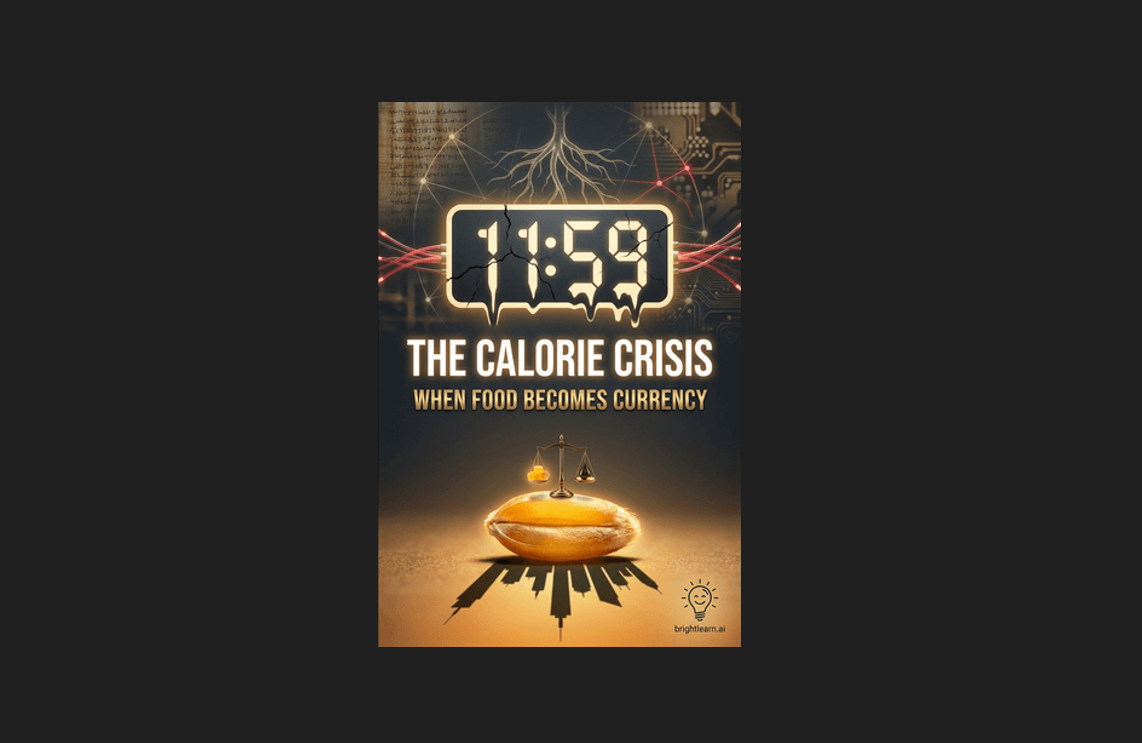
- "The Calorie Crisis" argues that food calories are the only true energy source for human survival, surpassing oil, coal or gold. Historically, grain served as currency (e.g., Roman soldiers' salarium) and in a collapse, food will be the ultimate wealth that people trade for everything else.
- The low price of conventional food is deceptive, masking hidden costs such as taxpayer subsidies, environmental damage (eroded topsoil, drained aquifers), antibiotic-resistant superbugs and diet-related healthcare crises. Americans now spend less on food but far more on healthcare as a result.
- Industrial food production depends on vulnerable systems—synthetic fertilizer reliant on natural gas, diesel fuel for machinery (with "tank bottoms" causing engine failures during disruptions) and permanent refinery closures that cannot be reversed. These are systemic, not temporary, weaknesses.
- The book offers hopeful, actionable strategies like bulk cooking with a "Crockpot Economy," saving open-pollinated heirloom seeds (described as a "personal printing press for real wealth") and building community resilience through gardening and food preservation as alternatives to crumbling industrial systems.
- The authors identify three stages of collapse (stability, scarcity, new trade system) and draw chilling parallels between 1918-1923 and 2020-2025, warning that collapse rarely reverses. They urge household leaders to create written plans for food storage, skills training and connection, as isolation is deadly while community is key to survival.
"The Calorie Crisis: When Food Becomes Currency" isn't just another prepper manual or doomsday prophecy. It's something far more unsettling: a carefully reasoned argument that the foundations of our civilization are cracking beneath our feet and that the only real wealth left standing when the dust settles will be the food on your plate.
The book weaves together history, economics, soil science and practical homesteading into a tapestry that feels less like speculation and more like prophecy.
The central thesis: Calories as the new oil
The book opens with a deceptively simple argument: We've been thinking about energy all wrong. Oil, coal, natural gas—these are secondary energy sources. They power machines, but they cannot power human life. Only food calories can do that. As author Mike Adams puts it, "a human being can survive only a few weeks without caloric intake. That is not true for any other energy source."
This hierarchy of energy is the book's foundation and it's genuinely difficult to argue with. When you start seeing the world through caloric lenses, everything shifts. The Roman Empire paid soldiers in grain—the salarium that gave us the word "salary." Grain is dense with calories. It was currency long before coins existed.
The authors draw on research by David L. Margules on how the human body prepares for famine by lowering metabolic rate and studies from Mark Rosegrant and Claudia Ringler showing that global calorie availability is barely keeping pace with population. These aren't fringe sources—they're mainstream academic work being deployed to make a radical case.
The deceptive artifice of cheap food
Perhaps the most devastating chapter dissects what the authors call "the deceptive artifice of cheap food." That dollar burger you bought last week? It's a lie. The true cost includes taxpayer subsidies that flow to industrial farms, aquifers drained dry, topsoil eroded, antibiotics creating superbugs and a healthcare system crushed by diet-related disease.
Here the book finds its moral voice. The authors rage against a system where "the cheap conventional tomato is cheap only because the system externalizes the damage." Government subsidies in the United States pour billions into corn and soy, flooding the market with high-fructose corn syrup and hydrogenated oils while real food—fruits, vegetables, whole grains—receives almost nothing.
The numbers are staggering. American families spent about 30 percent of their income on food in the early 1900s. Today it's around 10 percent. You might think that's progress. But healthcare spending has exploded, driven largely by diet-related diseases. We're still paying—we just pay in different ways.
The infrastructure of collapse
The book's middle sections read like a funeral dirge for industrial civilization. The Haber-Bosch process that made synthetic nitrogen fertilizer possible—and with it, the modern world—is so energy-intensive that natural gas prices directly determine food costs. Nearly 50 percent of the world's population is alive today because of synthetic nitrogen fertilizer. When natural gas spikes, fertilizer prices follow and the entire food system wobbles.
Then there's the diesel dilemma. The authors introduce a term you'll soon hear everywhere: "tank bottoms." That's the sludge, water and microbial gunk that settles at the bottom of fuel storage tanks. When turnover slows—as it has with supply chain disruptions—that sludge reaches the pickup line and engines stall. A combine that can't run during harvest loses an entire season's crop.
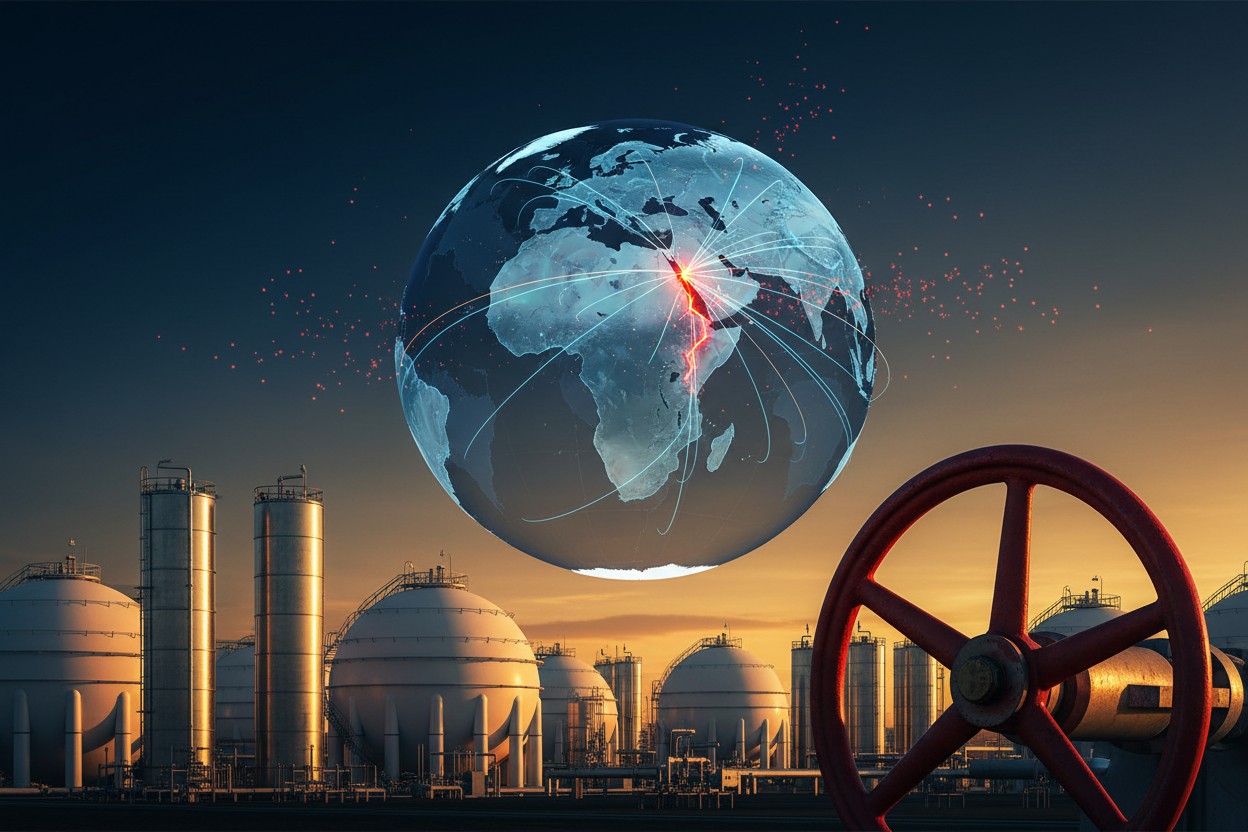
The book documents permanent refinery closures across Europe and North America. BASF, the German chemical giant, has shut down units that will never come back online. The authors' argument here is one of the most compelling in the entire work: even if the Strait of Hormuz opened tomorrow, even if every geopolitical tension were resolved overnight, the refineries that turn crude into usable fuel are gone. "This is not a temporary pause," they write. "These plants will never come back online."
Weather as weapon
Here, the book ventures into territory that will make some readers uncomfortable. The authors argue that weather modification is not a conspiracy theory but documented history. Operation Popeye during Vietnam seeded clouds to extend the monsoon season over enemy supply lines. Project Stormfury attempted to weaken hurricanes. The U.S. Air Force still maintains a weather modification program today.
The implications for agriculture are direct. "When weather is manipulated," the authors write, "famine becomes a tool." They cite peer-reviewed research from Food Policy showing how shocks to food systems increase malnutrition. Whether you accept the full argument or not, the documentation is extensive enough to demand attention.
The shift to localism
But this book is not despair porn. Its final chapters offer something genuinely hopeful: a practical vision for how individuals and communities can build resilience outside the crumbling industrial system.
The "Crockpot Economy" chapter is a standout. The authors make a passionate case for bulk cooking as a revolutionary act. A slow cooker drawing 150 watts can transform tough, cheap ingredients into meals that nourish. "In a world where food costs are climbing and energy is uncertain," they write, "this old-fashioned appliance becomes your best ally."
The chapter on seed sovereignty is equally powerful. Open-pollinated, heirloom seeds that can be saved and replanted year after year are "your personal printing press for real wealth." The authors warn against hybrid seeds that force farmers to buy new seeds each season and against Terminator technology designed to produce sterile seeds. Vandana Shiva's work on the dangers of GMOs and corporate seed control provides a scholarly backbone.
The mental game
Perhaps the most valuable section deals with psychology. The authors identify three stages of collapse: stability, scarcity and a new system of trade. Most people remain in denial during stage one, believing the system will bounce back. But "history shows that once collapse begins, it rarely reverses."
They draw powerful parallels between 1918-1923—the post-World War I era of pandemic, hyperinflation, revolution and famine—and our own 2020-2025 period. "The same pattern keeps showing up because history is not a straight line; it is a cycle." This section is genuinely chilling in its prescience.
The practical advice for household leaders is excellent. "If you are the head of a household, you carry a heavy responsibility." The book urges readers to develop written family plans covering food storage, skills training, meeting points and the decision to bug in or bug out. "In a crisis, isolation is deadly. Connection is survival."
The bottom line
"The Calorie Crisis" succeeds in doing what the best survival literature does: shifting your baseline assumptions about what constitutes wealth and security.
The book's core insight—that when fiat currency collapses, people will trade everything for bread—is supported by historical evidence from Weimar Germany, Zimbabwe, Cuba and Argentina. The practical chapters on gardening, seed saving, soil building, water harvesting and food preservation are detailed enough to be genuinely useful.
The authors conclude with a call to action that feels earned: "The garden is your personal mint, stamping out sustenance from the abundance of nature. It is a cost-saving measure today and a survival strategy for tomorrow. Start digging. Plant a seed. Claim your independence one vegetable at a time."
Grab a copy of "The Calorie Crisis: When Food Becomes Currency" via this link. Read, share and download thousands of books for free at Books.BrightLearn.AI. You can also create your own books for free at BrightLearn.AI.
This video is from the Health Ranger Report channel on Brighteon.com.
Sources include:



Please contact us for more information.


