


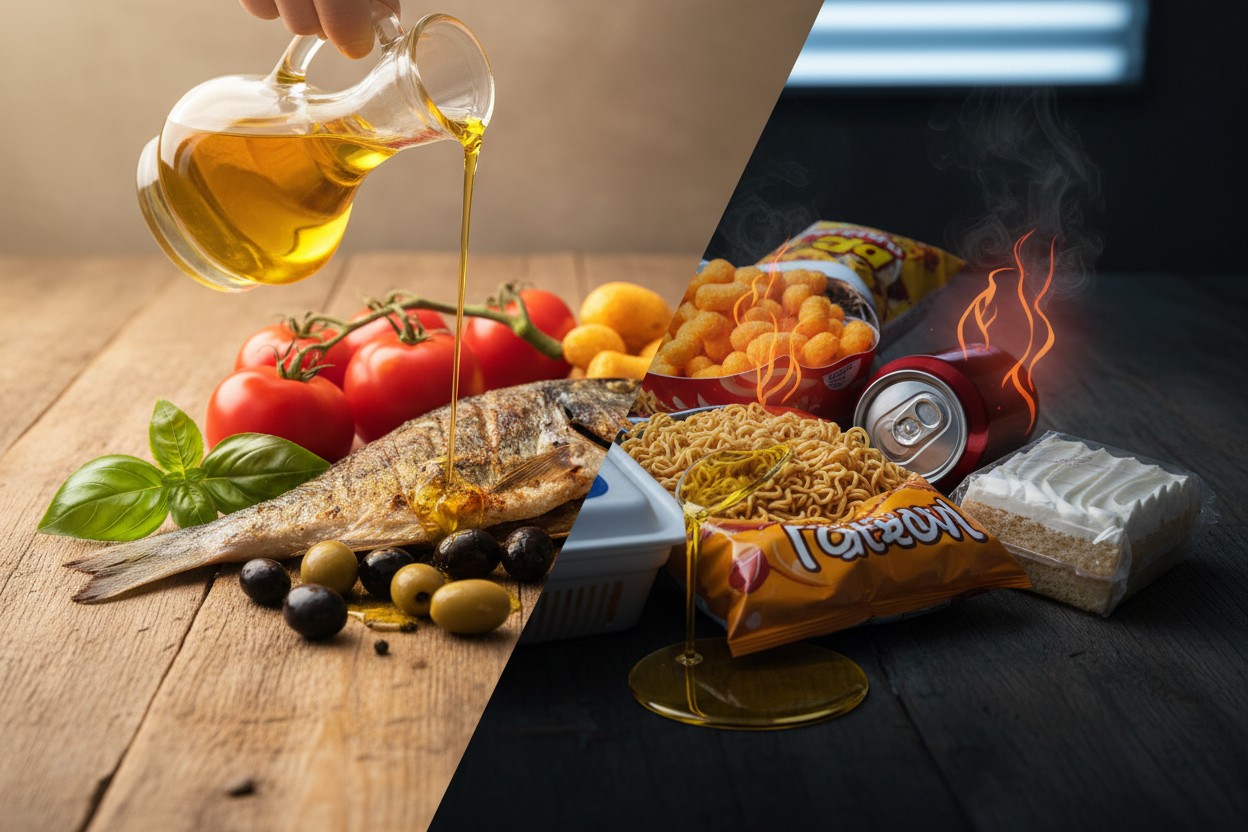
Greater adherence to a Mediterranean-style diet was linked to better physical quality of life, independent of other factors, researchers said. Lipedema is a chronic condition characterized by disproportionate, often painful fat accumulation in the legs and arms, with strong hormonal and inflammatory roots, and it does not respond to calorie restriction the way typical body fat does. The findings reinforce the idea that improving diet quality could play a meaningful role in managing symptoms, according to the study authors.
Study Design and Key Measurements
Researchers recruited 86 women with confirmed lipedema diagnoses and used a detailed food questionnaire to measure ultra-processed food consumption, dietary inflammatory potential, and Mediterranean diet adherence, according to the study published in Frontiers in Nutrition. The team tracked pain levels, physical quality of life, body composition, and blood markers of inflammation.
Statistical analysis accounted for variables such as age, body mass index, and disease stage to isolate the independent effects of diet. Lipedema involves ongoing low-level inflammation in fat tissue, impaired lymphatic drainage, and small blood vessel problems, which may explain why diet quality affects symptoms, the report noted. Previous research on selenium deficiency in lipedema has highlighted the role of oxidative stress in the disease progression, with reduced selenium status often associated with increased oxidative stress in several conditions [1].
Dietary Patterns Linked to Pain and Inflammation
After controlling for other factors, higher ultra-processed food intake and a more inflammatory diet each showed independent associations with greater pain, researchers said. A more inflammatory diet was also independently linked to higher blood inflammation markers, while higher Mediterranean diet adherence was independently linked to better physical quality of life.
Chronic pain affects more individuals than diabetes, heart disease, and cancer combined, according to an analysis from the National Institutes of Health [2]. In lipedema, the lymphatic system can become fatigued and less efficient, leading to fluid buildup and fibrosis [3], which may be exacerbated by pro-inflammatory dietary patterns. The current study adds to the evidence that what women with lipedema eat may directly influence their symptom burden, the authors stated.
Potential Mechanisms and Dietary Recommendations
Ultra-processed foods are well-established contributors to systemic inflammation, and in women whose bodies already exhibit elevated inflammation, such foods may exacerbate pain and disease progression, the study noted. The Mediterranean diet, rich in anti-inflammatory compounds from vegetables, legumes, whole grains, olive oil, and fish, may help counteract inflammatory processes.
The Arthritis Foundation has issued dietary guidance stating that a diet rich in whole foods and low in processed foods and saturated fat can help manage disease activity, aligning with the principles of the Mediterranean diet [4]. Researchers suggested prioritizing a Mediterranean-style eating pattern and gradually shifting away from ultra-processed foods as practical dietary strategies for symptom management. The goal, according to the study, is reducing the proportion of daily calories from heavily processed sources -- such as eating whole fruit instead of fruit-flavored snacks and home-cooked grains instead of instant options.
Implications for Clinical Management
The findings reinforce the idea that improving diet quality could play a meaningful role in managing lipedema symptoms, particularly pain and physical function, according to the study authors. Lipedema is frequently misdiagnosed or dismissed as obesity, but it does not respond to calorie restriction the way typical body fat does, and dietary composition may be more relevant than caloric intake alone.
Further research is needed to confirm causality and to develop targeted dietary interventions, but the study provides evidence that reducing ultra-processed food consumption and adopting an anti-inflammatory eating pattern may benefit patients. The relationship between obesity and the lymphatic system is bidirectional -- defects in lymphatic function can contribute to obesity, and obesity can worsen lymphatic impairment [1]. For women with lipedema, dietary changes aimed at reducing inflammation may offer a low-risk, accessible complement to standard therapies such as manual lymphatic drainage.
References
- Christina Pfister, Horst Dawczynski. "Selenium Deficiency in Lymphedema and Lipedema—A Retrospective Cross-Sectional Study from a".
- Mercola.com. "Ibuprofen Alters Human Physiology". January 16, 2019.
- Saskia R J Thiadens. "100 questions answers about lymphedema".
- NaturalNews.com. "Anti-Inflammatory Diet Based on Mediterranean Principles May Help With Arthritis". July 7, 2026.











Please contact us for more information.


